
Not communicating the value of your business effectively is costing you sales and growth.
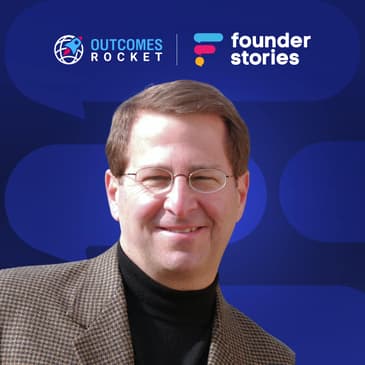
In this episode, Jay Drayer, founder of CareFlash, discusses his journey from corporate finance to creating innovative caregiving solutions like Careopolis and Kiddopolis. Inspired by his own experiences as a caregiver, he shares how he saw the need for tools that go beyond sympathy and provide meaningful support for those dealing with serious illnesses. Jay talks about the importance of listening to users and adapting the platform based on their feedback, leading to the development of a robust and supportive network for caregivers. He also highlights the evolution of his business model, overcoming setbacks, and the significant impact of providing employee benefits that support caregiving.
Tune in and learn how empathy, innovation, and perseverance can transform caregiving and workplace support!
Resources:
[00:00:02] [SPEAKER_01]: Hey everybody and welcome back to the Outcomes Rocket Founder Stories. I'm so excited to be
[00:00:10] [SPEAKER_01]: with an amazing person, health leader, recovering CFO as he likes to call himself. His name is Jay
[00:00:19] [SPEAKER_01]: Drayer. Jay is the founder of CareFlash, a visionary in caregiving solutions. The journeys
[00:00:27] [SPEAKER_01]: in his life led him to create Careopolis, followed by Petopolis and Kidopolis. All of these companies
[00:00:35] [SPEAKER_01]: make caregiving personal and help people with serious illness to end of life and their loved
[00:00:43] [SPEAKER_01]: ones really, even up to pets actually. He's helping pets now manage that situation in a
[00:00:50] [SPEAKER_01]: really nice way. So Jay, I'm excited to have you back on the podcast after I think way too long.
[00:00:56] [SPEAKER_00]: Yeah, it's great to be back and we have some opportunity enough, some new developments to
[00:01:02] [SPEAKER_01]: discuss. So keeping things fresh. I love it. Jay, you're always keeping things fresh. That
[00:01:07] [SPEAKER_01]: doesn't surprise me about you. And look, part of the founder story series and what we're doing is
[00:01:13] [SPEAKER_01]: diving into the entrepreneurial journey and you and I had a chance to connect before the podcast.
[00:01:19] [SPEAKER_01]: You've been in this business for how long? Well, CareFlash is into its 20th year.
[00:01:24] [SPEAKER_01]: Congratulations. That is amazing. And it's a mature business that is really doing well and
[00:01:31] [SPEAKER_01]: it's a testament to you. So talk to us about how you got into it and talk to us about your
[00:01:36] [SPEAKER_00]: entrepreneurial journey. I've always been an entrepreneur since I was a kid, but more recently
[00:01:42] [SPEAKER_00]: than that in the 2003, four and five timeframe, I was serving as a caregiver to a loved one living
[00:01:48] [SPEAKER_00]: with an advancing illness. And at the time I was a busy CFO of a software company. But as I
[00:01:54] [SPEAKER_00]: watched this journey go on and on, it became more clear to me every week that if someone could
[00:01:59] [SPEAKER_00]: create a tool that would enable all these well-meaning friends and loved ones to become
[00:02:03] [SPEAKER_00]: more engaged in my journey as a caregiver, and of course, our loved one at the center of
[00:02:08] [SPEAKER_00]: this experience, as opposed to all the nonstop sympathies and well wishes, messages of concern
[00:02:14] [SPEAKER_00]: and prayers, and over and over again, how can we help? It would have been fundamental enough to my
[00:02:20] [SPEAKER_00]: ability to be effective as a caregiver. And out of that whole thing, I left corporate finance in 2005
[00:02:27] [SPEAKER_00]: and started CareFlash, which as you were saying in the backdrop to this chat this morning, is we
[00:02:33] [SPEAKER_00]: offer a couple of tools, one called a Careopolis and one called a Kidopolis. And so I'm eager to
[00:02:38] [SPEAKER_00]: chat with you more in depth about that and understand if you have any advice on how we
[00:02:43] [SPEAKER_00]: can continue to grow into different markets throughout the continuum of care.
[00:02:47] [SPEAKER_01]: I love that, Jay. Thank you for that. Thanks for the context. You were dealing with it yourself,
[00:02:52] [SPEAKER_01]: right? You had a situation where you wish you had better tools and they didn't exist. And oftentimes
[00:02:59] [SPEAKER_01]: that's the situation that the call that entrepreneurs answer is there's nothing here
[00:03:04] [SPEAKER_01]: for me, so I'm going to build it. So talk to us about the building process and in particular,
[00:03:09] [SPEAKER_01]: some of the successes that you've had along the way.
[00:03:12] [SPEAKER_00]: The building process was given that I had a background in software, I had a bit of a head
[00:03:17] [SPEAKER_00]: start in understanding the landscape what I was entering into. But basically I started surveying
[00:03:22] [SPEAKER_00]: our friends and loved ones as they continued to after the loss of our loved one, a few weeks of
[00:03:28] [SPEAKER_00]: hospice care in the home, the loss of our loved one, they continued with all the nonstop, I don't
[00:03:34] [SPEAKER_00]: want to say sympathies as much as condolences for months on end really. And I kept thinking
[00:03:40] [SPEAKER_00]: if I could solicit their advice on what I could do in building a tool that would enable them to
[00:03:46] [SPEAKER_00]: become more part of my journey, as opposed to more and more of the landscape. And by landscape,
[00:03:51] [SPEAKER_00]: people have busy lives and they have emotional barriers and concerns about intrusiveness.
[00:03:56] [SPEAKER_00]: There's a lot of reasons why people cannot engage or won't engage around journeys that accompany
[00:04:01] [SPEAKER_00]: healing or aging or chronic or cognitive or behavioral illness, even journeys that accompany
[00:04:07] [SPEAKER_00]: celebrating the memory of lost loved one. And so as I continue to reflect on that and started
[00:04:13] [SPEAKER_00]: developing this tool, the Keropolis initially, I started listening to the user base of people
[00:04:18] [SPEAKER_00]: using the tool in connection with their healing and aging journeys around their loved ones.
[00:04:22] [SPEAKER_00]: And as we continue to listen to this population, which is now in the millions,
[00:04:27] [SPEAKER_00]: we've continued to solicit a lot of wisdom and advice as far as what we can do to make
[00:04:33] [SPEAKER_00]: the Keropolis more conducive to helping them to engage their friends and their loved ones in a
[00:04:38] [SPEAKER_00]: helpful and durable journey around what they're going through. Thank you, Jay. A lot of listening.
[00:04:44] [SPEAKER_00]: You did a lot of listening. That was the fundamental part of it. And I've always been
[00:04:49] [SPEAKER_00]: a good listener. But as I continue to reflect on why our tool wasn't experiencing uptake and
[00:04:54] [SPEAKER_00]: utilization, I kept thinking that these are the people out there using the tool who have that
[00:04:59] [SPEAKER_00]: bottled up wisdom and insight in the back of their mind that is explaining why they,
[00:05:05] [SPEAKER_00]: like I went through, would love to see their loved ones move away from all the sympathies to become
[00:05:09] [SPEAKER_00]: more empathetically and helpfully engaged as a supportive network throughout that journey.
[00:05:16] [SPEAKER_01]: Yeah, that's really great. And I love that this go from sympathy to empathy. We can all think
[00:05:21] [SPEAKER_01]: about a time I could think about a time where that's where I went. Like there's different
[00:05:26] [SPEAKER_01]: ways of approaching it. I always end up going to sympathy. It's a great thing to think about
[00:05:31] [SPEAKER_01]: empathy and having structure, because when you hit situations like this, we don't have structure,
[00:05:37] [SPEAKER_01]: we don't have support, and we just basically do what we know, which is not good all the time.
[00:05:43] [SPEAKER_01]: So, Jay, your platform is really helping guide people in these moments of challenge.
[00:05:47] [SPEAKER_01]: As you've built the business, you have evolved your go to market. Do you care to speak to that?
[00:05:54] [SPEAKER_00]: Absolutely. I think the big thing was the fact that when you look at these longstanding
[00:06:01] [SPEAKER_00]: conservatives, many times very deliberative and slow moving as far as innovation goes,
[00:06:07] [SPEAKER_00]: industries, specifically throughout most of healthcare, and I'm not talking about medical
[00:06:11] [SPEAKER_00]: devices and pharmaceuticals and implants, they're highly innovative and highly motivated to embrace
[00:06:17] [SPEAKER_00]: innovation. But as it relates to social innovation, I kept running into different,
[00:06:22] [SPEAKER_00]: a lot of people were interested in the tool, but they weren't willing and able to
[00:06:26] [SPEAKER_00]: step into what we finally settled on, which was a business model.
[00:06:30] [SPEAKER_00]: When you're farming new ground and trying to create a business that has a model that is compelling
[00:06:35] [SPEAKER_00]: to your customers and the people who are benefiting from the solution, it takes a lot
[00:06:41] [SPEAKER_00]: of, in our case, business models like a plate of spaghetti, a lot of loose ends, a lot of attempts
[00:06:47] [SPEAKER_00]: that fell short. It either couldn't work with our economics or the economics of our customers.
[00:06:53] [SPEAKER_00]: So we continued to explore different things and finally, probably into our eighth or ninth year,
[00:06:58] [SPEAKER_00]: settled on a business model that was conducive to the goals of everybody in the holistic equation
[00:07:04] [SPEAKER_01]: that defines our success. Man, Jay, that's powerful. It was one sentence, but that one sentence,
[00:07:11] [SPEAKER_01]: eight to nine years, and then you made that right business model shift. As those eight to nine years
[00:07:18] [SPEAKER_01]: went by, you were still building the business, right? Like help uncover that, right? You were
[00:07:23] [SPEAKER_01]: still getting wins here and there, but maybe not as fast as you would have liked.
[00:07:27] [SPEAKER_00]: Well, in so much of our target industries are just so conservative to the point where they
[00:07:32] [SPEAKER_00]: are not willing to speculate on a solution that is patient and family facing. Their most important
[00:07:41] [SPEAKER_00]: relationships to where there was any question about its longevity of either embarrassing them
[00:07:46] [SPEAKER_00]: or not serving their population in ways that they were expecting to have benefit created.
[00:07:54] [SPEAKER_00]: Part of the whole thing, I hate to say this to all the entrepreneurs out there,
[00:07:59] [SPEAKER_00]: is the fact that it is a long treading water game to be able to have that scar tissue and
[00:08:06] [SPEAKER_00]: that validation that you're going to be around and you're not going to embarrass your customers
[00:08:10] [SPEAKER_00]: with their populations. And that truly is a 10 or 15 year equation in order to be taken seriously by
[00:08:18] [SPEAKER_00]: world-class organizations who don't take their brands or their clients lightly.
[00:08:23] [SPEAKER_01]: Love that. I'm reminded of that Emmett Smith quote, when you get knocked down, you look up,
[00:08:28] [SPEAKER_01]: you get up and you never give up and you keep going and you keep going. And that's what you've
[00:08:33] [SPEAKER_01]: done, Jay. And so we've turned a corner on the business model, on the business, and you've got
[00:08:39] [SPEAKER_01]: some success. In particular, we reconnected because I had the chance to see a press release
[00:08:45] [SPEAKER_01]: on some of your wins. Do you care to comment on that?
[00:08:49] [SPEAKER_00]: I would. Thank you. Yes. And so probably the most interesting facet of the value-add of our tool
[00:08:55] [SPEAKER_00]: that should have occurred to me from my roots as a CFO, but it just really didn't until
[00:09:00] [SPEAKER_00]: we had been introduced by one of our customers to one of their business partners who does not
[00:09:07] [SPEAKER_00]: provide anything in the entire realm of care, health care, elder care, hospice care, nothing
[00:09:12] [SPEAKER_00]: like that. It was actually an advisory firm that provides consulting services generally around IT
[00:09:18] [SPEAKER_00]: and the like, but they were interested in using our tool because one of their employees' children
[00:09:24] [SPEAKER_00]: had developed cancer and they had learned about our tool from one of their executives who'd been
[00:09:30] [SPEAKER_00]: using the tool with another branch of his circle of friends. And they approached us and said,
[00:09:35] [SPEAKER_00]: we'd like to offer this as an employee benefit. And initially I was thinking, why would that,
[00:09:41] [SPEAKER_00]: if you're not providing any level of care, why would that be compelling to you? And they
[00:09:45] [SPEAKER_00]: proceeded to explain to me the concept of building a high-performance workplace, building
[00:09:50] [SPEAKER_00]: workplace culture, empowering the whole person of employees as they navigate journeys that
[00:09:56] [SPEAKER_00]: honestly are journeys that are not from the faint of heart. When you learn out of left field
[00:10:01] [SPEAKER_00]: that a loved one has been seriously injured or a difficult diagnosis, the big wet ceiling comes
[00:10:07] [SPEAKER_00]: right down on your head and all the uncertainty as you anticipate refining the diagnosis and
[00:10:13] [SPEAKER_00]: learning about the recommended course of action can be sometimes weeks in the making. And the
[00:10:20] [SPEAKER_00]: uncertainty that's on that employee's shoulders as they navigate all that uncertainty, not to mention
[00:10:25] [SPEAKER_00]: all the ins and outs of appointments and therapies and regimens and things that are
[00:10:30] [SPEAKER_00]: just beyond challenging, especially with all the uncertainty of that diagnosis or injury
[00:10:35] [SPEAKER_00]: couples into the fact that this tool has now become a world-class employee benefit
[00:10:40] [SPEAKER_00]: and we're in the process of going that direction.
[00:10:42] [SPEAKER_01]: That's awesome. So really it was this chance conversation that really uncoupled this idea that
[00:10:53] [SPEAKER_01]: the care providers were the ones that were going to be the ones to use it and see the value.
[00:10:59] [SPEAKER_01]: And in fact, that wasn't like that conversation helped you separate that idea, that assumption.
[00:11:05] [SPEAKER_00]: I've never been the sharpest tack in the box, but eventually I get things.
[00:11:09] [SPEAKER_00]: And this was laid out to me so clearly and so smoothly by this executive as far as her talking
[00:11:16] [SPEAKER_00]: about what her journey was in trying to be effective as a supporter and someone that
[00:11:22] [SPEAKER_00]: navigated not only meals and errands, but pet care and lawn care and respite and things that are so
[00:11:27] [SPEAKER_00]: critical to empowering caregivers to give them quality of life.
[00:11:31] [SPEAKER_00]: Caregivers, they fight the good fight, but in reality, their appetite suffers,
[00:11:35] [SPEAKER_00]: their sleep quality, their anxiety levels, their ability to be engaged at work.
[00:11:40] [SPEAKER_00]: All these tentacles of the caregiving equation are so brutal in the lives of most employers.
[00:11:46] [SPEAKER_00]: Back in my days as a CFO, communicating to our workforce how we valued work-life balance
[00:11:51] [SPEAKER_00]: was little more than a poster on the break room wall.
[00:11:54] [SPEAKER_00]: If you remember that poster of the monkey hanging from the hook and
[00:11:57] [SPEAKER_00]: underneath the caption said, hang in there.
[00:12:00] [SPEAKER_00]: That was the motivation back then.
[00:12:03] [SPEAKER_01]: It changed a lot since then, thankfully.
[00:12:06] [SPEAKER_01]: Thank God. Thank God. And thanks to platforms like yours, Jay, and the entrepreneur persistence
[00:12:13] [SPEAKER_01]: like leaders like you, these types of tools are available.
[00:12:17] [SPEAKER_01]: And so really thinking about as you've built the company,
[00:12:21] [SPEAKER_01]: what's been one of the big setbacks that you had that's made you guys even stronger?
[00:12:26] [SPEAKER_00]: Well, the biggest setback clearly was the longevity that we needed to develop in order
[00:12:31] [SPEAKER_00]: to be taken seriously.
[00:12:32] [SPEAKER_00]: And so much of the time, that's just a time building exercise.
[00:12:36] [SPEAKER_00]: But I think the really big thing was having the sophistication to be able to quantify and
[00:12:41] [SPEAKER_00]: communicate the value out of our tool to our customers.
[00:12:44] [SPEAKER_00]: And I know this sounds ridiculous as I say it as a former CFO, but when you're out there
[00:12:50] [SPEAKER_00]: trying to build a world-class platform that is secure and scalable and robust and compelling,
[00:12:56] [SPEAKER_00]: many times quantifying its value-add is not really on the radar.
[00:13:00] [SPEAKER_00]: And at the outset, we developed a lot of customer relationships that we lost because
[00:13:05] [SPEAKER_00]: we were incapable of communicating in a quantitative way, the value-add of our tool.
[00:13:09] [SPEAKER_00]: And so that was another real learning experience that we now have as part of our routine process
[00:13:17] [SPEAKER_00]: of reporting these metrics to our customers.
[00:13:20] [SPEAKER_00]: But it was long in the coming and it was such a low priority.
[00:13:24] [SPEAKER_00]: Then now that I look back at it, it was foolish that we didn't prioritize that early.
[00:13:28] [SPEAKER_00]: You live and you learn.
[00:13:29] [SPEAKER_01]: Yeah, totally.
[00:13:30] [SPEAKER_01]: And it's a great reminder, Jay.
[00:13:31] [SPEAKER_01]: Thank you for that.
[00:13:32] [SPEAKER_01]: For everybody listening, building businesses, are you showing your ROI?
[00:13:36] [SPEAKER_01]: You got the business.
[00:13:38] [SPEAKER_01]: Now what?
[00:13:38] [SPEAKER_01]: Now you have to keep reminding them about the value you're providing.
[00:13:43] [SPEAKER_01]: Ask your customers for feedback.
[00:13:45] [SPEAKER_01]: Like Jay was saying at the beginning, listen and listen hard and get those models together
[00:13:50] [SPEAKER_01]: because at the end of the day, at the end of the year, especially people start looking
[00:13:54] [SPEAKER_01]: at things like this and you've got to keep reminding them.
[00:13:57] [SPEAKER_01]: Jay, I love this great takeaway that we can all be working on our businesses.
[00:14:02] [SPEAKER_01]: Really, you've done an incredible job.
[00:14:03] [SPEAKER_01]: Tell us who your target audience is now because they're listening.
[00:14:09] [SPEAKER_01]: And for the ones that are specifically listening that align to who buys from you,
[00:14:14] [SPEAKER_01]: let them know who they are.
[00:14:16] [SPEAKER_00]: Well, it ranges everywhere throughout the entire healthcare continuum, even getting
[00:14:20] [SPEAKER_00]: into payers, orthotic and prosthetic organizations, obviously hospice home healthcare, and then
[00:14:27] [SPEAKER_00]: non-medical home care.
[00:14:28] [SPEAKER_00]: But more recently, we've been real excited to be very robustly growing into employers
[00:14:34] [SPEAKER_00]: that want to empower that facet of their workforce that's caring for a sibling or a best friend
[00:14:40] [SPEAKER_00]: or a parent where there's really nothing in the suite of employee benefits that's going
[00:14:44] [SPEAKER_00]: to begin to get to the root of that employee's anxiety and things that truly have an impact
[00:14:49] [SPEAKER_00]: on their engagement in the workplace.
[00:14:52] [SPEAKER_01]: That's great, Jay.
[00:14:53] [SPEAKER_01]: Thank you.
[00:14:53] [SPEAKER_01]: For those of you looking for those tools and capabilities to help your employees, the lives,
[00:15:02] [SPEAKER_01]: the members, the patients, whatever stakeholder you are and however you call it, you're working
[00:15:07] [SPEAKER_01]: with people.
[00:15:08] [SPEAKER_01]: Those core people are in your sphere of influence.
[00:15:11] [SPEAKER_01]: This is a really great technology to consider.
[00:15:14] [SPEAKER_01]: Check out Jay, check out his company, and it's a great opportunity to really take a
[00:15:19] [SPEAKER_01]: look at CareFlash.
[00:15:20] [SPEAKER_01]: If people want to reach out to you, Jay, where can they reach you?
[00:15:24] [SPEAKER_00]: Easily at Jay at CareFlash.com.
[00:15:27] [SPEAKER_01]: Amazing.
[00:15:28] [SPEAKER_01]: Well, look, Jay, we're going to leave your contact information, your website and all
[00:15:33] [SPEAKER_01]: the different ways to get in touch with you and the thought leadership that you put out
[00:15:36] [SPEAKER_01]: there in the show notes.
[00:15:37] [SPEAKER_01]: So folks, take advantage of this information and take action because now is the time to
[00:15:43] [SPEAKER_01]: make progress.
[00:15:45] [SPEAKER_01]: Jay, we appreciate you joining us on Founder Stories and look forward to catching you soon.
[00:15:49] [SPEAKER_00]: Fantastic.
[00:15:50] [SPEAKER_00]: Thanks, Saul.
[00:15:50] [SPEAKER_00]: Good to see you.
[00:15:51] [SPEAKER_01]: Likewise.