
Ambient AI in clinical documentation is transforming healthcare by enhancing physician workflows, marking a shift toward efficient and satisfying healthcare experiences.
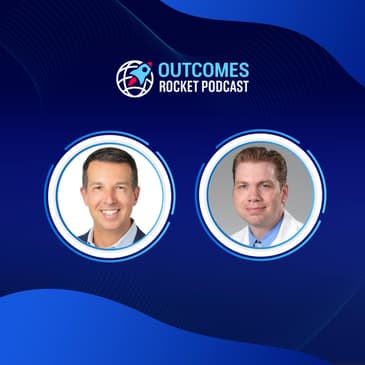
In this episode, Dr. Dean Dalili, Chief Medical Officer at DeepScribe, and Dr. Jason Hill, Innovation Officer at Ochsner Health, discuss the transformative potential of ambient AI in clinical documentation and its impact on healthcare. Dean and Jason talk about how DeepScribe’s technology is optimizing physician workflows, enhancing patient satisfaction, and driving measurable ROI for health systems. Dr. Hill and Dr. Dalili stress the importance of system-wide adoption and co-development partnerships in shaping the future of ambient AI in healthcare.
Tune in to explore how ambient AI is transforming healthcare and discover insights from leaders shaping the future of clinical documentation!
Resources:
[00:00:02] Hey, everybody. Welcome back to the Outcomes Rocket podcast, recording live from health. It's so amazing to be here with two amazing leaders in the space. I want to introduce you first to Dr. Dean Dalili. He's the Chief Medical Officer at DeepScribe, and I'm also accompanied by Dr. Jason Hill, who's the Innovation Officer from Ochsner Health. I'm excited to have them both here. They're thought leaders in the space, forward thinkers, and gentlemen, welcome to the podcast.
[00:00:31] Good to be here.
[00:00:32] Thanks so much, Saul.
[00:00:33] It's a pleasure to have you guys. Look, I want to start off just with a simple question. Why are you at health?
[00:00:40] Yeah, so health is one of the rare opportunities during the year to bring together all these great companies, great investors, great customers, and really learn, network, learn what other people are up to, but also get to show them our technology and have face-to-face conversations with people that we work with throughout the year,
[00:00:57] but that we rarely can all shake hands and make introductions to and really make it much more personal. So yeah, we're thrilled to be here. We have a large team here for the full conference.
[00:01:06] That's awesome, Dean. Thank you. Jason?
[00:01:08] Yeah, so as the person who oversees innovation, and a lot of that is done by early-stage companies, it is my job to figure out which of these 10,000 potential startups are the diamonds that I can invest and scale in.
[00:01:24] And so to me, that process is almost a full-time job, but being at health allows us to then get better relationships with other health systems that are doing similar things, as well as talk and see the products that are all on display.
[00:01:38] So it helps me to accelerate the process of my own internal prioritization for what things I'm going to innovate with.
[00:01:44] That's great. I appreciate you sharing that, Jason and Dean. And so let's hone into DeepScribe. How's DeepScribe helping the people that use it?
[00:01:54] I'll just tell you that we started off in the ambient documentation space. So we're an app that sits on an iOS or Apple device. We also work with desktop, laptop computers.
[00:02:05] And so we're basically in the room. We're the conversation between the clinician and the patient. And sometimes that can include other family members. It can include other clinical staff that are in the room.
[00:02:17] And the basic functionality is to just record the sound and then create a transcript and then summarize that transcript in a note, a clinical note.
[00:02:26] And we have spent the vast majority of the time since we've been a company, we were founded in 2017, really perfecting the nuts and bolts of building that basic clinical workflow.
[00:02:37] And now we've gotten to a point where we're taking it to the next level, really thinking about specialty specific workflows, which are much more complex, how we can have a much better user interface for providers.
[00:02:49] And then ambient intelligence, which is how we can bring information from outside of the visit room to the bedside and try to make the value of the clinical interaction that much better.
[00:02:58] That's great. Do you want to comment on that one, Jason?
[00:03:01] Yeah, from a health system perspective, ambient clinical documentation is exploding.
[00:03:06] So just as a field, it's coming to be almost mainstream.
[00:03:11] And I think probably in two years, it will probably be one of the primary forms of documentation.
[00:03:17] So as an organization like Ochsner, we want to be on the forefront of this.
[00:03:20] And we've decided working with DeepScribe has really helped us out in that space because we can truly develop a co-development and partnership.
[00:03:27] And so we help provide the clinical environments that allows DeepScribe to develop their product.
[00:03:33] And then we can cyclically improve that really rapidly, much more so than if we are working with a larger, more established framework.
[00:03:44] So that's one of the cool things about ambient documentation.
[00:03:46] And I think like just not to echo Dean's points, but you can think of documentation as a lot of where the root of problems for providers and health systems.
[00:03:57] Documentation is where we have a lot of issues when it relates to quality because your quality is equal to your documentation.
[00:04:03] It has a lot of issues when it relates to provider satisfaction because like me and patient too.
[00:04:08] So if I'm a patient, the last thing I want to do is talk to the side of someone's head as they're typing on their computer.
[00:04:13] And me as a doctor, the last thing I want to do is to think like I'm a waiter at a restaurant trying to remember all of the things that the patient is trying to tell me so that I can write them down later, maybe right after the visit, maybe at 11 o'clock at night after I put my kids to bed.
[00:04:26] So I think there's no doubt to me that ambient clinical documentation is going to be in the future very soon.
[00:04:32] But I think one of the interesting things that DeepScribe is it allows us to tackle those other problems of documentation with a tool that pretty much every provider wants to use.
[00:04:42] And so that is really important and novel in this space.
[00:04:46] And it is an opportunity that we want to take.
[00:04:49] That's great.
[00:04:49] Now, thank you both for your insights there.
[00:04:51] The ambient AI Scribe market, it's fairly crowded now.
[00:04:56] What sets DeepScribe apart from other offerings?
[00:04:59] You mentioned the specialty, but maybe you could unpack that a little more.
[00:05:02] Yeah, 100%.
[00:05:03] I would say it is a very crowded space.
[00:05:06] I would say the one metric that we point to as really a function of the fact that we do all of the basic things really well is our adoption.
[00:05:15] So a lot of the other large ambient solutions, when they go towards large enterprise adoption, they get somewhere between 20% and 30% of the entire clinical base using a tool.
[00:05:26] And I would say where the friction normally happens is if you have a one-size-fits-all framework, either for how the note is written or how the specialty workflow would be accommodated.
[00:05:37] Physicians are like snowflakes.
[00:05:38] They're all unique and they all want to see something a little bit different.
[00:05:41] The way DeepScribe has accommodated that is through, we have a very deep level of experience with our customization studio and preferences.
[00:05:49] So over 55 different variables that a clinician can customize with regard to how they like formatting done.
[00:05:55] And then we've expanded that to the specialty specific workflow.
[00:05:58] So if I'm an oncologist versus an orthopedic surgeon versus a primary care doctor, the amount of information that I want to capture, the brevity, the focus in terms of the clinical elements, the chronology, all of those are unique and somewhat specialty thematic related.
[00:06:14] And so we've really done a lot of work with Oshner to listen to those clinicians, to understand their workflow, and to try to make this tool as easy as it can be to use.
[00:06:24] Because to Jason's point, if you can create a tool that physicians love to use, then all of the ancillary benefits that come from that downstream revenue capture, quality capture, patient satisfaction, because the provider is more directly engaged with a patient.
[00:06:38] All of those are the ancillary benefits of getting the very core functionality right.
[00:06:42] And that's where we've spent a lot of time and focus.
[00:06:45] That's great. Thank you for that, Dean. Any points from you, Jason, on that one?
[00:06:48] Yes, we actually did when we first decided to go with DeepScribe.
[00:06:52] We actually piloted DeepScribe with another solution.
[00:06:54] And we found out that there was a heavy difference in adoption between the DeepScribe and the other solution we had.
[00:07:00] And I think that was the first aha moment for me.
[00:07:03] And then it came then right after when we started realizing that we had some issues with some of the way that the encounters were set up and primarily with HCCs.
[00:07:11] So we had our HCC rates we were noticing because the doctors weren't interfacing with the screen anymore.
[00:07:16] We had to figure out a way to help them interface with that in an app structure or in a different way.
[00:07:22] And the other solution told us, that's not a problem. Don't worry about it.
[00:07:25] And DeepScribe said, let's get some software developers to the table and figure out something.
[00:07:29] And that's exactly what they did in the middle of this pilot.
[00:07:31] So we piloted, I think, 14 different subspecialties.
[00:07:34] We all had high rates of adoption across all subspecialties.
[00:07:38] And the most important single piece of data that I'll give you is that we had an 8% absolute increase in patient satisfaction, which was, it's very rare that you have a technology that actually increases connection between people.
[00:07:49] Like, most of the time we're decreasing connection between people and intermediating screens.
[00:07:54] So the fact that you actually have a piece of technology that can do that is very significant and something that we should all pay attention to.
[00:08:00] Yeah, that's very telling.
[00:08:01] And just speaks to that specialty experience, the customization, and the HCCs.
[00:08:07] I mean, all of that ties to revenue, satisfaction.
[00:08:10] So in the end, it matters in a big way.
[00:08:13] So most health systems think there's no hard ROI for ambient AI documentation solutions.
[00:08:19] Do you have evidence that DeepScribe is different?
[00:08:22] Actually, I was just in a meeting this morning with like probably some of the largest health systems in the country.
[00:08:26] And I was arguing this with a large health system in California that I won't name.
[00:08:32] But the thought was, is that we shouldn't think about ROI with something that's as cool as ambient scribing, which I think is a false statement.
[00:08:41] With any technology, you have to think of ROI at every stage gate.
[00:08:45] So like early ROI that you get, that's hard return because this technology is not free nor cheap.
[00:08:51] So I come from the most medically disadvantaged part of the country, the poorest and least educated part of the country.
[00:08:57] And that is a challenge for us to provide medical care.
[00:09:01] And our organizations, not that we're not financially solvent, but it's always something that has to be on our minds as we implement a novel form of technology.
[00:09:08] What are we going to get for it now?
[00:09:09] And how do we accelerate that benefit for both the organization and the patients going forward?
[00:09:14] So I think that DeepScribe helped us to identify a lot of ways in the documentation space,
[00:09:20] how we can better quantify what our physicians are doing with the best source of truth possible.
[00:09:27] So I don't have to fudge anything.
[00:09:29] I have the actual conversation between the doctor and the patient and it's recorded.
[00:09:33] So that is the literal best source of truth before any source of documentation is the actual conversation.
[00:09:39] So I think that not only helps provide better benefit to putting all the things in, it has perfect memory.
[00:09:45] So I can put all the things in the chart that need to be there.
[00:09:47] But at the same time, if there's any question about that, I can just reference my source of truth, which is the conversation.
[00:09:52] And so I think there is definitive hard ROI for ambient listening in the beginning and then all the way up to scale as you develop out some of this further things that Dean was talking about.
[00:10:02] Yeah, I would agree with you, Jason.
[00:10:03] If you're not looking at ROI, why are you buying it?
[00:10:07] Right.
[00:10:08] How about you, Dean?
[00:10:09] Yeah, I would say it really speaks to the complexity of what the health system sales cycle is like, right?
[00:10:14] So typically early in our conversations, when we approach a new health system, we're speaking to clinical leaders, service line leaders who are thinking about a solution for their providers, the provider friction with EHRs and burnout.
[00:10:27] And admittedly, burnout is a very real phenomenon in healthcare.
[00:10:33] It's something that I'm very proud of the fact that our company and our technology can play a role in trying to limit burnout.
[00:10:39] But from a hard ROI perspective, it's harder to see the time cycle of what it means for a physician to actually leave the organization and quantify and attribute that to one specific cause.
[00:10:51] So in the meantime, what we're doing is we're capturing actual time saving in that people aren't in a chart documenting either at home or during visits or in between visits.
[00:11:02] And so we're able to see like where time is actually saved.
[00:11:06] It's typically on order of magnitude.
[00:11:08] It varies by specialty to about an hour per day and sometimes more than an hour a day.
[00:11:13] We're also then able to track visit volume week over week.
[00:11:16] We've seen lots of examples even outside of Oster where because of it, enhanced diagnostic capture, we're seeing work RVUs get better to the tune of mid single digits, which for a fee for service organization is like the lifeblood of how they stay alive.
[00:11:32] And then we've also really focused in on value-based care documentation with the HCCs.
[00:11:37] The next frontier for us is to really get into the CDI space at the inpatient level.
[00:11:42] So I'm a hospitalist.
[00:11:43] Jason's a hospitalist.
[00:11:44] In some ways, that is where documentation really, the rubber really meets the road from an ROI perspective and trying to be both efficient from a time savings, but also making sure you're comprehensive because so much of not just the physician revenue, but the organizational revenue is derived from the content of what goes into a chart.
[00:12:02] And so I would say the quick tell is that there is a lot of ambient solutions being deployed.
[00:12:08] I haven't seen a single case where an institution has ripped it and just said, we're going to go back to the old days.
[00:12:13] There is a lot of conversation about, hey, we made an early adopter decision to take a very large, very well-known resource, but we're finding that there's limitations to how far we can go with adoption.
[00:12:25] And if we actually could find either a constellation of solutions or another solution that goes deeper, then we can go and address the majority of our providers who have this pain point, but for whom a solution isn't really tailored built for their workflow.
[00:12:39] And that's where DeepScribe is really trying to put its focus.
[00:12:42] Yeah, I would actually double click on that for a minute and say that adoption is a predicate for everything.
[00:12:46] And so if you cannot achieve adoption at the system scale level, you've failed at driving all those secondary ROIs and value metrics.
[00:12:54] Like it doesn't matter.
[00:12:55] And so that's what we're putting a big focus on for DeepScribe is obviously the ROI is there, but if you don't get people to use it, what's the point?
[00:13:06] Exactly.
[00:13:07] No, well said, gentlemen.
[00:13:09] Lots of value to unpack in this conversation.
[00:13:12] In fact, everybody listening, I would rewind because there is so much value there in that last question from both Jason and Dean.
[00:13:18] We're here at the end, and I want to make sure to give both of you an opportunity to give our listeners a call to action and best place they could reach out to you.
[00:13:28] Yeah, Jason, do you want to start?
[00:13:29] So yeah, Oxner.org, that's our website.
[00:13:33] And you can go in there and look me up and happy to have some conversations there.
[00:13:37] Awesome.
[00:13:38] Thank you for that.
[00:13:38] Yeah.
[00:13:39] And I would say DeepScribe, we're always happy to meet with folks and really try to understand where they are in the journey of provider documentation and how we could be helpful.
[00:13:47] I would say the one key theme for us has been really leaning into the value of partnership.
[00:13:52] We believe that we're in the early innings of the AI ambient revolution and that where we need to be is really closely aligned to our customers and learning from them and with them so that we could deploy the most valuable solutions as quickly as possible.
[00:14:08] So I give people the metaphor that it's like you're standing on the bank of a river, the water's flowing quickly, and you're trying to make a decision at any given point in time.
[00:14:16] And by the time you make that decision, the water is changing.
[00:14:19] The functionality in this space is moving rapidly.
[00:14:21] And so we encourage people to reach out directly to us.
[00:14:24] You can find me on LinkedIn.
[00:14:26] You can go to deepscribe.ai to learn more about our company.
[00:14:30] But I'd say the one theme is that we're very much building solutions for a very broad clinical workforce, and we do that through partnership.
[00:14:38] Partnership is the two-sided benefit of us working together and really trying to solve problems collaboratively.
[00:14:43] That's great.
[00:14:44] Now, I really appreciate it, Dean, Jason, for your time here.
[00:14:48] Ladies and gentlemen, Dr. Dean DeLilley, Chief Medical Officer at DeepScribe, and Dr. Jason Hill, Innovation Officer from Ochsner here straight from Las Vegas to your ears.
[00:15:00] I hope you got a lot of value today.
[00:15:01] Check out the show notes where you could find ways to get in touch with both of them and their organizations.
[00:15:07] Make sure you make some moves to use this technology to improve your organization.
[00:15:11] And thank you guys so much for being here.
[00:15:14] Thanks, Saul.
[00:15:14] Appreciate it.
[00:15:15] Thanks, Saul.
[00:15:16] Thank you, Jason.
[00:15:17] Yeah, same.
[00:15:17] Thank you, Dean.