
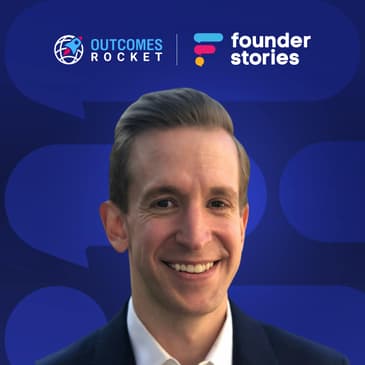
An independent dermatology practice prioritizes patient care and integrity over profits while aiming to improve geographic health equity through innovative business practices.
In this episode, Dr. Stephen Lewellis, founder of Above & Beyond Dermatology, shares his unconventional journey into medicine. Initially pursuing a medical career for its stability, Dr. Lewellis recently discovered his true passion as an independent physician, aligning with his values and goals despite the risks. His practice prioritizes patient experience and care integrity over profit, unlike larger hospital systems driven by market incentives. Dr. Lewellis employs unique business practices, such as accepting Medicare and Medicaid, avoiding direct contracts with commercial insurance, and providing personalized care. Throughout the conversation, he touches on improving geographic health equity through dermatology clinical trials, the importance of resilience in entrepreneurship, and the future of his practice.
Tune in to learn how Dr. Lewellis is transforming patient care and promoting health equity through innovative business practices.
Resources:
[00:00:02] Hey, everyone. Welcome back to the Outcomes Rocket Founder Stories. I'm so excited to be hosting the outstanding Dr. Stephen Lewis. He's a board-certified dermatologist and he's the founder and owner of Above and Beyond Dermatology. I had the chance to spend time on his podcast and I've been following a lot of his work in the space, both as an influencer and a physician. So I'm excited to have him here on the podcast with us. Stephen, welcome.
[00:00:28] Dr. Stephen Lewis, CEO of the Office of Healthcare and Healthcare and Healthcare.
[00:00:28] So it's my pleasure to be here as you have taught me in the past, the value of getting yourself in front of other people's audiences, OPS, other people's stages, right? That it is not just something, it's not just a catchphrase if you want to make a broader impact than just your day-to-day thing, especially for doctors, just one-on-one with patients. This is really important. So I'm grateful for the opportunity.
[00:00:50] Dr. Stephen Lewis, CEO of the Office of Healthcare and Healthcare.
[00:00:52] So Stephen, talk to us about your founder story and what got you into healthcare.
[00:00:56] Dr. Stephen Lewis, CEO of the Healthcare Healthcare and Healthcare.
[00:00:57] Dr. Stephen Lewis, CEO of the Healthcare Healthcare.
[00:00:58] Dr. Stephen Lewis, CEO of the Healthcare and Healthcare and Healthcare, the healthcare thing, I don't have that kind of story.
[00:01:00] I wanted to be a fireman or a doctor when I was five years old. I always knew that's not really it for me. But I almost drifted into medicine because it felt like I didn't know what I wanted to do and it felt like a nice thing to do, a good, solid career, helping people, that nice combination that a lot of people would often describe it as.
[00:01:21] and it helped just because I didn't have another thing
[00:01:24] that I was passionate about.
[00:01:25] I actually always really struggled with that.
[00:01:27] It made me feel insecure to an extent of,
[00:01:31] what do you love to do?
[00:01:31] What are you passionate about?
[00:01:32] What do you want to do?
[00:01:33] And I didn't find that until the last year or two,
[00:01:37] to be honest, and I'm almost 40.
[00:01:39] So I did a lot of schooling
[00:01:41] and just getting collecting credentials
[00:01:44] and things that I knew would make me
[00:01:45] at least secure financially and things like that
[00:01:49] if I worked hard.
[00:01:50] But I didn't find what actually drove me
[00:01:54] and got me up on Monday morning until very recently.
[00:01:58] So my story is more about what I've found
[00:02:02] after starting, graduating residency
[00:02:05] and starting my work as a dermatologist
[00:02:07] and just understanding what the challenges are
[00:02:10] in the current healthcare ecosystem in the US
[00:02:12] and understanding myself and knowing
[00:02:15] that I could only be happy being an independent physician.
[00:02:19] And now I'm incredibly happy doing that,
[00:02:21] even though it's much less secure,
[00:02:23] much less reliable income, all of those things,
[00:02:26] the benefits of that far outweigh.
[00:02:28] And I'm happy to elaborate on that story.
[00:02:30] But yeah, it was a kind of a,
[00:02:32] just almost defaulted into medicine
[00:02:34] because it seemed like a good thing to do.
[00:02:36] But now I much more feel the passion.
[00:02:38] I did not.
[00:02:40] Cool, man.
[00:02:41] That's really cool.
[00:02:42] And I appreciate you being very candid
[00:02:44] and vulnerable about your journey.
[00:02:47] I think more people need to be like that.
[00:02:50] So thanks for that.
[00:02:52] You're welcome.
[00:02:53] And so two years ago, you discovered it.
[00:02:56] And was it that,
[00:02:56] that you wanted to be an entrepreneur?
[00:02:59] And tell us more about your discovery.
[00:03:01] Yeah.
[00:03:03] I never knew what an entrepreneur did,
[00:03:08] nor did I have any desire to do that.
[00:03:11] With the limited amount of knowledge that I had about it,
[00:03:14] it sounded like it was like,
[00:03:16] why would I do that?
[00:03:17] The only first time I heard the word entrepreneur
[00:03:20] was when my brother, Jim,
[00:03:21] who has since passed,
[00:03:23] but has played such a vital role
[00:03:26] in getting me to where I am now in so many ways.
[00:03:30] And his dream was always to,
[00:03:32] to do something on his own and build something
[00:03:35] and leave something behind that was his,
[00:03:38] because he was just such a unique person,
[00:03:40] a little bit unemployable in the good sense.
[00:03:43] Like I consider myself now,
[00:03:44] not that I can't sit at a desk and get the job done,
[00:03:48] but we want to,
[00:03:49] we were driven to innovate and lead and these things.
[00:03:53] And it's hard to do that as in an employee setting.
[00:03:56] So he did a lot of things
[00:03:58] and he'd actually had jobs in most of his life.
[00:04:00] He was never truly an entrepreneur that he wanted to be,
[00:04:03] but he went to graduate school.
[00:04:05] He got accepted into the MBA program at Babson
[00:04:08] and he had received what's called the Olin Fellowship
[00:04:10] for their MBA in entrepreneurship.
[00:04:12] And it was a full ride
[00:04:13] and he told me he was excited about it
[00:04:14] and incredible that he got that.
[00:04:16] And I was like, what's entrepreneurship?
[00:04:18] But that's the first time I heard it.
[00:04:19] And I was just on my straight and narrow path, right?
[00:04:21] Like med school, I did an MD PhD program,
[00:04:24] so I made it even longer than it had to be already.
[00:04:26] And so I was doing the exact opposite of entrepreneur.
[00:04:30] I was just next star is here.
[00:04:32] Next wrong is here.
[00:04:33] Next, it's really hard, but it's the map is there.
[00:04:36] So if you're committed and your pain tolerance is high enough,
[00:04:39] you can get it because someone else is telling you what to do every step of the way.
[00:04:43] So I didn't discover my passion for entrepreneurship until I got to the point where I got all those gold stars.
[00:04:49] I got all the credentials and I got to the final boss.
[00:04:53] And then it was like, okay, what a lot of docs are experiencing these days is like, is this it?
[00:04:58] So this is water.
[00:04:59] I hoped it would be bluer.
[00:05:01] I hoped it would be warmer.
[00:05:02] I thought it would be.
[00:05:04] And then I started acting, I suppose, in unemployable ways,
[00:05:09] not with my patients and not with my staff.
[00:05:11] That was great.
[00:05:11] But in terms of the leadership,
[00:05:13] and I think they were not appreciative of that.
[00:05:16] And I was working with a big hospital organization.
[00:05:19] And at one day, they just canned me out of the blue without cause.
[00:05:22] So they didn't have to say why.
[00:05:23] And I'm happy for that because I didn't have to, I didn't do anything wrong,
[00:05:26] at least that they were willing to admit.
[00:05:28] But that was completely out of the blue.
[00:05:30] Like, you don't have a job anymore.
[00:05:32] You don't work here anymore.
[00:05:33] You can't even go back to your office, that kind of thing.
[00:05:35] And thanks.
[00:05:37] Yeah, it was, and it was much more tougher.
[00:05:39] Just my family, for instance, a small town,
[00:05:42] like all of those things are very complicated with that.
[00:05:45] But for me, in my heart, like the 30 seconds after they sprung that on me,
[00:05:49] pick my job off the floor.
[00:05:51] And then I'm like, all right.
[00:05:54] I never need another job again.
[00:05:56] Like, I do not need these people.
[00:05:58] And I'm just not aligned with what they're building.
[00:06:00] The incentives are that I'm, right now,
[00:06:03] every incentive I have is to help to raise the patient up
[00:06:06] and give them a great experience and a good health outcome.
[00:06:08] And those incentives are completely aligned
[00:06:11] with what generates long-term value for my business.
[00:06:14] And that is a beautiful way to live and work.
[00:06:18] And that's why I'm excited every Monday morning,
[00:06:21] even though I don't get a paycheck anymore on Friday or whatever it is.
[00:06:25] But I am so excited to wake up on Monday morning
[00:06:28] and continue to help people because that's the first and foremost.
[00:06:32] But then I know that all that is accruing value to my company,
[00:06:35] which I also think is important and is really fun.
[00:06:38] You play in the game,
[00:06:39] but I'm playing in the game in a way that is really helpful to people.
[00:06:41] And that's the dream for doctors.
[00:06:42] It's not just like you, well, you want to be a doctor,
[00:06:45] so you have to be a saint and you can't care about anything else.
[00:06:48] And you can't care about having a successful business and all that stuff.
[00:06:51] So that's what launched me out.
[00:06:53] I'm very grateful to that company for
[00:06:55] seeing that I was not meant to be with them.
[00:06:58] I don't think I was not impressed by their leadership,
[00:07:01] but in the end, they did the right thing.
[00:07:03] And I would have stayed, due to loyalty to staff and patients,
[00:07:06] I would have stayed way too long.
[00:07:08] Well, it worked out in your favor, maybe the challenging route,
[00:07:11] but it's not like you've ever shied away from the challenging route.
[00:07:14] What was your PhD in?
[00:07:16] Yeah, I studied something called developmental genetics.
[00:07:19] I was doing very fundamental bio,
[00:07:21] the kind of stuff that you put a,
[00:07:23] you work really hard to form kind of one new breadcrumb
[00:07:27] that maybe someone in 50 or 100 years will use
[00:07:29] to find the path to something very groundbreaking, for instance.
[00:07:33] And that is, science is so incremental and then suddenly transformative
[00:07:38] because we need all those people who came before us.
[00:07:40] So I studied a small model organism called the zebrafish.
[00:07:44] We use that to study how cells get around in the early embryo.
[00:07:48] So we started as a ball of cells and then they go,
[00:07:49] they have to go change and form organs, but they have to get there.
[00:07:53] So I studied the traffic patterns, essentially.
[00:07:55] What cues do these cells use between each other
[00:07:58] and between their environment to successfully and repeatedly
[00:08:01] in a remarkably consistent manner,
[00:08:04] use to go form the heart or go form.
[00:08:07] Fascinating.
[00:08:08] Very cool.
[00:08:09] And so now you're running your business, your practice.
[00:08:13] Talk to us about your practice.
[00:08:14] What's different or unique about what you're doing?
[00:08:17] Everything, which is what makes it fun.
[00:08:19] The bar right now in healthcare experience wise
[00:08:22] for the patient or the consumer, whatever you want to call it,
[00:08:25] is quite low.
[00:08:26] The system has dictated that.
[00:08:28] The incentives have dictated that.
[00:08:30] And we've found ourselves, at least in the US,
[00:08:34] in a place where, at least when you're doing something like dermatology,
[00:08:39] I do what are considered shoppable services.
[00:08:43] If you have acne or you have psoriasis or eczema or something,
[00:08:46] it can ruin your life.
[00:08:47] But it is not an emergency that you cannot choose
[00:08:51] what doctor or what place to go to for care.
[00:08:53] You don't need to have your brain decompressed because it's bleeding
[00:08:57] because you were in a car accident.
[00:08:58] They're very different type of things.
[00:09:00] So because of that, in my opinion,
[00:09:03] the third-party payer network and distortions as a result of that,
[00:09:07] the experience of receiving dermatology care
[00:09:11] is pretty low in general,
[00:09:14] and the cost is still quite high.
[00:09:15] So I'm trying to bring the cost down and make those things switch.
[00:09:19] And it doesn't mean the cost has to go way down,
[00:09:22] but if you put the experience above how much it costs,
[00:09:27] that naturally will bring the profits for the company up
[00:09:30] because you're doing the right thing.
[00:09:32] So I get to,
[00:09:33] because I don't have those perverse incentives
[00:09:35] that some of the big hospital systems do,
[00:09:37] I get to just simply do what's right for my patients,
[00:09:41] and then they take care of the rest, essentially.
[00:09:44] And that just sounds like a normal business.
[00:09:45] That is not innovative.
[00:09:47] But in healthcare, it feels innovative
[00:09:49] because we have been participating in such a not-normal business.
[00:09:55] Costco.
[00:09:56] They don't trick people into spending a lot of money there
[00:09:59] and then bragging to their friends about it or Target or whatever.
[00:10:01] They deliver a good product,
[00:10:02] and people are excited to go,
[00:10:03] and they spend a lot of money, hard-earned money,
[00:10:04] and then they have a good product and they're happy.
[00:10:06] So that, I just think about the patients.
[00:10:09] I do what's right for them.
[00:10:10] I don't think about the insurance company.
[00:10:12] I don't work for the insurance company.
[00:10:14] And then it's just a different experience for them.
[00:10:18] And that doesn't mean I do a great job at it every day,
[00:10:20] but I learn every time I don't do a good job.
[00:10:23] I make it right, and then I learn,
[00:10:24] and I put a system in place to hopefully not do that.
[00:10:27] Love it.
[00:10:28] And so are you cash pay only, or are you doing-
[00:10:30] No, I do.
[00:10:32] I just try to help people in any way that I can.
[00:10:35] And these will change over time,
[00:10:36] but I have some core principles or values that I try,
[00:10:40] that I want to have not changed over time,
[00:10:42] that I use as a decision-making filter,
[00:10:43] and that's my business card has those on it.
[00:10:46] Bottom of my business card, below the logo,
[00:10:48] it says hospitality, trust, access, and accountability.
[00:10:51] And I try to filter decisions through those lenses.
[00:10:54] But right now, and this, again, can change,
[00:10:57] I take Medicare and Medicaid out of principle.
[00:10:59] I think people who are on those programs,
[00:11:02] Medicare, at least, you've earned it.
[00:11:03] You put a lot of money into that system.
[00:11:05] Medicare pays doctors, most doctors at least,
[00:11:07] below market rate for their services.
[00:11:09] And that's, again, it's a systems issue.
[00:11:11] Because of that, we see more patients than we can take care of.
[00:11:15] And then the patients suffer.
[00:11:16] The patient experience suffers.
[00:11:18] But that's not our fault.
[00:11:19] We're working for companies.
[00:11:20] We're working for payers that are paying us under market value
[00:11:23] and not even keeping pace with inflation,
[00:11:25] not even remotely keeping pace with inflation,
[00:11:28] let alone incremental raises
[00:11:30] in what physicians are being paid for their services
[00:11:32] from third parties.
[00:11:33] But again, out of principle, Medicaid, similarly.
[00:11:36] I want to be able to blow the minds of people
[00:11:38] who are in really tough situations
[00:11:41] for whatever reason that might be.
[00:11:42] So I want them to have access to.
[00:11:44] And again, I wouldn't survive if I only had that population.
[00:11:48] You need some commercial patients.
[00:11:49] And then the commercial patients, that's the principle.
[00:11:52] I do not contract directly with any major commercial plans
[00:11:57] because they don't respect me, to be honest.
[00:12:00] And a real terrible thing about our system is that
[00:12:03] if I go to Anthem, Blue Cross, whatever,
[00:12:05] I won't call it any major commercial insurer.
[00:12:09] And I say, this is what I charge for my services.
[00:12:13] And I will get a different contract,
[00:12:16] a different price and contract
[00:12:17] as compared to some group that has a thousand doctors
[00:12:20] or 20,000 doctors.
[00:12:22] And so I'm doing the same service
[00:12:24] and getting paid a lower amount than another company.
[00:12:28] And the bigger the company, typically the worse the service.
[00:12:30] So I'm delivering better service,
[00:12:33] better experience on average than the big shop,
[00:12:37] but they're getting paid more for it per unit.
[00:12:39] And that is, not a lot of people are aware of that.
[00:12:42] That's just how it works.
[00:12:43] So I do not need to contract directly with those places.
[00:12:46] I don't want to beg them for money.
[00:12:48] But I'm very happy with the few ways that I do have,
[00:12:51] and that's in the weeds we'll talk about later,
[00:12:53] but the few ways I do have access
[00:12:55] to some commercially insured patients.
[00:12:57] But if they don't, if they're out of all of those boxes,
[00:13:00] I say, I'm like a plumber and electrician.
[00:13:03] I'll come into your life if you allow me.
[00:13:06] We'll talk for a few minutes, no cost there.
[00:13:08] I'll understand what your problem is.
[00:13:10] I can usually get a good idea of what's going on
[00:13:12] just from a few minutes.
[00:13:13] And I will quote a price based on what I think the complexity of it is.
[00:13:17] If it's just a little screw on the back of the toilet that I need to fasten,
[00:13:20] I'm ethical.
[00:13:20] I'll tell you that.
[00:13:21] I'll tell you this isn't a big deal.
[00:13:22] I still came out to the house to look at it,
[00:13:24] all that stuff I'm going to charge for my time,
[00:13:25] but it's going to be proportional to the complexity of the issue.
[00:13:29] And I will say a price.
[00:13:30] Some people say, great, let's go.
[00:13:32] And one of the value propositions is I will never say
[00:13:34] it's six months for the next appointment.
[00:13:36] And the local places, including where I used to work,
[00:13:38] that's very common for a patient to call
[00:13:40] and then just say, well, our next appointment is in March
[00:13:43] and it's October or April.
[00:13:45] So I will never, ever say that.
[00:13:47] I don't think that's acceptable for a normal business.
[00:13:49] So I say a price and they can,
[00:13:51] they either say, I'm not ready for that.
[00:13:52] And I say, if you need me, call me
[00:13:54] or I'll send some reticency and I'll even negotiate.
[00:13:57] I'm not going to do this, see a patient for $2, right?
[00:13:59] But I can, I am the boss.
[00:14:02] I get to decide what to charge for my services.
[00:14:05] So my priorities are helping people.
[00:14:07] That will change over time.
[00:14:07] But I just try to, I just try to figure out a way
[00:14:11] I can help them.
[00:14:12] And if I can't, I say, call me.
[00:14:13] Love it.
[00:14:14] So what's the next five, 10 years look like for you?
[00:14:18] Assuming everything's, you're crushing
[00:14:20] and everything's going great.
[00:14:21] Yeah, that looks really exciting.
[00:14:23] It looks like a lot of personal growth
[00:14:25] in terms of things that I'm going to have to figure out.
[00:14:28] The biggest thing I'm dealing with right now
[00:14:29] to get to that, continue on that five-year plan
[00:14:32] is delegating.
[00:14:33] That's the biggest thing with an entrepreneur.
[00:14:35] Just those first couple hires,
[00:14:37] or just even if it's not an employee
[00:14:39] and I don't have any employees yet,
[00:14:41] just slowly taking things off your plate
[00:14:43] and trusting someone to do them
[00:14:45] and knowing that person is going to do a better job
[00:14:47] at that than you are because they're an expert at it
[00:14:49] or they're committed to that thing.
[00:14:51] And then I can spend my time doing the thing
[00:14:53] that I trained for many, many years to do
[00:14:56] and to do the things that I just really enjoy doing
[00:14:58] if there are those.
[00:15:00] So if I execute on those,
[00:15:03] I want to be a premier kind of place
[00:15:05] to go within central and northern Wisconsin
[00:15:08] and then expand from there
[00:15:09] that is known for the patient experience.
[00:15:12] Just that sort of Ritz-Carlton, JW Marriott type of...
[00:15:16] I say it all the time to people,
[00:15:19] for my patients, it feels concierge here,
[00:15:21] but not concierge in their pocketbook.
[00:15:24] And that...
[00:15:25] Because people always say,
[00:15:26] oh, you're a concierge doctor.
[00:15:27] That's when I start saying I accept cash for things sometimes.
[00:15:31] And that's...
[00:15:32] Concierge has a specific definition within medicine,
[00:15:34] so that's not what I do.
[00:15:35] Usually concierge is you take all insurances
[00:15:37] and there's that,
[00:15:38] but if a person has some money
[00:15:40] and they want to pay something on top of that,
[00:15:41] they get an additional level of care.
[00:15:43] All of my patients get the same level of care,
[00:15:45] whether they are paying me directly
[00:15:47] or it's a Medicaid patient.
[00:15:48] So concierge here,
[00:15:50] but not concierge in terms of the actual model
[00:15:52] or how it feels when they're writing me a check,
[00:15:54] how it feels to them.
[00:15:55] And I also want to have a clinical trials unit
[00:15:58] because in central Wisconsin,
[00:16:00] we have...
[00:16:01] If you are in my house where I am right now,
[00:16:04] it's about six hours round trip
[00:16:05] to get to any place
[00:16:06] where a legitimate dermatology clinical trial is being done.
[00:16:09] And that's sad.
[00:16:11] Part of health equity is not just...
[00:16:13] We talk a lot about skin of color, for instance,
[00:16:15] and it's very important
[00:16:16] adjusting disparities among people
[00:16:18] of different ethnicities and things like that,
[00:16:20] but it's also geographic.
[00:16:21] And my patients do not have access to medications
[00:16:25] that are being studied
[00:16:26] and opportunities to participate in those studies
[00:16:28] and receive those drugs for free
[00:16:30] in return for participating in those studies,
[00:16:32] access to breakthrough treatments,
[00:16:34] all of that.
[00:16:34] And you mentioned my PhD.
[00:16:36] I have a research background
[00:16:37] and I think clinical research
[00:16:39] will be a big part of what I do.
[00:16:42] And that's part of...
[00:16:44] I was just a week away traveling
[00:16:45] and it's an impact.
[00:16:47] It impacts my family when I'm gone,
[00:16:48] so I try to make the most of it.
[00:16:49] And that's the hustle that's required
[00:16:52] to if you're not affiliated
[00:16:53] with a big medical center
[00:16:54] to know that you want to have studies
[00:16:56] and have a trials unit,
[00:16:57] you need to be talking to people.
[00:16:58] You need to be talking to all
[00:16:59] the major pharmaceutical companies
[00:17:01] and smaller ones as well,
[00:17:02] saying, I want to do this.
[00:17:03] Who do I need to talk to?
[00:17:04] This is why I'm going to be good at it.
[00:17:06] This is what separates me,
[00:17:08] even though I'm not at a major medical center.
[00:17:10] Though there's other things as well,
[00:17:12] but I hope my podcast continues to grow.
[00:17:14] I hope I can leverage myself
[00:17:15] in ways beyond just my day-to-day
[00:17:17] interactions with patients
[00:17:18] through different media channels
[00:17:20] and things like that
[00:17:21] so that I can help inspire other doctors
[00:17:24] to become independent.
[00:17:25] And the groundswell of independent physicians
[00:17:28] that's happening right now,
[00:17:29] as that grows,
[00:17:30] that's the only thing
[00:17:31] that will force the system to change
[00:17:32] because people will have alternatives.
[00:17:35] They have to accept
[00:17:37] the high cost, low value experience now
[00:17:41] because they don't have a choice
[00:17:42] because of insurance networks
[00:17:43] and things like that.
[00:17:44] But if we give them a choice,
[00:17:45] we can change.
[00:17:47] Yeah, no, thanks for that, Stephen.
[00:17:49] I think there's definitely
[00:17:50] a movement happening
[00:17:51] in the physician community
[00:17:54] and awesome to see
[00:17:55] you're living your life
[00:17:57] and your career
[00:17:58] in a way that you want to.
[00:18:00] So that's great.
[00:18:01] And it's just definitely encouraging
[00:18:02] for others hearing it.
[00:18:04] So look, we're here at the end.
[00:18:05] Like, how do you want to close
[00:18:06] the podcast today?
[00:18:08] And where can people find you
[00:18:09] to learn more about what you do
[00:18:12] if they're in Wisconsin for a doctor?
[00:18:14] But if they're maybe
[00:18:15] a pharmaceutical company
[00:18:17] looking for opportunities
[00:18:18] to engage rural communities,
[00:18:21] like, how can they find you?
[00:18:22] You bet.
[00:18:23] Thank you very much, Saul,
[00:18:24] for sharing your platform with me,
[00:18:26] first of all,
[00:18:26] and for coming on my show.
[00:18:27] I really appreciate that.
[00:18:29] One thing I'd like to leave
[00:18:31] listeners with,
[00:18:32] at least in terms of
[00:18:33] any doctors who might be out there
[00:18:35] or people who are looking
[00:18:35] for a different type
[00:18:37] of doctor's office,
[00:18:39] there is a,
[00:18:40] I think there's a misconception
[00:18:41] about having to,
[00:18:42] we can have either or.
[00:18:43] You can prioritize patients
[00:18:45] or you can prioritize profits.
[00:18:46] And there's a common thing
[00:18:48] in our industry
[00:18:49] about this practice
[00:18:50] is profits over patients
[00:18:51] and this one is
[00:18:52] patients over profits.
[00:18:53] And the misconception is that
[00:18:56] if I,
[00:18:57] what I'm experiencing
[00:18:58] things so far
[00:18:59] is that if I always
[00:19:01] keep patients over profit,
[00:19:03] they can be close to each other,
[00:19:04] but they act like magnets
[00:19:05] and magnets are polarized, right?
[00:19:06] If you have them facing
[00:19:07] the right way,
[00:19:08] they go like that.
[00:19:08] So if,
[00:19:09] as I bring patients up,
[00:19:11] the higher I bring them,
[00:19:11] that will follow
[00:19:12] due to the 90s.
[00:19:13] But as soon as I do this,
[00:19:15] as soon as I let it slip
[00:19:17] and that is all about
[00:19:18] the core values in the business,
[00:19:20] they will repel each other
[00:19:21] and the profits could soar.
[00:19:23] And we've proven that
[00:19:24] with the place I used to work,
[00:19:25] for instance,
[00:19:26] and the patient experience
[00:19:27] goes down.
[00:19:28] So just keeping profit,
[00:19:30] patients over profits
[00:19:32] does not sacrifice profits.
[00:19:33] It actually increases them.
[00:19:34] And that is such
[00:19:35] a simple business model
[00:19:36] and it works
[00:19:37] because again,
[00:19:38] it's a normal business
[00:19:39] if you eliminate
[00:19:39] as many third-party players
[00:19:41] as possible.
[00:19:41] So I want people to know
[00:19:42] that is possible
[00:19:43] and it's not just where,
[00:19:45] oh, you can do that
[00:19:46] in Beverly Hills or something.
[00:19:47] No, I live in rural
[00:19:48] like center of Wisconsin.
[00:19:50] Keep that in mind.
[00:19:51] And last,
[00:19:52] you can find my practice
[00:19:54] is called
[00:19:54] Above and Beyond Dermatology.
[00:19:56] My podcast is
[00:19:57] The Direct Care Derm,
[00:19:59] but I'll be rebranding it soon
[00:20:00] to Above and Beyond Dermatology.
[00:20:01] You can let me know
[00:20:02] if you think that's a good idea
[00:20:03] or not.
[00:20:03] I do think there's
[00:20:04] a lot of brand equity
[00:20:04] and I think in having the show
[00:20:06] and I talk a lot more
[00:20:07] about than just direct care,
[00:20:09] which is receiving payment
[00:20:10] directly from the patient.
[00:20:11] So Above and Beyond Dermatology
[00:20:12] for the podcast
[00:20:13] is going to be
[00:20:14] a much better name.
[00:20:14] You can find me there.
[00:20:15] Above and Beyond Derm
[00:20:16] is the website,
[00:20:18] but also on Instagram,
[00:20:20] TikTok, Pinterest,
[00:20:21] Above and Beyond Derm,
[00:20:22] as well as Lou Ellis MD.
[00:20:23] I'm on those platforms
[00:20:24] and you can see me
[00:20:25] in Wisconsin.
[00:20:26] I'm also licensed
[00:20:27] in a few other states
[00:20:28] where I do some telehealth work.
[00:20:30] You can find all that
[00:20:31] out online.
[00:20:31] I give my number out
[00:20:32] 715-391-9774.
[00:20:36] You can text that,
[00:20:37] call it.
[00:20:38] That's my office number,
[00:20:39] but it goes right to me
[00:20:40] and I'd be happy to talk to it.
[00:20:42] It doesn't have to be
[00:20:42] about patient care necessarily.
[00:20:43] If you just want to reach out to me,
[00:20:45] still feel free to use that line.
[00:20:47] Amazing, Stephen.
[00:20:48] Well, thanks again.
[00:20:49] Really appreciate you joining us.
[00:20:50] Ladies and gentlemen,
[00:20:52] Dr. Stephen Lou Ellis.
[00:20:54] He's a board certified
[00:20:56] dermatologist,
[00:20:56] founder and owner
[00:20:57] of Above and Beyond Dermatology,
[00:20:59] as well as the host
[00:21:01] of the Direct Care Derm podcast.
[00:21:03] We're going to leave ways
[00:21:04] to get in touch with him
[00:21:05] in the show notes,
[00:21:05] so make sure you check him out.
[00:21:08] Now's the time
[00:21:09] to make change happen.
[00:21:10] Take inspiration from him.
[00:21:12] He's making it happen.
[00:21:13] And Stephen,
[00:21:13] thanks for being with us.
[00:21:15] Thank you, Saul.
[00:21:15] And here's the dog
[00:21:16] making all that noise.
[00:21:17] So he deserves a walk,
[00:21:20] but thank you very much
[00:21:21] for your time.
[00:21:22] It's always a pleasure
[00:21:23] talking to you.
[00:21:23] I'm happy to come back anytime.
[00:21:25] I love it.
[00:21:25] Thanks again.