
This podcast is brought to you by Outcomes Rocket, your exclusive healthcare marketing agency. Learn how to accelerate your growth by going to outcomesrocket.com
GE Healthcare is leading the way in global medical technology and pharmaceutical diagnostics by leveraging innovations like AI and cloud computing to reduce healthcare disparities and improve access.
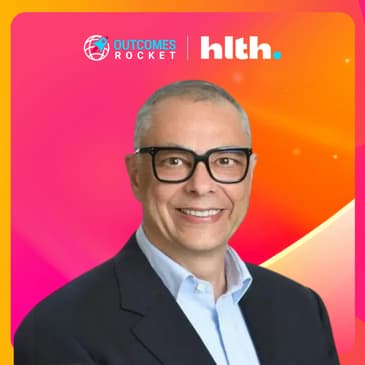
In this episode of The Beat Podcast, Dr. Taha Kass-Hout, GE Healthcare’s Global Chief Science and Technology Officer, discusses how GE Healthcare is leading in global medical technology and pharmaceutical diagnostics through innovations like AI and cloud computing to reduce healthcare disparities and improve access. He introduces the AI-driven CareIntellect platform for oncology and the Health Companion project, which uses agentic AI to optimize patient treatment plans. Dr. Kass-Hout also explains how these technologies can alleviate clinician burnout by streamlining workflows and enhancing operational efficiencies, and highlights GE Healthcare's AI Lab initiative focused on mammography screening.
Tune in to gain valuable insights into how GE Healthcare is driving innovation and transforming the future of healthcare.
Resources:
- Connect with and follow Dr. Taha Kass-Hout on LinkedIn.
- Follow GE Healthcare on LinkedIn and visit their website.
Fast Track Your Business Growth:
Outcomes Rocket is a full-service marketing agency focused on helping healthcare organizations like yours maximize your impact and accelerate growth. Learn more at outcomesrocket.com
[00:00:01] This podcast is produced by Outcomes Rocket, your healthcare exclusive digital marketing agency. Outcomes Rocket exists to help healthcare organizations like yours to maximize their impact and accelerate growth. Visit outcomesrocket.com or text us at 312-224-9945.
[00:00:25] Hey everyone, welcome back to the Beat Podcast brought to you by Health. I'm so excited to have today's guest with us. His name is Dr. Taha Kass-Hout. He is the Global Chief Science and Technology Officer at GE Healthcare.
[00:00:51] He's an interventional cardiologist and bioinformatician, and just an outstanding leader at the GE Healthcare Company. Such a pleasure to be with you here, Dr. Kass-Hout. Thank you so much for having me. Looking forward to the conversation. Likewise, before we get started, tell us a little bit about GE Healthcare. So, GE Healthcare is a leading global medical technology, pharmaceutical diagnostics, and also digital solutions innovator.
[00:01:18] We're dedicated to providing integrated solutions, services, as well as data analytics to make hospitals more efficient, clinicians more effective, and also therapies more precise. Ultimately, we want to see patients around the world healthier and happier. Serving patients and providers for more than 125 years, where GE Healthcare has been advancing personalized, connected, and compassionate care, while simplifying the patient's journey across the entire care pathway. Thanks for sharing that, Dr. Taha Kass-Hout.
[00:01:48] There's some really interesting things that you guys brought to health this year. Surprising stat that I've heard you reference before. Nearly 4.5 billion people currently don't have adequate access to healthcare. How do you think about that and the potential for technology to help us improve access globally? Yeah, no, thank you for that question. It's a sobering statistic that truly demands both attention and action.
[00:02:14] So, in my keynote, and then also subsequent discussions, I've outlined that technology, particularly artificial intelligence and cloud computing, is going to be really critical in addressing global healthcare disparities. The moral imperative is not just innovation, but also that these innovations actually make healthcare more equitable.
[00:02:34] At the heart of it, AI and cloud computing are truly transformative forces that can make sense of overwhelming amount of unstructured or multimodal healthcare data. Predominantly, this is really what we deal with in the medical field, like medical images, notes, device readings.
[00:02:53] For example, when I introduce care intellect for oncology, oncologists can help expedite patient history review, making therapy far more effective and gaining quick access to clinical trial information. Right.
[00:03:05] And we're also seeing already promising collaborations like some early evaluations of care intellect at our organizations, such as Tampa General Hospital, where these partnerships are helping shape, but also exemplify our commitment in bringing practical solutions that physicians can use today beyond just proof of concepts or some models that we're trying to influence here. And if you look at, you're pushing the envelope further.
[00:03:30] And if you look also pushing the envelope further, like our research, like the Health Companion Project is looking much further into how AI agents can now act autonomously to perform predefined tasks. You look at how can you synthesize now this large volume of multimodal data in order for these clinicians to deliver more personalized care plans. So this is beyond just improving care. So this is beyond just improving care.
[00:03:53] It's about reinventing the framework of patient care workflows to relieve the cognitive burden from clinicians, where almost half of clinicians today are per burnout and hospital systems average about 100% turnover every five years. So reducing burnout and improving patient outcomes is top of mind for a lot of these customers. So that was the crux of my discussion around where AI is not just an aid, but truly an agent of change.
[00:04:21] So it empowers us to optimize care delivery, cross health networks and disease state. It's a pathway to a future where clinicians are supported, where operation efficiencies are realized, and also quality care is available, not to select few, but to all, irrespective of geography or economic status. And this future is not just possible. It is on the horizon, and we are committed to making it a reality. That's great. No, I really appreciate that, Taha.
[00:04:47] And there's, even in this country, there's a big gap, like in rural care. And some of the things that you shared will make a big difference. And it's about rethinking it, to your point. It's not iterating. Like I heard an example, iterating on a candle didn't get us a light bulb. That's very true. So I love your approach for sure, and it's necessary. Taha, building on that, GE Healthcare announced some big news this year at health.
[00:05:15] Tell us a little bit about the news and the problems that it's going to solve. Yeah. Yeah. So at this year's health event, GE Healthcare unveiled several groundbreaking initiatives that are truly aimed to address some of the most pressing challenges in healthcare. The two significant announcements were Care Intellect and the Health Companion Project. Let me orient you a little bit.
[00:05:37] So on Care Intellect really represents a suite of applications that dramatically simplifies access to complex patient data. And the goal there is to help streamline the care delivery process. Care Intellect does utilize generative AI to help summarize clinical notes and reports, which offers, in turn, care teams a full, comprehensive, easy, navigable view through a single pane of glass of patient's treatment journey.
[00:06:05] Our initial focus there is on oncology. So Care Intellect for Oncology application aims to reduce the time where oncologists spend sorting through patient history, instead giving them more synthesized, relevant information that they need in order to monitor disease progression, as well as treatment plans, and even identify appropriate clinical trials for their patients.
[00:06:28] The greatest thing about, and the beauty about Care Intellect also lies in, not just in the analytical capabilities it offers, but also its ease of integration. Once healthcare providers install their first application, Care Intellect application, they can activate additional applications with that expensive, time-consuming integration, point-to-point solutions.
[00:06:50] And this approach truly opens the door for other specialists, specialties, and care pathways to also benefit from some similar AI-driven efficiencies. So you're really bringing a lot more AI to be fully integrated within the care pathways in healthcare system with this sort of ease of use. Think about that as a smartphone in your pocket and how securely would this integrate with your single sign-on and enable you to activate, try, and bring more applications in the fold.
[00:07:18] So that's the first really exciting news that was significant that we made at Health. The second one then, there's also the Health Companion Project, which is still under development, but just truly step further into how far can we take AI. So using the concept of agentic AI, where they can act as intermediary between fast amount of data resources, but also the clinician's decision-making process.
[00:07:43] For example, imagine AI agent that processes data and has deep expertise in various domains, right? You have an agent in radiology, another in genomics or coverage and so on, but they're all working collaboratively just as a multidisciplinary medical team would.
[00:08:00] And these agents aim to provide predictive insights, but also can think and plan and help you as a clinician or care team drive those insights and have recommendations that can ultimately lead to these personalized treatment plans and effectively amplify the physician's ability to deliver customized care. And we believe that solutions like these are really serve dual purpose, right?
[00:08:24] They not only enhance operation efficiency and support clinicians, but also represent a concrete step forward and realize in the future where high-quality healthcare is universally accessible. And so these innovations at health really are just our proof of our strategic path forward where AI and technology become the standard bearers in transforming healthcare delivery globally. Thanks for sharing that. Very bold. That's the theme of the meeting this year.
[00:08:51] These bold technologies and these bold initiatives that are going to help us win. I've been hearing a lot and everybody's been hearing a lot about this agent AI. Why is this such a breakthrough technology? That's a great question. Agentic AI, fundamentally, they're going to redefine AI's role from a passive analytical engine to an active participant that's truly capable of shaping outcomes through informed decision-making, but also collaboration.
[00:09:19] What sets agentic AI apart is not only its ability to shift through massive amounts of multimodal data, which is typical of healthcare, but also to interpret complex data from various sources, disparate sources, and then turn that into the capability to act forward toward predefined goals. Right? So imagine this AI system only evaluates patient data, but keeps up with the latest research and treatment protocols,
[00:09:46] and then integrate all this knowledge to suggest now what would be the most effective treatment plan that is tailored to this individual patient need. And as it continuously updates its decision and thinking process, as new data becomes available, be it from patients' records or emergent medical studies, right? So this AI now approach can truly refine and adjust its recommendation to ensure that treatment plans remain on the cutting edge of medical science.
[00:10:16] But these agents also don't stop at data synthesis. They upgrade to also collaborators that act as an expert human team, you would expect from that, and democratize the whole process. So they can contribute to discussions and deliberation with profound insights that they come up with. And they really embodied sort of a blend of expertise across spectrum domains, as I mentioned, like radiology, oncology, pathology, hematology, even coverage, but then marry it with the ability to learn from this new data.
[00:10:45] So essentially thinking, adapting, and suggesting actions, much like you would expect from a human expert that's collaborating with you. So why these agents now are transformational? Because they could be that colossal breakthrough in healthcare, particularly with the Health Companion Project that GE Healthcare is developing, where this technology can proactively generate personalized treatment recommendations,
[00:11:11] continually refining those plans as it ingests new patient data or evolving medical information, that help can accelerate the care process end-to-end. And then when you think about it more globally, agentic AI's real-time adaptive nature and this sort of collaborative approach mean that care can be more responsive to individual patient needs, right? As well as emerging data trends, which dramatically could reduce now the cognitive load on healthcare providers, are usually tasked with keeping abreast of the latest research,
[00:11:40] and you have to sift through Harry Potter's worth of documentation on your patients as the care sort of evolves or transitions from one care provided to another, where the clinicians or care team can now truly can focus on other critical aspects of patient care. So we're really excited about this. We believe this evolution promised a heightened level of dynamism and also responsive in patient care delivery and potentially transforming healthcare operations worldwide. Yeah, super exciting.
[00:12:08] I know I've heard different samples of these types of agents now, even with the ability to observe. Exactly. So it's moving very fast and exciting to hear what GE Healthcare is doing to use it to improve some of the challenges we have in healthcare. As we highlighted, the theme this year was at the event is bold. Can you give us an example that really sticks out, right? Because you guys are doing a lot of bold things.
[00:12:33] One that sticks out of all the things you're working on, that's bold, that's looking to reshape or transform healthcare. Yeah, absolutely. The big point I want to emphasize here, we are laser focused on doing work at the vanguard of healthcare innovation. When we made an announcement about the AI lab, which is a new internal initiative focusing on truly pioneering early concept AI innovations, but also promote the adoption of AI enhanced capabilities that are accelerated by cloud computing across the healthcare industry.
[00:13:01] One key project there is helping radiologists scale mammography screening. Generally, if you look across the board, about approximately 90% of screening mammograms in the U.S., for example, are normal. Yet there's no efficient way for radiologists to quickly separate the clearly normal scans from potentially suspicious ones.
[00:13:20] So one of our projects is exploring how foundation models, these are the next generation of AI models, can help clinicians quickly identify normal breast screening exams with the goal to help these radiologists focus more on their time on suspicious cases by quickly triaging these normal scans.
[00:13:40] The other area, as I mentioned, the health companion project, it's aimed to determine if multiple AI agents, each an expert in particular area, including clinical, biochemical, genomic, radiology, pathology, even coverage and more, could analyze multimodal data and then collaborate together and with care teams to help suggest and generate treatment plans recommendation.
[00:14:05] And we believe these agentic AI approach can bring insights almost like multidisciplinary care team right to a clinician's fingertips, democratizing access to care and access to this knowledge and expertise globally, which could be very practical and powerful everywhere, particularly in rural and underserved areas. That's certainly powerful. And I know GE has a big footprint in their radiology space and a lot of opportunities there to lead the charge, as you guys always do.
[00:14:35] Taha, this has been great. Where can people find you and the team if they want to learn more? GE has a great place to engage with us. We have a number of channels on Twitter, on LinkedIn, myself, other leaders and also GE Healthcare and all these announcements we made, especially around the lab and others available also online. So looking forward to continue the conversation and engage with the broader audience here. That's awesome. Thank you for that. Ladies and gentlemen, thanks for joining us for another episode of The Beat from Health.
[00:15:05] This has been an excellent opportunity to have a discussion with Dr. Taha Kasshut. He's the Global Chief Science and Technology Officer at GE Healthcare. Thanks for tuning in. Check out the show notes for all the ways to get in touch, the resources that he shared. And thanks so much for doing this. Thank you so much for having me today. Appreciate it.
[00:15:49] This podcast is produced by Outcomes Rocket, your healthcare exclusive digital marketing agency. Outcomes Rocket exists to help healthcare organizations like yours to maximize their impact and accelerate growth. Visit OutcomesRocket.com or text us at 312-224-9945.