
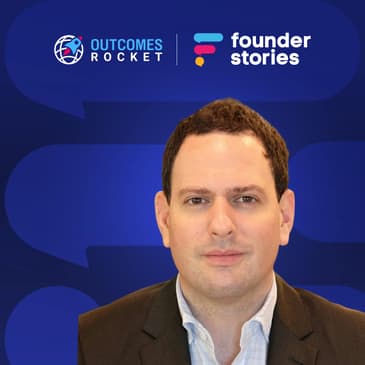
Unlocking healthcare's potential, Dandelion Health merges clinical AI with real-world data to revolutionize precision medicine.
In this episode, Elliott Green, co-founder and CEO of Dandelion Health, explains how his company leverages real-world data and clinical AI to advance precision medicine. Dandelion partners with healthcare systems to extract, de-identify, and harmonize large-scale data like MRIs and lab tests, allowing AI developers and life sciences companies to generate actionable healthcare insights. Elliott explains how this data-centric approach enables faster, more comprehensive analyses, such as discovering the cardiovascular benefits of GLP-1 beyond what traditional clinical trials have shown. He also discusses how Dandelion’s unique strategy emphasizes building strong data pipelines and involving health systems in the product development process to ensure accurate, real-world solutions.
Join us as we dive into how Dandelion Health is transforming healthcare with cutting-edge AI and real-world data, driving innovation in precision medicine and patient care!
Resources:
[00:00:02] [SPEAKER_00]: Hey everyone, welcome back to the Outcomes Rocket founder stories. So excited that you
[00:00:08] [SPEAKER_00]: tuned into our podcast again because today I've got the privilege of hosting Elliott Green.
[00:00:14] [SPEAKER_00]: He is the co-founder and CEO of Dandelion Health. They're a real world data and clinical
[00:00:22] [SPEAKER_00]: AI platform powering the next generation precision medicine and personalized care.
[00:00:28] [SPEAKER_00]: His career has spanned finance and health technology, culminating in executive roles
[00:00:34] [SPEAKER_00]: within this tech health area. They're really focused on payers, providers, life sciences,
[00:00:40] [SPEAKER_00]: and healthcare data. I'm excited to have them here on the podcast. Elliott, welcome.
[00:00:46] [SPEAKER_00]: So thanks so much for the invitation. Pleasure to be here.
[00:00:49] [SPEAKER_00]: Hey listen, it's our pleasure to host you. And today we're going to have a chance to
[00:00:53] [SPEAKER_00]: really unpack the work that you and the Dandelion Health team are up to. But before
[00:00:57] [SPEAKER_00]: we do, tell us about you. What is it that drives your mission in healthcare and also
[00:01:02] [SPEAKER_01]: entrepreneurship? Yeah, a nice big topic to start with.
[00:01:08] [SPEAKER_01]: I'll start with the healthcare bit first. I was one of these people that was kind of
[00:01:13] [SPEAKER_01]: lucky enough to kind of fall into healthcare. You can probably tell being English, we have
[00:01:18] [SPEAKER_01]: a very different health system. And so the complexity of the US healthcare system
[00:01:23] [SPEAKER_01]: was astonishing to me once I'd kind of got into it. And I think once you do,
[00:01:28] [SPEAKER_01]: and you kind of get bitten by the bug as so many people say, it's that two-sided coin of,
[00:01:33] [SPEAKER_01]: my God, this feels like a sysophane task. But oh, if we could just manage this bit,
[00:01:39] [SPEAKER_01]: the impact we could have on so many people is unlike anything you could ever do.
[00:01:44] [SPEAKER_01]: And so that allure of trying to be this impactful in such a positive fashion in
[00:01:49] [SPEAKER_01]: society and health is really what keeps you going on a personal level. I just kept on having
[00:01:54] [SPEAKER_01]: experiences that taught me that the more you could kind of control and move towards as an
[00:02:00] [SPEAKER_01]: entrepreneur, the bigger the impact could be. And so I was more of a, I would say cumulative
[00:02:06] [SPEAKER_01]: journey. Some people kind of wake up in the morning, you have their bowl of shreddies and
[00:02:10] [SPEAKER_01]: they're like, I want to start a company. And mine was a bit more, I got lots of experiences
[00:02:15] [SPEAKER_01]: through Oscar, through Charles Bark and through Clarify and realized, wait a second,
[00:02:19] [SPEAKER_01]: if I bring all of this together, I could do something really impactful with a great team.
[00:02:24] [SPEAKER_01]: And that's also the key thing, right? If you don't have a good team, it doesn't
[00:02:27] [SPEAKER_01]: matter how much of an entrepreneur you are, you will achieve nothing.
[00:02:30] [SPEAKER_00]: Amen to that, Elliot. So true. And so this is super fascinating. So it's an area of high
[00:02:37] [SPEAKER_00]: impact for you. You decided to go for it. Tell us about dandelion. What is it that
[00:02:41] [SPEAKER_01]: you guys are up to? So as you said in the intro, real world data platform focused on
[00:02:46] [SPEAKER_01]: clinical AI and kind of precision analytics. Great buzzwords. What does it really mean?
[00:02:51] [SPEAKER_01]: What makes us very different is that we looked at the world of kind of AI and my co-founder's
[00:02:56] [SPEAKER_01]: a kind of world famous in that space of AI and healthcare. My other ones are leading
[00:03:00] [SPEAKER_01]: health system exec and between all of us, we had different perspectives. And what we
[00:03:04] [SPEAKER_01]: universally understood was that AI was in an interesting dilemma of having a data problem
[00:03:09] [SPEAKER_01]: more than an implementation problem. Often in healthcare, it's, oh, I don't want to
[00:03:13] [SPEAKER_01]: alter the physician workflow or how do I get an insurance company to pay for this? And all of that
[00:03:17] [SPEAKER_01]: stuff is going to happen. But ultimately, the beginning of AI, it's a huge data issue of how
[00:03:23] [SPEAKER_01]: do I get hold of the best quality data to build the right products? And that was where you take
[00:03:29] [SPEAKER_01]: open AI and LLMs, where you had the internet. It was very easy. You're just getting harder.
[00:03:34] [SPEAKER_01]: Obviously, it was people steep on putting gates behind things. But ultimately,
[00:03:37] [SPEAKER_01]: you could train on this huge data set. In healthcare, that's not the case. It's hard to get past that
[00:03:42] [SPEAKER_01]: walled garden into the really interesting stuff, the MRIs, the CTs, the lab tests, the outcomes,
[00:03:48] [SPEAKER_01]: like all of that together. That's what you want. And so that's where we got to was understanding
[00:03:54] [SPEAKER_01]: that we then realized, well, health systems hold this information. Let's build a company that
[00:03:59] [SPEAKER_01]: partners with those health systems, the right kind of health systems that have that data,
[00:04:03] [SPEAKER_01]: pull out this high quality data, curate it, harmonize it and make it available for really,
[00:04:09] [SPEAKER_01]: really smart people to go off and build products that would ultimately change the face of healthcare.
[00:04:15] [SPEAKER_01]: And as we got into that, we've been doing that. So we extract petabytes of data from health systems,
[00:04:20] [SPEAKER_01]: de-identify it, move it into the cloud, harmonize it. And then we have life sciences
[00:04:23] [SPEAKER_01]: companies, medical device companies, AI developers use it. And we try and further science
[00:04:28] [SPEAKER_01]: wherever we can in the hopeful pursuit of increasing quality of outcomes.
[00:04:33] [SPEAKER_00]: That's fascinating, Elliot. Yeah. And so what do you find today is the biggest use case and opportunity?
[00:04:42] [SPEAKER_01]: So about two months ago, we launched a GLP-1 library.
[00:04:45] [SPEAKER_01]: Oh, that's interesting.
[00:04:46] [SPEAKER_01]: And yeah, there's...
[00:04:47] [SPEAKER_01]: That's a hot item.
[00:04:50] [SPEAKER_01]: And as it was funny, the reason we did this was because kept on reading these articles
[00:04:54] [SPEAKER_01]: about people saying, well, GLP-1s, they could have all this incredible impact. And
[00:04:58] [SPEAKER_01]: you realize historically, that would normally take potentially decades and hundreds of millions,
[00:05:03] [SPEAKER_01]: if not billions of dollars to find out. And actually, that impact is happening right here and now.
[00:05:09] [SPEAKER_01]: People are on GLP-1s and they're seeing their cardiovascular risk or decline. They're seeing
[00:05:13] [SPEAKER_01]: their liver fat decrease. They're seeing then your... Maybe changes in their neurology.
[00:05:18] [SPEAKER_01]: It's just we can't access the data to assess it. The only way you can access that data
[00:05:22] [SPEAKER_01]: is normally by running a clinical trial and very specifically getting people to give you
[00:05:26] [SPEAKER_01]: that data. So you can analyze it, that takes years. But if you can find that data now happening
[00:05:30] [SPEAKER_01]: to patients within these health systems and across America and you make it available to smart people,
[00:05:37] [SPEAKER_01]: you can actually find out right now. So to give you an example, in a very short while,
[00:05:41] [SPEAKER_01]: we'll be coming out with a study that actually looked at cardiovascular risk in GLP-1s
[00:05:46] [SPEAKER_01]: and used ECGs. And we were able to discover this population that was completely novel to
[00:05:53] [SPEAKER_01]: anything that had been seen in a clinical trial because using artificial intelligence,
[00:05:58] [SPEAKER_01]: you were able to extract this data from an ECG and understand the impact of a GLP-1
[00:06:03] [SPEAKER_01]: in a way that no one had ever done before. And that's where this combination,
[00:06:07] [SPEAKER_01]: these two incredible fields of get the right data, this huge sway of real world data with
[00:06:12] [SPEAKER_01]: like raw biological information and AI, that's the kind of paradigm shifting combination.
[00:06:17] [SPEAKER_00]: Yeah, no, I definitely love that. So with this particular subset of patients in cardiology,
[00:06:24] [SPEAKER_00]: what was the insight? Like what was the big aha?
[00:06:26] [SPEAKER_01]: Oh, I don't know if I can give that to you, Saul. It's two weeks early. But basically,
[00:06:30] [SPEAKER_01]: oh, is it?
[00:06:30] [SPEAKER_01]: Yeah, we're coming out with a really sick. But ultimately, it's that the GLP-1s had a far
[00:06:36] [SPEAKER_01]: more positive effect and impact on a different strata of the population than people had
[00:06:41] [SPEAKER_01]: even studied. Clinical trials will focus on a certain strata of population, right? Because
[00:06:47] [SPEAKER_01]: that's what you need to prove efficacy. Whereas AI is able to analyze people outside of those
[00:06:52] [SPEAKER_01]: trials because you can just take their raw data. And so what's this space? I will send you a copy
[00:06:57] [SPEAKER_01]: of the white paper as soon as we're down. But we think it's incredibly impactful, because
[00:07:01] [SPEAKER_01]: that's the point, right? What you want to do is not just get the white elephant of all of this
[00:07:05] [SPEAKER_01]: data. It's you want to turn into something actionable and somebody is going to benefit
[00:07:09] [SPEAKER_01]: society. And that's where I think that combination of AI and data will be so amazing.
[00:07:14] [SPEAKER_00]: That's awesome. Yeah, no, no. I love it. And you know, I love that you went for GLP-1s just because
[00:07:20] [SPEAKER_00]: it's a hot topic. It's costing a lot of money. There's a lot of questions. What are we doing here?
[00:07:27] [SPEAKER_00]: And yeah, like rather than be restricted to a research cohort, the data is out there. Let's
[00:07:33] [SPEAKER_00]: do something with it. So I think it's really cool, man. And I was at the American College of
[00:07:38] [SPEAKER_00]: Cardiology this year, big topic GLP-1s, but also the use of AI. And this is just a great example of
[00:07:45] [SPEAKER_00]: things you could do with it. So I appreciate the real use case, like tangible use case. Talk to us
[00:07:51] [SPEAKER_00]: about what makes you guys different, right? There's a lot of players out there in the space
[00:07:56] [SPEAKER_00]: that are trying to make an impact with data and AI. Sir, I mean, fundamentally, one of the
[00:08:01] [SPEAKER_01]: big things that makes us different is we spent years building pipes to do this properly.
[00:08:06] [SPEAKER_01]: Yeah, I could come out and say, I've got 300 million lives. It's this incredible real-world
[00:08:10] [SPEAKER_01]: data. It will be skimming the surface. What you really want to do this effectively or sending
[00:08:14] [SPEAKER_01]: the way that we're trying to is you want all of those raw images, raw ECGs, raw data, that takes
[00:08:19] [SPEAKER_01]: years to work that out with health systems to be able to get into the data and extract it,
[00:08:25] [SPEAKER_01]: de-identify it, do it ethically and responsibly. And so there's no substitute for that. It
[00:08:29] [SPEAKER_01]: doesn't matter how much AI revolution. Like that's just nuts and bolts, right? Pure plumbing.
[00:08:33] [SPEAKER_01]: And so that's the first thing, like we just spent a long time doing it. Secondly, we work with
[00:08:38] [SPEAKER_01]: these health systems because the curation of the data, the context of the data is so key.
[00:08:43] [SPEAKER_01]: I could go and get a lot of data, but I wouldn't necessarily understand it. It could be a perfect
[00:08:48] [SPEAKER_01]: example. There are like 17 discharge dates in one of our health systems, EMRs. And the reason
[00:08:53] [SPEAKER_01]: there are 17 discharges is that it discharges all at different points in the system. Is it
[00:08:57] [SPEAKER_01]: the ICU to the main floor? Is it the ED to the ICU? Did you actually go home? Did what we do?
[00:09:02] [SPEAKER_01]: And so unless you've got context over something that simple, you don't necessarily know exactly
[00:09:09] [SPEAKER_01]: what the outcome was. And so that's the other thing. We plan with our health systems to get
[00:09:12] [SPEAKER_01]: that information so that we can have the highest fidelity data and then speed because we've got
[00:09:18] [SPEAKER_01]: that piping bill. We've done the curation properly. Now what we can do is we can move
[00:09:22] [SPEAKER_01]: really fast to getting the insights. And so that combination is awesome. And then we also
[00:09:26] [SPEAKER_01]: built this validation for AI capability. So what we actually do is we take this really diverse
[00:09:32] [SPEAKER_01]: population. So we built our health systems with three health systems, Sharp in San Diego,
[00:09:36] [SPEAKER_01]: Sanford in the Dakotas, largest rural health system in the US, and Texas Health in Dallas.
[00:09:41] [SPEAKER_01]: And we've got a fourth coming in the northeast. And that takes us to about 15 million patients.
[00:09:45] [SPEAKER_01]: And it's completely a cross section of race and ethnicity in the US, as you would imagine.
[00:09:49] [SPEAKER_01]: And so what that allows us to do is it allows us to take algorithms and validate them
[00:09:53] [SPEAKER_01]: on this data and assess them to say, are you actually performing as you should number one?
[00:09:59] [SPEAKER_01]: And two, is there any bias? Are you accidentally biased against Hispanic ladies between 40 and 55
[00:10:05] [SPEAKER_01]: because guess what? They just weren't in your training set. And so that combination of all
[00:10:10] [SPEAKER_01]: of those things means that we can take this high quality data, high quality algorithms
[00:10:15] [SPEAKER_01]: and create a high quality product that can ultimately be used to benefit.
[00:10:20] [SPEAKER_00]: Interesting. Now that's really great. So let's talk about stakeholders. So you've got health systems
[00:10:26] [SPEAKER_00]: that have the data. And then you mentioned the industry stakeholders like Pharma, MedDevice.
[00:10:33] [SPEAKER_00]: So what is the provider looking for? Right? When they're saying, here's my data,
[00:10:40] [SPEAKER_00]: but like what's in it for me as a provider?
[00:10:42] [SPEAKER_01]: That's a great question. The key thing for us and I think you'll appreciate this,
[00:10:46] [SPEAKER_01]: having partnerships are all about how do I align incentives? Not in a full sway, but in a real long
[00:10:52] [SPEAKER_01]: term, like if it's not win, win, win kind of thing for everyone, it just won't work.
[00:10:56] [SPEAKER_01]: Right. And so how we designed Dandyline was the systems are our stakeholders,
[00:11:00] [SPEAKER_01]: but so are the patients. And so ultimately, if you think about it,
[00:11:04] [SPEAKER_01]: if we didn't do this with our partners, how would this work? Well, probably what would
[00:11:08] [SPEAKER_01]: happen is Google, Amazon, a bunch of other companies would get all of this data. They'd
[00:11:11] [SPEAKER_01]: create a bunch of solutions. Maybe they'd be good. Maybe they wouldn't. Who knows?
[00:11:14] [SPEAKER_01]: And then they kind of be foisted onto the healthcare systems. They wouldn't really be
[00:11:18] [SPEAKER_01]: involved in it, be involved in the product development. They just kind of have to use it.
[00:11:22] [SPEAKER_01]: And we've seen that play out and it's never as pretty as one would like, right?
[00:11:26] [SPEAKER_01]: Right. Whereas this way, the health systems can be involved in the actual development. Like
[00:11:31] [SPEAKER_01]: they can consult with some of the companies, they can be involved, like we're going to run
[00:11:34] [SPEAKER_01]: clinical trials at some of them. And then also they can add their expertise.
[00:11:38] [SPEAKER_01]: And so their patients will get those solutions earlier and other health systems around the
[00:11:44] [SPEAKER_01]: country will know that providers were involved in some of the things that we're doing a lot
[00:11:48] [SPEAKER_01]: earlier that would ultimately lead probably to a better outcome. So that's for the provider,
[00:11:52] [SPEAKER_00]: I think, where the biggest benefit is. And so is it about, I mean, are we squaring this into
[00:11:58] [SPEAKER_00]: the life sciences sector primarily and kind of quicker drugs to market,
[00:12:03] [SPEAKER_00]: right treatments to the patients when they need it? That type of value?
[00:12:06] [SPEAKER_01]: I think in the short term, where we've found the industry that's most willing to take AI on board
[00:12:12] [SPEAKER_01]: is going to be the life sciences. You know, like life sciences and med device are often a
[00:12:18] [SPEAKER_01]: little further up the curve in terms of adoption of these things, right? And so
[00:12:21] [SPEAKER_01]: one of the things that we'll find is payers and providers will come later. But yeah, life
[00:12:25] [SPEAKER_00]: science is a med device initially. No, I love it. Super interesting and valuable.
[00:12:30] [SPEAKER_00]: And there's, you know, like on the devices side, I spent 17 years on the devices side,
[00:12:35] [SPEAKER_00]: there's so much data that those devices produce. So like let's throw on a med device hat.
[00:12:44] [SPEAKER_00]: What do you want to tell them? Like, you know, you guys are generating all this data with
[00:12:48] [SPEAKER_00]: your devices. What do you want to tell them about that? So this is really, really interesting.
[00:12:53] [SPEAKER_01]: A lot of people would say, okay, look at Philips, Metronik and all these guys,
[00:12:56] [SPEAKER_01]: why would they ever need you? They've got so much data. Surely this has already been done,
[00:13:01] [SPEAKER_01]: but you'll know this from having worked there. You have data on exactly what happens when somebody's
[00:13:06] [SPEAKER_01]: using a device, but no context outside of that. Don't know how they got to wearing it. You don't
[00:13:11] [SPEAKER_01]: know what happens to them afterwards. And so how can you improve a device if you don't really
[00:13:16] [SPEAKER_01]: understand the impact that it's had or what it's measured or what the outcome was. And so
[00:13:20] [SPEAKER_01]: for med device, one of the key things is we have this longitudinal data.
[00:13:24] [SPEAKER_01]: Take an ECG, right? It's a perfect example. So we'll walk into the ED with the chest pain,
[00:13:30] [SPEAKER_01]: the physician will look at the ECG. They probably can only tell if there's an arrhythmia.
[00:13:34] [SPEAKER_01]: And then they make a decision whether or not that person with chest pain should go and have
[00:13:38] [SPEAKER_01]: an echocardiogram or should go home because they think it was indigestion, but they don't know.
[00:13:41] [SPEAKER_01]: They're kind of phenotyping and guessing. And Philips and Metronik can't do anything
[00:13:45] [SPEAKER_01]: about that, right? You can't change that. You're not going to be able to get AI to
[00:13:50] [SPEAKER_01]: diagnose that because you can only use a human. And the human can only see if it's an arrhythmia.
[00:13:55] [SPEAKER_01]: If I got longitudinal data and I see outcomes, now I can see, okay, these are the patients
[00:13:59] [SPEAKER_01]: who had this waveform. And then these are the ones that got discharged and were fine.
[00:14:03] [SPEAKER_01]: And these are the ones that sadly had a cardiac arrest. And these are the ones that had this
[00:14:06] [SPEAKER_01]: and had that. And you can train an algorithm to recognize those patterns. And now you
[00:14:10] [SPEAKER_01]: can adjust the software on your device to say instead of when the ED physician looks at the
[00:14:16] [SPEAKER_01]: ECG and has to guess, now they have a run-down based on an algorithm you have built to say,
[00:14:21] [SPEAKER_01]: there's an 84% chance you should send this person through to an echocardiogram now based on X, Y,
[00:14:26] [SPEAKER_01]: and Z. But only with longitudinal data and outcomes can you build that world.
[00:14:31] [SPEAKER_00]: Yeah. It's an interesting thing to think about, right? The ecosystem that our devices,
[00:14:36] [SPEAKER_00]: the devices that the manufacturers, you're listening to this, right? Your devices,
[00:14:40] [SPEAKER_00]: they're in the ecosystem. So where do they sit with regard to that longitudinal journey
[00:14:45] [SPEAKER_00]: of the patient? It's critical that we think about how things are feeding in and potentially,
[00:14:51] [SPEAKER_00]: I don't know, I mean, does this sort of potentially inform pipeline for their development?
[00:14:57] [SPEAKER_01]: Dashboards. I mean, let's be honest, everyone is trying to work out how to utilize AI.
[00:15:02] [SPEAKER_01]: I mean, even the LLMs, they're trying to work out. So healthcare is no different.
[00:15:07] [SPEAKER_01]: Healthcare just has this added complexity of, not only do I have to work out what it does,
[00:15:11] [SPEAKER_01]: but who pays for it? Which is always the classic. But there are so many... This is why AI is going
[00:15:16] [SPEAKER_01]: to be such an interesting shift because it's so clear that you can not only create value,
[00:15:22] [SPEAKER_01]: but you can actually understand who that creation of value, that value of creation,
[00:15:26] [SPEAKER_01]: who it goes to. So to give you an example, we're looking at an algorithm now where we're
[00:15:30] [SPEAKER_01]: assessing chest CTs and emphysema. And the algorithm predicts emphysema. And so what we
[00:15:35] [SPEAKER_01]: did was we compared it to real life and we said, okay, well, this is what real life looked like. Now
[00:15:40] [SPEAKER_01]: we use the algorithm. This is the delta between the two. When did the algorithm catch it? How
[00:15:45] [SPEAKER_01]: much earlier? How much more accurate was it? But also then you can start working out,
[00:15:49] [SPEAKER_01]: is it better for fee-for-service? Is it better for value-based care? Is this a payout product?
[00:15:54] [SPEAKER_01]: Is this a provider product? And that starts to help medical device AI developers understand
[00:16:00] [SPEAKER_01]: what you're building and who you're building it for. And only data can allow you to have that
[00:16:06] [SPEAKER_01]: insight. And we haven't had access to that kind of data before. So that's really where the big shift
[00:16:11] [SPEAKER_00]: is. Love that. Super interesting conversation, Elliot. Really enjoying this and the value is
[00:16:16] [SPEAKER_00]: clear. Let's shift to the building of a company. We learn more from our setbacks than our
[00:16:23] [SPEAKER_00]: successes sometimes. What setback would you point to that's taught you a ton about the business and
[00:16:30] [SPEAKER_01]: it has helped you make it that much better? Good question. People is always one. I'll give
[00:16:35] [SPEAKER_01]: you that in a second. I think the other big one is work out when you need plan Bs. You don't
[00:16:42] [SPEAKER_01]: always, but you need to understand where your key risks are. And so the setback we had was we
[00:16:47] [SPEAKER_01]: got to the one-yard line like a two-year process with the hospital system. Thought we
[00:16:51] [SPEAKER_01]: were about to get the deal done for the data. And then suddenly they had a change of like process.
[00:16:56] [SPEAKER_01]: And I got learned two things. One, I didn't have a backup at that particular moment. It was hard
[00:17:00] [SPEAKER_01]: to do it. But two, and so I started to think differently. And also how do I defeat, how do
[00:17:04] [SPEAKER_01]: I like take that risk and bring it up front? How do I make sure I'm seeing around more corners
[00:17:09] [SPEAKER_01]: so that I don't get surprised on the one-yard line? I like know about it way, way before
[00:17:13] [SPEAKER_01]: that, right? So that was one. Two, I actually stuck in there and now they're part of the
[00:17:17] [SPEAKER_01]: consortium. So, you know, worked out. And so that was a big one. And then I'd say on people,
[00:17:23] [SPEAKER_01]: you know, when I started this, you always hear the classic of the people you hire,
[00:17:28] [SPEAKER_01]: the quality of the people is the single most important thing. And I think you
[00:17:31] [SPEAKER_01]: get that, but you don't really, really get it until you have to go through that scaling up the
[00:17:36] [SPEAKER_01]: first time. And it is about attitude. It's about flexibility. It's also about the fact
[00:17:43] [SPEAKER_01]: that you need people that you don't have to direct at the beginning on every level thing
[00:17:47] [SPEAKER_01]: and that you can give them a task. And, you know, that classic thing of exceed expectations.
[00:17:53] [SPEAKER_01]: You know, what's been so wonderful about Dandelion and the amazing team that I've been
[00:17:56] [SPEAKER_01]: fortunate enough to create is each time I give somebody something or they look at it,
[00:18:00] [SPEAKER_01]: it's always an exceeding expectation that comes back to me better than I would have
[00:18:04] [SPEAKER_01]: thought it was going to. That's awesome. And that's an amazing thing.
[00:18:07] [SPEAKER_00]: Yeah, for sure. And man, loud and clear on the unforeseen events, they're always going
[00:18:12] [SPEAKER_00]: to happen, whether it's a deal and congrats on getting it anyway and making that happen.
[00:18:18] [SPEAKER_00]: But the timing, right? Like so like whether it's a deal, whether it's funding,
[00:18:22] [SPEAKER_00]: whether it's a partnership, like just thinking about those corners, like looking around those
[00:18:27] [SPEAKER_00]: corners and having that plan B is such a great tip for all of us to keep in mind. So Elliott
[00:18:32] [SPEAKER_00]: really appreciate that insight for us. It's all about making an impact
[00:18:37] [SPEAKER_00]: with each podcast and with each founder that we have on the podcast. Leave us with what you want
[00:18:43] [SPEAKER_00]: all of our listeners and viewers to be thinking, a call to action there, and then the best place
[00:18:49] [SPEAKER_00]: that they could reach out to you to learn more about what you and the Dandelion team are up to.
[00:18:54] [SPEAKER_01]: It's hard not to continue the theme of AI. I mean, I could talk about employer-led health
[00:18:58] [SPEAKER_01]: insurance all day, but that's not where we're going. I think people have a vague sense of
[00:19:03] [SPEAKER_01]: impactful AI would be. I don't think that there are enough tangible examples of really understanding
[00:19:08] [SPEAKER_01]: it. And so I think a couple of ones that would be really good to leave you with as it were.
[00:19:13] [SPEAKER_01]: I think of AI almost like this hyperpowered physician, right? In an ideal world, what would
[00:19:18] [SPEAKER_01]: you do? Your loved ones in the hospital bed, you're standing there and the physician comes in
[00:19:22] [SPEAKER_01]: the attending having like hurriedly read maybe a page of probably 400 pages of notes.
[00:19:28] [SPEAKER_01]: And so the classic thing would be the LLM can like summarize it and they can read them quickly
[00:19:33] [SPEAKER_01]: and that will help. But it's also all the other information. It's the MRI and the CT and the ECG
[00:19:39] [SPEAKER_01]: and the other diagnosis. What you want is this hyperpower to take all of that information and
[00:19:44] [SPEAKER_01]: distill it into a really high-powered diagnosis, right? That would be amazing. And similarly,
[00:19:50] [SPEAKER_01]: and that's what AI can do, right? It does what humans can't, it augments that capability
[00:19:54] [SPEAKER_01]: and then humans stay in the loop to assess whether or not that was accurate and if you've
[00:19:58] [SPEAKER_01]: learned something. And then the life sciences side, I think this really incredible bit of
[00:20:04] [SPEAKER_01]: drug development right now takes far too much money and takes far too much time.
[00:20:09] [SPEAKER_01]: And over COVID, the FDA got a really good experience of using real-world evidence
[00:20:13] [SPEAKER_01]: to kind of look at the vaccines and understand how you could do some of that.
[00:20:17] [SPEAKER_01]: And I think the more that this high quality multimodal data comes out,
[00:20:21] [SPEAKER_01]: the less crazy it is to imagine broader, more impactful, faster, cheaper trials
[00:20:28] [SPEAKER_01]: really helping to propel drug development in a way that you know, it hadn't done previously.
[00:20:33] [SPEAKER_01]: Even down to like label expansion, you know, there are lots of treatments out there where
[00:20:37] [SPEAKER_01]: you often get your physician will say, oh, I've heard that this could be really good for
[00:20:41] [SPEAKER_01]: this off-label. But wouldn't it be amazing if you had the data that could actually
[00:20:44] [SPEAKER_01]: securely tell you that information and could say actually it's really good for
[00:20:49] [SPEAKER_01]: this particular population. And that matches you. And I've got the evidence here to show it.
[00:20:54] [SPEAKER_01]: That's where we should be going towards, right? That personalized care.
[00:20:57] [SPEAKER_01]: And so I think that's where we're starting and for the first time ever. And I think
[00:21:02] [SPEAKER_01]: that's where we'll get to.
[00:21:03] [SPEAKER_00]: That's awesome Elliot. Now I love the very clear picture you've painted
[00:21:07] [SPEAKER_00]: for the future of AI and healthcare as an augmentation tool, but also as a tool
[00:21:13] [SPEAKER_00]: that helps really reduce the amount of time and investment that it takes to get drugs
[00:21:17] [SPEAKER_00]: to market to the right people at the right time. Tell us where people can reach out to you.
[00:21:21] [SPEAKER_00]: Like let us know what's the best place to get in touch.
[00:21:24] [SPEAKER_00]: So I probably a bit old at this point, it's still linked in for me is probably the best way.
[00:21:28] [SPEAKER_01]: Yeah, it's great. It's good. I'll be a health. I'm on a panel.
[00:21:32] [SPEAKER_01]: I'll see you there then.
[00:21:33] [SPEAKER_01]: I'll see you there.
[00:21:33] [SPEAKER_01]: We'd love to talk to anyone that's going to be around the ones that's okay
[00:21:36] [SPEAKER_01]: and healthcare and then come to the website and anyone who's interested in this space.
[00:21:41] [SPEAKER_01]: We're always looking to have good conversations with people and see what happens.
[00:21:46] [SPEAKER_00]: Outstanding. This has been a lot of fun Elliot. Thank you so much for joining us folks.
[00:21:51] [SPEAKER_00]: Elliot Green, co-founder and CEO of Dandelion Health, bringing that real world data and clinical AI
[00:21:59] [SPEAKER_00]: all within this platform that gives us that precision medicine and personalized care
[00:22:04] [SPEAKER_00]: that we're all looking for. Reach out to them. We're going to leave their
[00:22:07] [SPEAKER_00]: contact information in the show notes. So make sure you check those out to get
[00:22:11] [SPEAKER_00]: in touch with Elliot. That's how you make stuff happen. Elliot, I want to thank you
[00:22:15] [SPEAKER_00]: for joining us. This has been a lot of fun.
[00:22:17] [SPEAKER_00]: Now the pleasure was on my hands so thanks so much again.