
This podcast is brought to you by Outcomes Rocket, your exclusive healthcare marketing agency. Learn how to accelerate your growth by going to outcomesrocket.com
Handwritten letters foster human connection, bridging cultural and systemic gaps in mental health care and empowering individuals, even in underserved communities, to feel heard and supported.
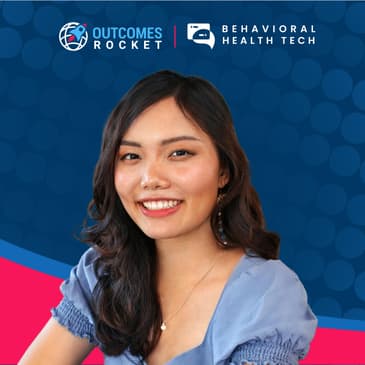
In this episode, Diana Chao, founder of Letters to Strangers, discusses how her personal struggles with mental health led her to create a global youth mental health NGO that spans 72 countries. She also discusses the power of letter writing to foster empathy and connection and the limitations of Western-centric mental health frameworks in a globalized world.
Tune in to hear how the universal power of human connection is breaking barriers in mental health care!
Resources:
- Connect with and follow Diana Chao on LinkedIn.
- Follow Letters To Strangers on LinkedIn and explore their website.
Fast Track Your Business Growth:
Outcomes Rocket is a full service marketing agency focused on helping healthcare organizations like yours maximize your impact and accelerate growth. Learn more at outcomesrocket.com
[00:00:01] This podcast is produced by Outcomes Rocket, your healthcare-exclusive digital marketing agency. Outcomes Rocket exists to help healthcare organizations like yours to maximize their impact and accelerate growth. Visit outcomesrocket.com or text us at 312-224-9945.
[00:00:33] Hey, everyone. Welcome back to another episode of Expanding Access Podcast. Recorded live here at Behavioral Health Tech Conference in Arizona. Today, I have the privilege of hosting Diana Chao. She is the Executive Director at Letters to Strangers. Such a privilege to have you here. Thanks for joining us. Thank you so much, Saul. It's my privilege and honor genuinely to be here. Thank you. Thank you. Look, very excited to be here at the conference. But what brings you to the conference?
[00:01:02] Yeah, I mean, it's quite a lucky and wonderful thing. You know, I know we're talking about lived experience here on the podcast. So I'm sure we'll have room to delve into my lived experience a bit more. But really, I'm just really grateful to be here this time to be one of the Young Innovators in Behavioral Health Awardees. And thank you. Thank you. And to have been here for my work with founding and now leading Letters to Strangers. Amazing. Congratulations on that award. Thank you. I'm really excited. Well, so what was the award all about?
[00:01:31] Yeah. So it turns out someone, I don't know who, nominated me for this award, which I'm very grateful for. You still don't know? I still don't know. What did you came out until two? Okay, okay. I have my suspicions, but you know, I don't want to be like, hey, was it you? Yeah, yeah, yeah. Yeah. But I'm really grateful because I think I've been doing this work since I was a high school sophomore. So it's been a decade now and I feel both really old in this space and really young in this space all at once because of that really weird combination.
[00:01:58] So whenever I get chances to share that validation from people who are also in this field, I really appreciate that. It's a good boost reminder as to why I'm still trying to chuggle along. I love it. I love it. And I think it's a natural flow into sharing about Letters to Strangers. So tell us about it. Yeah. So Letters to Strangers was essentially how I tried to heal myself as I was struggling with mental illness. So I'm a first generation immigrant.
[00:02:27] I moved here to the U.S. with my parents and my brother when I was about nine years old. I was born in a rural village in the poorest province of China as an ethnic minority. And so growing up in that sort of environment and having come here as immigrants with parents who didn't speak English, living below the poverty line, all of these things are not exactly mental health conducive factors. Yeah.
[00:02:50] But that combined with the fact that I had a lot of difficulties dealing with certain elements of my family being quite abusive and violent led to me receiving a diagnosis of bipolar disorder when I was 13. Later on, I got diagnosed with PTSD. It's not quite clear how that whole diagnosis situation goes. Point being, I knew that there was something I was struggling with a lot as a young teenager. And I also knew that my family was not going to be supportive of me trying to find help.
[00:03:17] So that is when I really needed to find avenues for support and growth. And people told me to write in journals, which was great, but I was kind of my own worst enemy. So I ended up writing a letter to a stranger instead. And I realized that if I could imagine someone who was exactly what I needed at the time, even though I didn't know if those people existed, you know, in the form of that stranger, I could be kind to them the way that maybe I should be kind to myself too. And so that started my healing journey.
[00:03:46] And I created Letters to Strangers as a student club at my high school after that. And over time, it's good to what it is today as the largest global youth mental health NGO in 72 countries. Amazing. Such a great story. Thank you for sharing it. And thank you for not only sharing your story, but also what helped you, you know. And so talk to us about how Letters to Strangers is helping people.
[00:04:14] Yeah. You know, one of the biggest factors for me when I found Letters to Strangers was that there was zero intention of it growing to this big NGO that it is today. It was genuinely just because something helped me find my own voice, my own potential path for healing. And I thought maybe there's someone out there who was feeling the same way I was, and this could help them too. And that is the whole starting point.
[00:04:38] So to this day, we still do our letter writing exchanges, which happens on our, like, you know, student run clubs on campuses and in communities. But we also have expanded to other things like peer education with our own curriculum, grassroots advocacy, direct service provision. So it really depends on what the community needs. But we are really trying to be that A to Z guide for people who want support from their peers,
[00:05:02] who they feel like can understand them better, especially in places where mental health is more of a culturally stigmatized and inaccessible issue. Yeah. No, thank you for that. What would you say is missing in current discussions of mental health access? You know, it's a topic that's really close to my heart, both in the village where I grew up. You know, when I was growing up, it's always really strange to think back on it, given how different the world I live in today feels like. But this is just like, you know, 20 years ago-ish, right?
[00:05:32] Like my village, we didn't even have running water or bathroom for stuff. So we had like one ditch, like one village ditch that we dug out of the ground. And that's where everyone went to the bathroom. Yeah. And that's one thing. And that's when you think about images of poverty or, you know, developing countries or like, you know, health. But that's health from a physical perspective that very much then spills over into what the health and lack of health looks like in the mental health perspective.
[00:05:59] And so for us, a big part of trying to bridge that gap is in voicing how much of today's discourse on mental health access is really restricted to just the West and developed nations. Both in terms of the types of care we're talking about, what types of care are becoming more prevalent with telehealth and those types of technological advances.
[00:06:21] But also the types of care that derives from scientific studies and learnings that were historically only done by and designed for people who are not necessarily from people who look like me. And people who I share similar cultural values as me. So to just give two big examples for that. One thing that I think is a big barrier right now to mental health access, equitable access worldwide is as we talk about bringing more tech-based mental health services to people. That's amazing and we need it.
[00:06:51] But at the same time, what principles are we basing this off of? Because if you look at the DSM, the diagnostic manual, right, used to diagnose mental illnesses, they relegate culture-bound syndromes or basically symptoms of mental illness within non-white cultures to just six syndromes at the appendix of this huge book for the entire non-white population of the world. Six syndromes. How are you going to bring this to the majority of the world and be like, oh, because I don't recognize your symptom in this book,
[00:07:18] but you and your healthcare system is using this book as the blueprint for psychology and psychiatry today. I cannot diagnose you because I don't recognize those things. So then you go away feeling unheard after trying so hard to get to see a therapist in the first place. So that's one part. And then the second part is just reality we face on the ground with our chapters. In our Liberia chapter, we hire one of the six psychologists and psychiatrists in the entire country.
[00:07:44] There are six psychologists and psychiatrists in total for a country of 5.5 million people. And we, as a team of all under 24-year-olds, when we first started the first toll-free Pan-American mental health hotline in our Liberia office, hired one of them. And so now our hotline is part of the national budget in Liberia. But it's not because we did something like so amazing and incredible, but just because that was an access gap that people didn't prioritize.
[00:08:08] And so that's just one of the things that I really hope we don't forget as the rest of the world charges forward in mental health, behavioral, technology breakups. It's a great call out, making sure that we're thinking outside of the box because the box is small and that box doesn't capture everyone. So that's a phenomenal point. How do we engage young people without coming across as pedantic? You know, it's a tough thing, especially because when we talk about the generational gap, right?
[00:08:38] Like, especially given how quickly social media technology and now generative AI is really going to change people from toddler age to my age or whatever else. It's hard to have those conversations and not feel like you're just shouting at each other and not understanding. But I think I would say the same thing about this, as I would say in any other context about just talking and supporting people with mental health concerns in general, which is our jobs.
[00:09:04] If you are talking from the perspective of someone like a parent or a teacher or whoever else who wants to be there to support this person, our job is not to be the knight in shining armor, which cannot be. And that's a good thing. It means we don't have the pressure of slaying that fire breathing dragon. But I think our job is more to be like a partner of sorts walking alongside this person as they navigate the road that they themselves want to find to heal.
[00:09:29] Because ultimately, I remember in the most deepest, darkest moments of my life, what I felt was everything in my life was going out of control. I had no autonomy left. I didn't exist as a person in any meaningful sense of the word. And if someone had just told me that they don't need anything from me, but they just want me to be there and discover things for myself because I am inherently capable of that. I am still me. I am not some disease they have to fix.
[00:09:58] I am still a person with autonomy and independence and capabilities. Even if I can't see that in the moment. And that is the sort of thing that feels real and genuine and no longer feels like you're just shouting at someone thinking I am better than you or I know more than you, which may or may not be true. But regardless, it's not really that helpful in them. Right. Yeah. I think that's a really great thing to share because many people might feel that way.
[00:10:25] You know, they might feel like you're better than me, but that's not the case. You know, and so your perspective is really, really important. Well, and sometimes it might be the case, but is it the right place to bring up if that is the case or not? I don't think so. That's the thing. No, I agree. What have you found resonates with people who are writing letters to strangers? The really funny thing about this is nowadays I have so many folks who tell me that this is their very first time handwriting a letter. Oh, does it have to be handwritten? Yes.
[00:10:55] Why is that? This is actually the thing that I've been a big stickler all that people always push back on at first. Because I realized when I first started writing letters that if I was typing them, I type much faster than I handwrite, especially as a digital native. Right. So for me, when I have to handwrite, I can't just control Z or backspace or control A delete. I have to literally sit down very slowly, write out every letter and then maybe cross it out if I think I've messed up.
[00:11:24] But it requires such careful thinking that I actually have to process what I'm going to write down before I write it down. And so in that way, it gives me more time to understand what I'm feeling and to then recognize and catch myself before I start to spiral into a very negative spiral, which I would have otherwise done in most cases. So that is what I found to be the case for so many of the young folks we work with as well.
[00:11:48] But I think at the core of it, because sometimes we do also allow letters to be typed up if it's just necessary or whatever else. The key point of these letters is just to remind people that they are not alone in this world. And our letters are not exchanged on like a pen pal basis. So it's not like I write one and then I'll receive yours and I write back to you. But instead, if we're part of the same student club, we'll have like a monthly theme and then we'll both write letters to strangers, ask strangers on that theme.
[00:12:16] And then our letters get randomly exchanged at the next meeting. Within people in the group? Yes, or with a partner site, depending on the chapter setup. And so what that means is I don't necessarily have to know what is the best way to respond to your situation because I don't know what is the best way. But instead, as I read your thoughts, I'm starting to think, hey, I see elements of this in my life too. And as you read my thoughts, you think, okay, I have no idea who wrote this. I almost want to talk back to them because that's exactly how I'm feeling. And I didn't think anyone else would feel this way.
[00:12:44] So it's through this sort of low burden, low pressure and low expectation, anonymous exchange with therapy informed guiding questions and themes that we then try to encourage people to recognize their shared humanity and build that empathy. I love it. It resonates in a big way. You're not alone. Yes, exactly. It's sort of what you're left with, right? Yeah, yeah. That's the hope. But the hope is that you arrive at that conclusion yourself rather than someone telling it. Right, exactly. Because that's when you really sort of realize it. Yeah.
[00:13:13] It's a realization, not a telling. Yes, exactly. So great. So great, Diana. So great. I love this. Look, for everybody with us that can't be here, we're doing this to help bring them into the loop. So what would you tell them as a closing thought? And where can they find you and letters to strangers to learn more? I think the fact that the audience and I myself, like we're all constantly trying to learn more about how we can be there for each other.
[00:13:40] It's such a beautiful thing. And I hope you give yourself kudos for that because it is not easy. And so that is a key thing. I want us to remember to, you know, give ourselves grace on this learning process. Yes. And if anyone wants to learn more about letters to strangers or access our free resources. So we have an online letter writing platform for people outside of the chapters. We also have free guidebooks and our curriculum and all of that. So that's at letters2strangers.org. And all of our social media is at L2S Mental Health.
[00:14:10] Only the two is the number two. So L, number two, letter S, mental health. Okay, like letters to strangers, L2S. Yeah, mental health. Got it. Mental health. Very cool. L2S Mental Health. Yes, that's our social media and the website's letters2strangers.org. Amazing. Thank you. Diana, thank you very much. And for everyone watching and listening to this, thanks for tuning in to another episode of Expanding Access with Diana Chow, Executive Director at Letters to Strangers.
[00:14:37] Make sure you check her out and check out her team in the show notes. Take advantage of today and maybe not for yourself. Maybe you share it with a friend or a colleague. Or a stranger. Or a stranger. Thank you. Or a stranger to make a difference in, as our podcast is named, Expanding Access to Mental Health. Thanks for tuning in. And Diana, thanks for being with us. Thank you, Saul. I appreciate it.
[00:15:15] This podcast is produced by Outcomes Rocket, your healthcare-exclusive digital marketing agency. Outcomes Rocket exists to help healthcare organizations like yours to maximize their impact and accelerate growth. Visit OutcomesRocket.com or text us at 312-224-9945.