
This podcast is brought to you by Outcomes Rocket, your exclusive healthcare marketing agency. Learn how to accelerate your growth by going to outcomesrocket.com
Autism advocacy is transforming perceptions and increasing awareness in various domains.
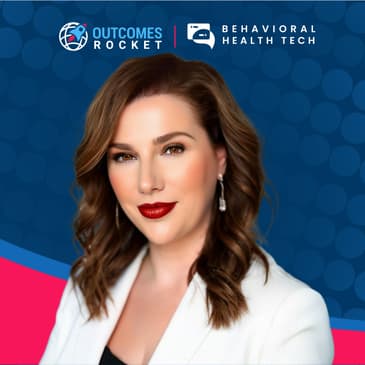
In this episode of the Expanding Access podcast, Jennifer Palumbo, a writer and advocate, at the Behavioral Health Tech Conference, shares her journey with autism and infertility, driven by raising her neurodivergent son. She highlights the importance of dispelling misconceptions about autism in the workplace to showcase the value of neurodivergent individuals. Advocacy has been empowering for Jennifer, akin to her previous stand-up comedy work, and she emphasizes humor's role in coping with challenges and making complex topics accessible through Wonder Woman Writer. Jennifer's future panel will explore neurodivergence and technology, and she encourages openness about personal challenges to reduce stigma, inviting listeners to connect with her on platforms like Forbes and Today.
Tune in to this insightful episode to learn more about Jennifer's advocacy and the power of humor in navigating life's challenges!
Resources:
- Connect with and follow Jennifer Palumbo on LinkedIn.
- Follow Wonder Woman Writer LLC on LinkedIn and explore their website.
Fast Track Your Business Growth:
Outcomes Rocket is a full-service marketing agency focused on helping healthcare organizations like yours maximize your impact and accelerate growth. Learn more at outcomesrocket.com
[00:00:01] This podcast is produced by Outcomes Rocket, your healthcare exclusive digital marketing agency. Outcomes Rocket exists to help healthcare organizations like yours to maximize their impact and accelerate growth. Visit outcomesrocket.com or text us at 312-224-9945.
[00:00:34] Hey everyone, welcome back to another episode of the Expanding Access Podcast recorded live here at the Behavioral Health Tech Conference in Arizona. Today I have the pleasure of having Jennifer Palumbo with us. Hello. She is a freelance writer at Wonder Woman Writer. Jennifer, thanks for joining. Thank you for having me. I'm very excited. We were just chatting about the fabulous people at the conference. Yes, and there's fashion. Yes, it's a very fashionable group, which is good for your mental health.
[00:01:03] I love it. So what brings you to the conference? It's funny. I had heard of the conference, but I had never considered attending just because I'm lazy. But someone reached out to me and they knew that I wrote a lot about my son who's neurodivergent. And they said this is the first year they were introducing autism to this conference, which I was really excited about. So they asked if I would interview one keynote speaker and moderate a panel.
[00:01:33] And at first I was, because I've never been to Arizona, I was a little bit like, do I want to make that trip? Because I'm on the East College. You're in New York, right? Yeah. And again, I'm lazy. But then the prospect of connecting with people that want to learn more about autism really appealed to me because I always say that too many people think Rain Man is a documentary. And if I have the opportunity to educate people about the reality of neurodivergence, I'm all about it. I love it. We're so glad you're here.
[00:02:03] Thank you. And we're glad you're doing this. It's a big need. Tell us about you and your experience. I am a series of disasters. I want to write a book called Of Course Me. Because you know how people are like, oh, why me? After a while. Of course. I'm like, of course me. I just, that's what I want to call my book. Because I feel like I've had a series of what seemingly are unfortunate events. I could go on.
[00:02:29] But the main things that I speak about the most are being diagnosed with infertility and then having a child with autism. Which, it's funny, on the surface, one's a uterus, one's a brain. And you wouldn't think they'd be related. But there's stigma around both of them. And I feel like my years dealing with infertility put me in training for when my son was diagnosed with autism. So I'm all about, it's so choosy, but I'm all about taking lemons and spiking it and making lemonade.
[00:02:59] And both these issues actually, I don't want to ever say I'm grateful for them. But they really have been wonderful in terms of connecting with like-minded people. And people who want to actually make a difference, which I know sounds corny. But as I told you off camera, I used to do stand-up comedy. I still do sometimes. But I feel like advocating around these two issues is doing stand-up, but with a purpose. Corny, but... True. I love it. I love it.
[00:03:29] Very purpose-driven. And so the education piece, I love that you said people think Rayman is a documentary. Yes. What is one of the most common misconceptions that you feel people have around diversion? I can take my son to Vegas and win a lot of money. My husband and I joke, they're like, what special powers does your son have? Like he was bitten by an autistic radioactive spider or something.
[00:03:55] But my brother-in-law, bless his heart, when we told him that Michael was autistic, he was like, oh, taken to Vegas. They think you all count cards and you're all, what, IT developers or something like that. Yeah. But there really are a lot of misconceptions around autism. And one of the biggest things that I'm hoping to dispel is that they're employable. People think you have to make all these special accommodations or that it's just impossible to hire neurodivergent workers.
[00:04:22] But all these studies and research, Harvard Business Review just did one, that they're actually very uniquely set up to like catch bugs in the system. Like they have such a specific perspective that it actually will benefit companies. So I'm trying to, that's one of my main issues is trying to change the perception. Get away from Vegas and let's look at KPNG or something like that. I love that. Yeah. I love that. That's so great. KPNG.
[00:04:47] How has being an advocate and writing about these two issues, has it been empowering to you and how has it helped your mental health? Yeah. This is huge. When I first got diagnosed with infertility, which you've known me for five minutes, but you can tell I'm pretty outgoing. Yeah. I didn't tell anyone. I was really embarrassed and ashamed being Roman Catholic and Italian. Life is a series of weddings, christenings and funerals. And to not be able to get pregnant was shocking to me.
[00:05:17] I just, I'm like, because I was told if you're like in a mild radius of sperm, you'll get pregnant and your husband will work at a gas station and your life's ruined. But when it wasn't happening, I just felt shame. And I went through a very big period of depression. I didn't want anyone to know because I felt like I did something wrong. And then the more I learned about it, that it really is a medical diagnosis and not like a personal commentary of who you are. Yeah. When the more I started speaking about it, the more empowering it was.
[00:05:46] And I think it was just better for me mentally because hiding isn't my thing. And being open. I think about something that shouldn't have a stigma. If you keep it quiet, then you're making it have more power than it should. And so I started getting involved in advocacy efforts. I'm from New York. And so I helped advocate to make service illegal in New York. It's called the CPSA Act. And there's a FAFTA bill to help access to care for IVF.
[00:06:14] And the more I advocated and spoke about it and even did comedy routines about it, the more it just felt like it didn't have its same power. And I didn't have to be depressed anymore, basically. That's great. Yeah. Tell me more about your writing and the work that you do at Wonder Woman Writer. Yes. I love Wonder Woman because I look so much like her. We have the same waist dimensions. Yeah. To me, it's... I love supporting female writers.
[00:06:42] When I first started doing stand-up comedy, there were very few, which I know sounds ridiculous. But I was always like the lone female shows. Like one time I did a show at the Friars Club in New York. And they literally... They give you the lineup for the show. And they were like, oh, we'll have Dave. We'll have Rob. We'll throw the girl up there just to break up the continuity. And then we'll have Ted. And I was just like... Like a token bookend female. Yeah. So Wonder Woman Writer helps support other female writers.
[00:07:09] And I also write for companies that usually write about difficult topics, to be honest with you. So people will contact me about kinetic testing or neurodivergent topics or sometimes just diseases because they want to make it digestible. Sure. So I put it through a filter and make it like a friend explaining kind of a difficult topic to another friend. I love that. Yeah. It's very huge.
[00:07:37] Take it from technical to you humanize it. Yeah. Make it digestible. Exactly. There was this test. It was called endometrial receptivity analysis. I know. A lot of fun. And it was all about timing. And when you do your IVF and timing. And I made the opening paragraph about a knock joke about how timing is important. And I think that's why people like to hire me because it's not so clinical and dry. It's more engaging, I hope. I like that. Yeah, no, I love the style. I love your style. Oh, thank you.
[00:08:07] You talked about the work you've done there. What advice do you have for anyone dealing with a stressful time or a stressful situation in their lives? I always talk about employing humor. When I was single and had free time, I used to volunteer at Gilda's Club. And I don't know if you're familiar with Gilda's Cloud. No, I'm not. It was founded in the honor of Gilda Radner. She was on Saturday Night Live. She was original class. Interesting. And she was diagnosed with ovarian cancer.
[00:08:36] And she and her husband, Gene Wilder, they used humor a lot to deal with the cancer. And after she passed away, they opened a series of non-for-profit homes called Gilda's Club to support either family members or people dealing with cancer. But they had something called Mugieland. For the kids. Yes. And it was all about humor. And I've done studies on it. I shouldn't say I've done personal studies, but I've researched it.
[00:09:04] And it's a really powerful tool. And I do think, like I said earlier, it takes the power away from whatever is going on if you have some sort of sense of humor about it. And I really do think you can make anything funny if you do it in a very tactful, creative, careful way.
[00:09:22] But I think using humor and I do think these topics like what we're talking about, infertility and autism, I think on the surface, people don't want to talk about them because they think, like I said, they did something wrong or I'm very open about my son being autistic. And why wouldn't I be? He didn't do anything wrong. I didn't do anything wrong. It's if you have diabetes or arthritis or anything. Exactly. And I think the more you talk about it, are open about it, maybe add some humor, it destigmatizes it.
[00:09:50] And then more people will know that they're not that different. And even today, right after the first panel, someone came, actually a couple of people came up to me afterwards and told me about a neurodivergent family member or a child. And yeah, it just makes people feel less alone. I love it. Yeah, I love it. Thank you for sharing that. And I've enjoyed our conversation. Me too. Do you have one more panel? Yeah, I have a panel tomorrow. What's that one about?
[00:10:17] It's so funny to ask that because as I was answering that, I was trying to remember the topic. I think it's actually and neurodivergence and how technology can help autism, which I'm actually very curious about. Yeah. Yeah. I love it. We certainly appreciate the work that you're doing. I hope your next panel is fantastic. Me too. For everybody watching and listening to us today that couldn't be here, what call to action would you leave them with?
[00:10:42] And where can they find you to find some of your writing and maybe some of your comedy and the work you do? Yeah. There's this wonderful search engine called Google. And if you Google Jennifer Day, J-A-Y Palumbo, you'll see I'm every woman. It's all in me. To quote Shaka Khan, I'm everywhere. I write for Forbes. I write for Today. I write. I don't mean today, although I am in the moment. But the Today Show and of many other places. So Instagram, I'm all over the place. People can find me. Yeah. Amazing.
[00:11:11] I certainly look forward to reading more of your work. Thank you. So glad that we got a chance to speak with you, Jennifer. And for everybody out there, make sure you look up Jennifer Palumbo. She's a freelance writer at Wonder Woman Writer. Sharing her experiences with us. Hopefully you don't feel as alone anymore. That's the point of today. Check her out in the show notes. We'll leave ways to get in touch with her. And Jennifer, thanks for doing this. Thank you. And thank you for doing this whole podcast because it's a brilliant thing to do at a mental health conference. Pleasure.
[00:11:40] This podcast is produced by Outcomes Rocket, your healthcare exclusive digital marketing agency. Outcomes Rocket exists to help healthcare organizations like yours to maximize their impact and accelerate growth.
[00:12:10] Visit outcomesrocket.com or text us at 312-224-9945.