
This podcast is brought to you by Outcomes Rocket, your exclusive healthcare marketing agency. Learn how to accelerate your growth by going to outcomesrocket.com
Adolescent behavioral healthcare is undergoing a transformation through innovative virtual solutions.
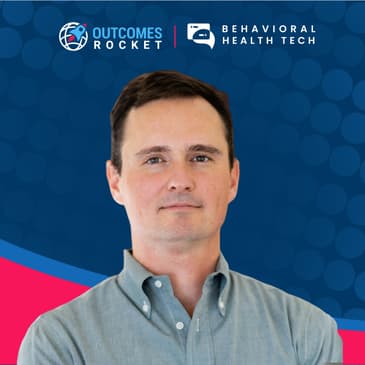
In this episode, Robert MacNaughton, co-founder and Chief Strategy Officer of Antelope Recovery, discusses how his organization addresses challenges in adolescent behavioral healthcare, including mental health deserts and stigmas against virtual care. Antelope Recovery provides virtual, personalized care for high-acuity teens, integrating therapy within their home environments and collaborating with school and healthcare providers. Robert emphasizes the effectiveness of virtual care in improving teens' real-life situations and highlights the importance of clinician wellbeing, collaboration, and sustainable practices. He also advocates for a growth mindset to continually address deficiencies in the behavioral health system.
Tune in to discover how Antelope Recovery is transforming adolescent behavioral healthcare with innovative virtual solutions!
Resources:
- Connect with and follow Robert MacNaughton on LinkedIn.
- Follow Antelope Recovery on LinkedIn and explore their website.
Fast Track Your Business Growth:
Outcomes Rocket is a full service marketing agency focused on helping healthcare organizations like yours maximize your impact and accelerate growth. Learn more at outcomesrocket.com
[00:00:01] This podcast is produced by Outcomes Rocket, your healthcare exclusive digital marketing agency. Outcomes Rocket exists to help healthcare organizations like yours to maximize their impact and accelerate growth. Visit outcomesrocket.com or text us at 312-224-9945.
[00:00:33] Hey, everyone. Welcome back to another episode of the Expanding Access podcast. We're so grateful that you joined us for this segment. Today, I have the privilege of hosting Robert MacNaughton on the podcast. He is the co-founder and Chief Strategy Officer at Antelope Recovery. Robert, thanks so much for joining us today. Robert MacNaughton- Yeah. It's really great to be here, Saul, with you here at the Behavioral Health Tech Summit. It's a lot of engagement. It's a lot more than we have time to give credit to, but I'm really happy to have this conversation with you today.
[00:01:01] Yeah, we're grateful for the work that you guys are doing and glad that we could carve out some time in your busy schedule to do this. So what brings you to the conference, first of all? Yeah, great. So everyone knows that there's a lot of challenges with health care these days. And with behavioral health care, there's just a massive dearth of services. We're in the adolescent space. We are working with high acuity teens. And there's mental health deserts throughout the United States.
[00:01:28] And so we're trying to back up where there's already hospitals going out of business everywhere. So the last thing people have availability for is behavioral health. And beyond just behavioral health care in general, we know that there are major paradigms that have to shift. We know that there's massive disruptions that have to happen. And a lot of the industry is stuck in old patterns of broken systems that we're all aware of and trying to get out of that.
[00:01:53] And really disruptive, fast growth innovation that we're seeing in a lot of the startup space is necessary. And I love being here at the Behavioral Health Tech Conference because everyone here believes in that. They believe in innovation. They see it happening. There's companies that are getting the resources they need to move forward and make the changes that have to happen. So there's hope here. There's optimism. There's good energy. That's why we're here.
[00:02:18] I love it. I love it. I feel that, too. And certainly want to better understand the progress you're creating with the team at Antelope. So tell us about the company and tell us about you. Yeah, great. So Antelope Recovery was born out of a number of clinicians that have years of personal experience, clinical experience that have worked primarily in residential and inpatient facilities. And then those facilities went out of business for all of the usual reasons.
[00:02:46] And as we looked out at where to transfer the kiddos that needed to be taken care of, there wasn't anything available. Then we looked at the various telehealth options that were out there and were frankly fairly disappointed with both their value being provided and their organizational integrity. And the refrain kept coming around. It's like we could do better than this. And my personal experience is in fast growth startup innovation.
[00:03:10] I ran a leadership development training company and do organizational development work and work with a lot of founders. So I have a lot of a lot of optimism and belief in that space. And so kind of bootstrap the belief says like, OK, let's do something a little bigger and better. So I started there. Yeah. And then we're two years in now. So we've got a lean and mean team of a dozen right now. Nice. Rapidly scaling clinical capacity because as soon as we get clinicians in, the trust is building in our referral network and they're starting to fill up.
[00:03:40] And so like variable scaling is the nature of the business. Yeah. And in innovation and a startup, a lot of people are always looking for tech innovations, tech platforms. But there's so many amazing tech platforms, especially when you start talking about AI. It's like, OK, let those companies that are well funded do that. We're going to do the hard work of figuring out how do you have operational integrity to allow capacity so that there aren't waiting lists,
[00:04:05] so that we can allow the referral networks who are still getting over the stigma of virtual care to see that we're getting delivering results. And there's a lot that we're focused on that we know creates better results. That's great. And are you guys brick and mortar? Are you virtual? Talk to us about the model. All virtual because the brick and mortar is like building a hospital. There's a lot of barriers to entry there and a lot of CapEx.
[00:04:30] It's expensive to get into that, but we're able to grow faster of being virtual and we can have we can have therapists from anywhere in the country. Yeah. And that's where the supply comes in, right? Like you address the supply issue in a really big way. Exactly. Yeah. OK. And so let's zoom into teens, which is who you guys specialize on. Why aren't teens getting the care they need? Yeah, that's a really good question.
[00:04:55] And it really boils down to access that there's I mentioned these mental health deserts, these rural areas where you barely have emergency care services in the first place. Yeah. And so the school counselors, the primary care physicians, all of those partners who are normally dealing with these problems. They trust inpatient. They trust in-person services that don't exist. And there still is a stigma against mental health services, even in those areas. There's still resistance.
[00:05:24] And in rural places of people that either don't believe mental issues really exist or don't believe therapy helps. And they certainly don't think that virtual therapy helps. But we've actually found that virtual therapy is in some ways more effective than inpatient because it's great. You know, a residential facility, if you can afford it and if you have one that has beds available, which are both hard to come by. Right. It's great. A kid's going to be able to survive. They're going to be able to get like a good schedule and good health and they need.
[00:05:53] But as soon as they're released, they go right back into their environment, which is really causative for a lot of their conditions. We do what we call embedded care. So we are in the house. We're doing family therapy, one-on-one therapy in the kid's room. We get to see the environment that they live in. That's awesome. And work with them directly. So I went off course of where your question was going, but there's a lot of problems to solve. Yeah, for sure.
[00:06:17] And I'm glad you went where you went because it really does paint a picture of meeting kids where they're at, helping them address the things that they're dealing with where they're at. Yes. And setting new anchors and new mindsets where you're at. Exactly. Yeah. I love that. I love that. There's a sentiment that telehealth and virtual care is a compromise for access and less effective than in-person care. What's Antelope's perspective here? And what's the embedded care methodology? Yeah.
[00:06:47] So as I was just saying, we have found, we do measurement-based care. We're tracking outcomes everywhere we can. And we found that we really are getting results with virtual care in an embedded, integrated, collaborative way. So when we say embedded care, we're meaning that we are integrating the relationships of all the care providers. So we're talking to the school counselor. We're talking to the primary care physician. The parents and the case workers and the judicial situations and making sure that we're, the support team is all on the same page.
[00:07:16] That we're not undermining each other at each step. Right? And by coordinating those efforts and having a case coordination and navigation strategy allows us to have a personalized strategy that really works. Now, it's like, I want to talk about personalized care for a second because you'll see a lot of solutions out there that say personalized care that really you're just meaning we're going to pair you with a therapist that we think is appropriate. Now, that's good. But when we say personalization, we need true personalization as in diagnoses are very difficult.
[00:07:46] And with teens, since their brains are rapidly developing, there's multiple diagnoses that are a moving target all the time. So we have to have a dynamic care strategy that is rapidly iterating and that has a lot of dimensionality to it. So that's why we have a full menu of the one-on-one therapy, but also the peer mentorship, the family therapy, and parent coaching. So because the parents need it. You got to equip us. We got to equip us. Right? Yeah.
[00:08:13] This is at least the joke of Cesar Millan that the dog whisperer says, he's like, you think I'm training your dog? I love that. So we have to go into the environment and allow the healing to happen there. That's fantastic. Thanks. Thanks for sharing that with us, Robert. And how does Antelope ensure clinician well-being and minimize burnout? Okay. So this is a big problem. It's like you may have heard the term compassion fatigue before, right?
[00:08:39] That there's a bit of a martyr mentality in healthcare of like, okay, I'm going to go and help the people that need help. And the pain may not be great. And then they burn the candle on both ends. And then they, it's like, you got to put the oxygen mask on yourself before you can help others. Yes. And so at the founding of Antelope, we were committed to having clinicians who are taking care of themselves and we are taking care of them so that they can give the utmost care to the high acuity teams that we're working with.
[00:09:07] And we believe that with the amount of need that's out there, that the amount of resources can come in that clinicians that work with a company like Antelope can afford to buy a house, can afford to raise their family, can afford to set a reasonable schedule so that they can actually bring the resource and kind of the energetics into the healing that needs to happen in this space.
[00:10:00] And so that's what's the thing. Tell your manager, tell the chief people officer, and so that we can be integrating that rapidly. And so feedback is a big part of our culture, because if we're not personally growing as fast as our business is growing, we're not the right people to be in those seats. So that's healthy health care is a commitment to ours. I think that's great, Robert. And how do people find out about your programs and how can people engage? I'd love if you could just leave us with how to do that.
[00:10:30] Yeah, of course. Well, so anteloperecovery.com is the easy way to do that. And so there's plenty of contact information. Of course, on my LinkedIn page, you're welcome to message me and connect with me there. Happy to get on the phone. Shelby Robbins, my co-founder and CEO, happy to talk anytime because this is a relationship business. Yeah. Right. And there's a lot of blitz scaling, fast growth companies out there who want to get to all 50 states as fast as possible.
[00:10:54] But unfortunately, the reputation of virtual care is suffering for that because the quality of services and relationships we're talking about in rural environments, people that work in the health care system that don't trust fast growth, that don't trust a lot of things disrupting the industry. So we have to rebuild trust in those relationships there and give us a call. And we want to listen to you and the challenges that you're working with and tell us and share our own ideas and see where we can collaborate.
[00:11:21] We want to get really good in our swim lane of personalized, high acuity, teen care with substance use disorder, focus on substance use and order. And the things that we don't do, eating disorders and various things, we want to have the best possible partners because it's been a theme at this conference. It's less about competition than it is about coordination. And I think that goes for all the challenges in the world. We can still take care of ourselves while collaborating and coordinating.
[00:11:46] So long way around of answering your question, Saul, but antelope recovery dot com is how you can find us. And please give us a call. Yeah. And just kind of a clarifying question for my end, Robert, are you guys B2C, B2B? Like, who are you looking to work with? Are you wanting to work with payers? Yeah. Well, it's B2C. It's a complex sales cycle.
[00:12:06] So like the at-risk teens are the client, but the customer is the parent, the caseworker, the primary care physician, the school counselor, all of these people in the network of care. And so those are really our customers of who we're trying to sell behavioral health care to, the possibility of true recovery and growth, the possibility of really having meaning in their lives.
[00:12:33] And so that the social impact here, Saul, is that like when teens don't get the help they need when they're having it, the lifespan on average decreases by 30 years when we're talking about high acuity, severe mental illness. And I personally had the experience of friends of mine that I lost growing up and people not getting the care and having to work the rest of their adult lives do that. So for the future of humanity, of our cultures, we want to give the youth the attention they need when they need it. I love it. I love it.
[00:13:03] Well, this has been a phenomenal opportunity to connect with you, Robert. What final closing thought would you leave our viewers and listeners that couldn't be here with us that maybe you want them to just leave with as a closing idea?
[00:13:15] Yeah, I think it's really that a growth mindset to use a pop psych term that we have to be hungry for seeing our blind spots, for seeing personally as leaders in our industry, in all of our systems that we have to really be starving for what's broken in our system. What are my blind spots as a leader?
[00:13:38] And in our industry, where are we not having the difficult conversations and being willing to take the risks of disruption to go to address the problems? Because these problems are solvable. I know you believe that and I believe it. And there's a lot of cynicism that can get very tired when we overwork ourselves in our commitments. So let's keep waking up and showing up and growing up and cleaning up for the future of what we all believe is possible. I love it, Robert. And just really want to say thank you for the opportunity to connect with you today.
[00:14:08] Ladies and gentlemen, thanks for tuning in to another episode of the Expanding Access Podcast. Robert McNaughton, co-founder and chief strategy officer at Antelope Recovery. In the show notes, you're going to find ways to get in touch with him and his organization to help your kids and your community get the care that they need. Robert, thanks for joining us. Thanks so much, Saul. This was fun.
[00:14:29] This podcast is produced by Outcomes Rocket, your healthcare exclusive digital marketing agency. Outcomes Rocket exists to help healthcare organizations like yours to maximize their impact and accelerate growth.
[00:14:58] Visit outcomesrocket.com or text us at 312-224-9945.