
Medication adherence is not just a transaction; it's a journey!
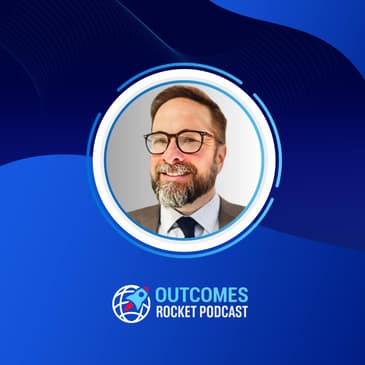
In this episode, Michael Oleksiw, CEO of Pleio Inc., discusses the complexities of medication adherence and how his company addresses emotional barriers that prevent patients from taking their prescribed medications. He emphasizes the importance of understanding the patient journey and the role of pharmacies and pharma companies in supporting adherence. Michael shares insights on the impact of their interventions, the diverse client base they serve, and the lessons learned from setbacks in the industry. He concludes with advice for leaders on maintaining focus and the importance of collaboration in healthcare innovation.
Tune in to highlight the complexities of medication adherence and the importance of understanding the patient journey!
Resources:
- Connect with and follow Michael Oleksiw on LinkedIn.
- Follow Pleio Inc. on LinkedIn.
- Reach out to Michael at Michael@Pleio.com
[00:00:02] Hey everyone, welcome back to the Outcomes Rocket. I'm so excited that you joined us again for another episode with some of the greatest thinkers and leaders in healthcare. Today, I have the privilege of hosting the outstanding Michael Oleksi. He is an innovator, a transformer, and a business builder. And his experience spans from a lot of different areas in healthcare. For the last 12 years, he's been the CEO of Pleio.
[00:00:30] They're doing incredible work helping with adherence in the U.S. pharma industry. So I'm so excited to have you here on the podcast, Michael. Thanks for joining.
[00:00:41] Michael Oleksi Great. Yeah. Hey, thanks for having me.
[00:00:42] Michael Oleksi Yeah. And we had some fun chatting about the surfboard in your office. And I said, wow, Michael, where are you from? And Michael, where are you from?
[00:00:52] Michael Oleksi I am from Montreal, home of fantastic river serving.
[00:00:57] Michael Oleksi I love it. I love it. I love it. And look, before we kick off, and thanks for joining us all the way from Montreal, talk to us a little bit about you and what got you into healthcare and into running a business.
[00:01:12] Michael Oleksi I spent most of my career in life sort of being a corporate entrepreneur and pathfinder. I had a very natural kind of career path where I was an entrepreneur through college, built a bike company, and then just got recruited into a clinical trials company.
[00:01:27] Michael Oleksi And from there, the entrepreneurial spirit kicked in, commercialized that. And then one led to another from clinical trials. I worked in CME for doctors, short stint in the fashion industry, very natural.
[00:01:41] Michael Oleksi And then from there, I got the call to join this adherence company at the time. I really didn't know much about medication adherence. And now there's very much that I do not, still do not know about medication adherence, given its complexity.
[00:01:57] So that's what makes it so fascinating.
[00:02:00] Michael Oleksi Yeah, it's definitely a complex area to work in, but also a huge opportunity to work in and improve healthcare and cost. So talk to us a little bit about what you guys do at Pleo and how you're adding value to the ecosystem.
[00:02:16] Michael Oleksi Great. Yeah. So Pleo takes a little bit of a different view to medication adherence. Understanding that it is complex. We basically take the patient view or the people view.
[00:02:26] Michael Oleksi And say that adherence and taking a medication is not just about the transaction. It's not about, can I pay for the meds and how do I take the meds? We recognize that there are emotional barriers.
[00:02:37] Michael Oleksi And the reasons people don't take their medications are many. And most of those are emotional. Loneliness, stigma, fear, et cetera. And we differentiate ourselves by really focusing on those emotional barriers.
[00:02:53] Michael Oleksi And to get to those emotional barriers, we focus on understanding what it is that basically triggers them.
[00:03:01] Michael Oleksi Yeah. And that's fascinating. So really putting together this mental and behavioral health component of a person and integrating that into the adherence process.
[00:03:13] Michael Oleksi Correct. Yeah. Our working premise is that every medication journey in one way or another is a mental health journey. And that's essentially how we look at it.
[00:03:22] Michael Oleksi Our job is to un-overwhelm a patient, connect with them as a human, and then abstract the medication from the journey.
[00:03:29] Michael Oleksi Let them think about, accept that they're facing a chronic condition, accept that they need to take a medication, and think about all the things that will unlock and how that will make their life better.
[00:03:42] Michael Oleksi And again, it's not so much about the medication or the particular event. It's about the journey.
[00:03:48] Michael Oleksi Yeah, for sure. And as you think about this differentiation, talk to us about some of the results that you've been able to help, whether it's the patient or an employer or a pharma company.
[00:04:01] Michael Oleksi What are the results you're seeing here as a result of your interventions?
[00:04:05] Michael Oleksi Yeah. So the results are really patient-centric, right? They're really, how do we do better by the patient?
[00:04:10] Michael Oleksi And obviously what cascades from there is benefits the pharma company, benefits the pharmacies that we partner with, eventually leading to better outcomes, healthier population, lower costs.
[00:04:21] Michael Oleksi But really what's at the forefront of it is we're really strong at getting patients beyond their first refill.
[00:04:28] Michael Oleksi So in other words, we instill those positive behaviors, shape those positive behaviors within 21 days.
[00:04:34] Michael Oleksi So they adopt positive behaviors. And in terms of results, what does that mean?
[00:04:39] Michael Oleksi It means at the end of the year, patients that run through our program see about an additional prescription per year.
[00:04:47] Michael Oleksi They can see anywhere between 20% to 30% improvement in persistence, which is significant to the patient because it means that they're taking the medication that their doctor prescribed for them.
[00:04:57] Michael Oleksi And it's got all of those cascading effects for like a pharmacy.
[00:05:02] It means that their patient is coming back into the store. It's forging a better relationship with their pharmacist. It really has a cascading effect.
[00:05:10] Michael Oleksi That's great. And so the benefits are all there. Who are you guys mainly working with? Who's your client base?
[00:05:17] Michael Oleksi Our client base is pretty diverse, but essentially we'd like to say we basically will be anywhere where a patient sits on the corner, a patient and a medication intersect.
[00:05:27] Michael Oleksi But the bulk of our work is really with helping pharmacies extend care beyond their walls, essentially, and helping pharma companies get closer to the patient and helping those patients get closer to the brands and the manufacturers that we work with.
[00:05:44] Michael Oleksi Again, on medications that have been prescribed for them. We're not a marketing company, right?
[00:05:49] Michael Oleksi Our purpose is strictly on getting patients to continue to take the medication that their doctors have prescribed for them.
[00:05:55] Michael Oleksi So the primary two constituents are pharmacies and pharma companies.
[00:06:00] Michael Oleksi However, that definitely extends well beyond to employer groups, payer groups.
[00:06:05] Michael Oleksi Even there's even potential to look at what we do in the realm of clinical trials.
[00:06:10] Michael Oleksi So our beachhead is really pharmacy and pharma companies.
[00:06:14] Michael Oleksi Love it. No, that's great.
[00:06:15] Michael Oleksi So walk me through some short kind of one of each scenarios, like for our pharmacy listeners,
[00:06:21] Michael Oleksi What benefits could they gain and for our pharma listeners as well?
[00:06:27] Michael Oleksi So if you look at a pharmacy that partners with us, we essentially, again, become an extension of the pharmacy, strictly focused on adherence, strictly focused on keeping patients on the prescribed med.
[00:06:38] Michael Oleksi So for a pharmacy, we essentially receive pharmacy data.
[00:06:42] Michael Oleksi We know about the patients.
[00:06:43] Michael Oleksi Once they've been prescribed that med, they meet their pharmacist, they're educated on the medication, they find themselves at home.
[00:06:50] Michael Oleksi They're alone.
[00:06:51] Michael Oleksi And that's the point at which they receive an outreach from us, a call, a text, a mail.
[00:06:57] Michael Oleksi Usually the primary contact is human, peer to patient.
[00:07:01] Michael Oleksi And what we essentially do is they're sitting in this kind of trough of disillusionment, right?
[00:07:05] Michael Oleksi They've been informed.
[00:07:06] Michael Oleksi They've got their diagnosis.
[00:07:08] Michael Oleksi They're sitting there with their med and it's a what do I do now type situation.
[00:07:11] Michael Oleksi And that's where we basically come in and start to talk to those emotional barriers, get the patient to take a step back, to take two forward.
[00:07:19] Michael Oleksi So to the pharmacy, the impact of the pharmacy is we get to extend the reach.
[00:07:24] Michael Oleksi We help the pharmacist work to top of license.
[00:07:28] Michael Oleksi The pharmacist gets to do what they do best, given all of the constraints and all of the pressure on pharmacy.
[00:07:34] Michael Oleksi So we relieve some of that pressure.
[00:07:36] Michael Oleksi But in relieving some of that pressure, I mentioned earlier, we extend the reach of pharmacy.
[00:07:41] Michael Oleksi Well, we drive that patient back to their pharmacy with refills, which leads to greater in-store loyalty, which leads to the halo effect.
[00:07:50] Michael Oleksi Not just the targeted medication, but all of the other meds that are in their basket because we've essentially changed the mindset and behavior of that patient.
[00:07:58] Michael Oleksi And then very similar on the side of the pharma company that's sponsoring these programs.
[00:08:04] Michael Oleksi We're educating the patient in terms of the materials that are available to them.
[00:08:10] Michael Oleksi We're helping, again, un-overwhelm them, break things down, understand in a personalized fashion what's most important to each patient so we can guide them to the best tools and resources that the pharma companies have put together.
[00:08:22] Michael Oleksi Pharmaceutical agencies, pharma manufacturers put together a lot of information, but just like the clinical information that's available from the pharmacy, it can be overwhelming.
[00:08:32] Michael Oleksi So there too, we drive the patient to the right tactics, the right tools that are best for them.
[00:08:38] Michael Oleksi As I mentioned earlier, for the pharma company, the benefit essentially is the increase in fills and the stickiness on the prescribed bed.
[00:08:46] Michael Oleksi That's great. No, I really appreciate those two scenarios.
[00:08:48] And on the pharmacy side, I was curious, do you white label it or is it just play-o and does it even matter?
[00:08:55] Michael Oleksi Yeah, no, it's a great question.
[00:08:56] Michael Oleksi Because we're all about that human experience, peer-to-patient, we want to focus on the emotional barriers.
[00:09:01] We don't want distractions.
[00:09:03] So our program is always white label.
[00:09:06] It assumes if we're talking about a patient support program by a pharma company, we will assume the name of that program.
[00:09:14] We, again, without overwhelming the patient, we want to keep it as simple as possible.
[00:09:18] So we're always white label.
[00:09:20] Michael Oleksi Very cool.
[00:09:21] Michael Oleksi Yeah, I was just curious.
[00:09:22] It makes sense, but I wasn't sure.
[00:09:24] And the less of the making of the pie, the better for the patient in my mind.
[00:09:31] So cool to hear that's the route.
[00:09:32] Hey, look, I mean, as you've been at this for quite some time now, as you guys have been building the business and delivering value to the end stakeholders and patients,
[00:09:42] what's one of the biggest setbacks you've seen and a learning that's come out of that that's made you guys better?
[00:09:47] Yeah, I think one of the great things is we learn every day.
[00:09:50] There are a couple of setbacks, quasi setbacks.
[00:09:53] There was this big movement toward digital everything that happened around COVID.
[00:09:59] And one of the learnings we had was, well, we realized that all of our engagement numbers essentially shot up,
[00:10:06] even though less patients were going to pharmacy, simply because the need for human action grew.
[00:10:11] But one of the setbacks we saw was pharma was shifting toward all digital tactics.
[00:10:16] They created digital health groups, digital teams.
[00:10:19] And the thinking was, let's just text the patients.
[00:10:24] And now there's a trend toward let's go anything AI.
[00:10:28] Let's go hit that took us.
[00:10:30] That essentially had the industry take a step back from being human.
[00:10:33] But it was a very temporary setback.
[00:10:35] We're seeing that wave turn again as essentially there's a realization that technology is not an end all.
[00:10:41] But, yeah, I wouldn't say setback per se, but probably a little bump in the road, right?
[00:10:47] Yeah.
[00:10:48] In terms of the mindset.
[00:10:49] Yeah, for sure.
[00:10:51] And that was how the market works.
[00:10:54] The trends come and go.
[00:10:55] And some things stick and they could challenge our businesses.
[00:10:59] But it's just staying through the course.
[00:11:02] And what's one thing that you'd give as a tip to other leaders listening to the podcast, Michael,
[00:11:08] on what helped you guys endure that and break through the temporary trend?
[00:11:12] I think with us, it's always a question of focus.
[00:11:15] We're a highly focused company.
[00:11:17] We've been successful, largely working by word of mouth for well over a decade.
[00:11:21] I like to think of us as a 10-year-old startup because we have that startup mentality.
[00:11:25] We're very agile.
[00:11:27] We move quickly.
[00:11:28] But the 10-year-old part is we deliver.
[00:11:30] We're predictable.
[00:11:31] Our customers have been with us for a very long time.
[00:11:34] But in terms of advice, I would say stick to your swim lane.
[00:11:37] Commit to it.
[00:11:39] It doesn't mean you don't innovate.
[00:11:40] You definitely innovate in doing things better within your defined space.
[00:11:44] It doesn't mean that you don't pivot.
[00:11:46] But as best as possible, you stick to your swim lane.
[00:11:49] Stay true to yourself.
[00:11:50] And quite frankly, determine what your core value is and do the best with it, quite frankly.
[00:11:57] I think there's a lot of we don't chase trends.
[00:12:01] And I think that's been critical.
[00:12:03] It's worked for us.
[00:12:03] And quite frankly, through the course of my career, that focus has served me well.
[00:12:08] That's great, Michael.
[00:12:10] Great advice for all of us.
[00:12:12] Let's stick to our swim lane.
[00:12:14] And when those trends come by, don't get seduced.
[00:12:18] There's definitely a coming and a going of that.
[00:12:21] Really appreciate that, Michael.
[00:12:23] Look, fascinating work that you and the team are up to at Playo.
[00:12:27] For everybody listening that may want to engage or learn more, where can they reach you?
[00:12:33] And what closing thought would you leave them with?
[00:12:35] In terms of reaching us, always welcome folks to check out our website.
[00:12:39] We're very open.
[00:12:40] We could always reach out to me, michael at playo.com.
[00:12:43] Very simple.
[00:12:44] Parting thoughts are there need to be more discussions like this.
[00:12:47] I think it's always great when different companies, different innovators and leaders get to speak
[00:12:53] to what they do in open conversation, as opposed to overt, call it marketing.
[00:12:59] I do think the exchange of ideas and concepts just makes us all stronger.
[00:13:03] My parting thought is when we embarked on this journey, we always said as part of being in
[00:13:07] our swim lane that there is no silver bullet to solving the adherence problem because it
[00:13:12] is complex.
[00:13:12] And how we solve the problem is by really collaborating well with others.
[00:13:17] So my parting thought is I would love to see more collaboration in this industry and more open
[00:13:23] discussion around problem solving because fact of the matter is there's a lot of room for
[00:13:27] businesses and there's always room for innovation.
[00:13:30] That's awesome, Michael.
[00:13:31] What a great way to close and couldn't agree with you more.
[00:13:34] Folks, Playo is P-L-E-I-O.
[00:13:38] So definitely look them up.
[00:13:40] We're going to leave ways to get in touch with Michael as well as the company in the
[00:13:45] show notes.
[00:13:46] So all the information will be there.
[00:13:49] Thank you all for tuning in to another outstanding interview on the podcast with Michael Olexi,
[00:13:55] CEO of Playo.
[00:13:57] Michael, thanks so much for joining us.
[00:14:00] Yeah.
[00:14:00] Thanks again.
[00:14:01] It was a good time.
[00:14:02] Thank you.