
In order to ensure a fair and accessible future, it's imperative to cut down on healthcare expenses.
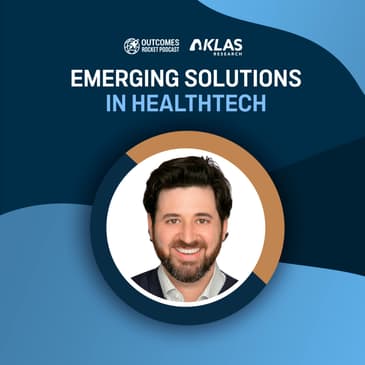
In this episode, Dan Wilson, founder and CEO of Moxe Health, discusses how their team unlocks the power of clinical data to drive payment and operations. He shares how Moxe is making it easier to share data and insights, which ultimately drives down costs and improves care. Throughout this conversation, Dan unravels Moxe's mission to forge interoperability in healthcare tech, streamline payer-provider relationships, and, most importantly, drive affordability for all. His unique approach sidesteps the typical jargon of software talk and zeroes in on solving real-world problems with human empathy and innovative technology.
Get ready to understand how Moxe is not just a software platform but a beacon for collaboration and efficiency in the complex world of healthcare.
Resources:
[00:00:00] Hey everybody and welcome back to the Outcomes Rocket.
[00:00:05] I'm super excited about this series that we're doing in collaboration with class to recognize
[00:00:12] the top achievers in health care technology.
[00:00:18] Class put together a list of top 20 emergency tech awards that they showcase that health.
[00:00:25] We were excited to meet many of the companies and really just wanted to collaborate in sharing
[00:00:30] the success and value that all of these companies are creating in the health care ecosystem.
[00:00:36] Join me in the series of interviews where we recognize the top 20 emergency tech awards.
[00:00:42] Hope you enjoy learning about them because you could both learn what to do for your
[00:00:46] business but also as a provider and a payer learn how to scale solutions within your
[00:00:53] organization.
[00:00:54] Thanks for joining me and I hope you enjoy this interview.
[00:00:57] We've been at conferences, HIMS, Vive and it's nice to be back at home chatting with today's
[00:01:04] outstanding leader.
[00:01:06] I want to introduce Dan Wilson to you all.
[00:01:08] He is the chief executive officer and founder of Moxie.
[00:01:14] Dan oversees their growing organization ensuring that their strategy aligns with
[00:01:18] their mission evolving needs to make change happen in the health care industry.
[00:01:24] Dan, welcome to the podcast.
[00:01:25] So glad to have you here.
[00:01:26] Yeah, I appreciate the opportunity.
[00:01:27] Absolutely.
[00:01:28] So do we folks.
[00:01:29] Dan and I had a chance to meet at HIMS two HIMS ago.
[00:01:32] It was a short meet and greet so it's really great to be here with him for an extended
[00:01:36] interview.
[00:01:37] Dan, just anybody that hasn't had a chance to get to know you, tell them a little
[00:01:41] bit about yourself and also what got you into the health care business?
[00:01:45] Yeah, sure.
[00:01:46] So I grew up in the Detroit area which is where I am today and got my certain
[00:01:51] health care back in high school.
[00:01:53] I'm not sure that you think when you're sending those bills to your FSA administrator
[00:01:56] wondering why they got denied.
[00:01:58] That was me for a couple of summers and so I guess that was maybe my first
[00:02:02] foray into health care, but falling into it later was a bit more circumspect.
[00:02:08] So I ended up after school going out and moved to Wisconsin, worked at Epic.
[00:02:13] So got started on the provider medical record side of things and was there for about
[00:02:19] four years or so before leaving to start Moxie.
[00:02:22] So over the last decade or so I've spent time getting to understand
[00:02:27] different parts of the ecosystem.
[00:02:29] Today we work mostly with health plans and health systems so it's very much
[00:02:33] focused on how to help those two groups work more effectively together.
[00:02:37] I love it.
[00:02:38] I love it and had a chance to meet a lot of bright minds that spent
[00:02:42] that time in Wisconsin at Epic that have built interesting and
[00:02:46] super value added companies.
[00:02:48] And so definitely excited to dig into the findings that you've got going on at Moxie.
[00:02:54] So Dan, tell us about Moxie.
[00:02:56] What are you guys doing?
[00:02:57] How are you adding value to the health care ecosystem?
[00:02:59] I think you can think about where we sit from a couple of different vantage points.
[00:03:02] One would be interoperability.
[00:03:05] So we certainly fall into the camp of interoperability businesses in the sense
[00:03:09] that we're very focused on data exchange.
[00:03:12] What probably makes it a little bit different is that we're very focused
[00:03:15] on how to use data from medical records to support payment and operational use cases.
[00:03:21] If you think about most of the effort is focused on treatment use cases,
[00:03:25] provider to provider.
[00:03:27] That's really been the focus for a couple of decades.
[00:03:30] Our point of view is really coming in saying we digitized all this data
[00:03:34] and yet we still have not seen the kind of the return as taxpayers,
[00:03:41] as patients from all that energy.
[00:03:43] And really looking at how can we use the data in these EMRs to drive a more efficient
[00:03:49] by which we mean lower cost health care system.
[00:03:51] The North Star is affordability.
[00:03:53] It's very much how do we think about ringing out waste and excess costs?
[00:03:58] And the way that we're thinking about that, what we work on every day is,
[00:04:01] really how do you collapse cost out of the middle of the payer provider relationship?
[00:04:06] And how do we take a look at all the decisions that are being made countless times a day
[00:04:12] using frequently phone calls, the faxes, maybe claims data to try to adjudicate a decision?
[00:04:20] How do we take a look at each of those different jobs to be done
[00:04:23] and reimagine them around the use of EHR and clinical data, clinical workflow?
[00:04:29] And really what that creates then is a much more timely.
[00:04:34] So you can think about clinical data is available very quickly as opposed to claims data,
[00:04:38] which might have a long lag time.
[00:04:41] It's native to how a clinician is thinking and working.
[00:04:44] So all the friction we put on providers to translate what they're doing with a patient
[00:04:51] to fit a billing kind of protocol, we're trying to offload all of that complexity.
[00:04:59] Ultimately, it really is looking at how to make more effective decisions
[00:05:04] around how we pay for health care using clinical data.
[00:05:08] Love that. Yeah. And let's talk about applications, right?
[00:05:11] How is this being leveraged?
[00:05:13] Are we talking addressing approvals?
[00:05:16] Give us some examples of the applications.
[00:05:19] Yeah, I think that's another very good point.
[00:05:21] I think in the interoperability landscape, we don't talk about use cases nearly often enough.
[00:05:27] And so we are a very use case specific company.
[00:05:31] And the areas that were most focused would fall into risk management,
[00:05:36] so risk adjustment, underwriting, things that generally would allow you to quantify your risk.
[00:05:41] Quality program administration.
[00:05:43] So those could be things like HEDIS and STARS, it's formalized programs.
[00:05:46] But there's countless quality programs and measures that are run
[00:05:50] where clinical data is really critical to have a good accurate picture of what's going on.
[00:05:56] And then we do a lot around payment integrity, revenue integrity.
[00:05:59] So those would be two sides of the coin of effectively accurate payments,
[00:06:03] making sure that you've got a clear sense of what was done, how it should build, so forth.
[00:06:09] Beyond that, you mentioned utilization management.
[00:06:11] We do support UM authorization type workflows.
[00:06:16] Those are kind of other examples of kind of...
[00:06:19] We would almost put it...
[00:06:21] We think about it in the same lens of kind of the payment revenue integrity.
[00:06:24] It's an accurate payment question.
[00:06:25] It's kind of an access, and can you get people into the right program?
[00:06:28] Are they supposed to have that intervention?
[00:06:31] And so there are really programs around quantifying risk
[00:06:35] and then intervening to buy down risk.
[00:06:37] And we would support kind of use cases within each of those broad buckets.
[00:06:42] And so really what we're doing is we're going to health plans
[00:06:46] and looking at all the different places that today
[00:06:50] they're looking to use clinical data in their kind of core operations.
[00:06:55] And then we're giving them a much more efficient way to do that.
[00:06:57] And then at the same time, we're going to provider organizations
[00:07:01] and saying, look, the amount of data that you're needing to share with health plans
[00:07:05] is only increasing.
[00:07:06] It's relevant across all these different use cases.
[00:07:09] There are very few tools to help you manage that.
[00:07:12] You want to have access control logic running.
[00:07:15] You want to understand where data is going.
[00:07:17] You look at all of the different compliance requirements, regulatory requirements,
[00:07:22] security from a data breach and understanding where your data is actually being sent.
[00:07:28] All of those are different requirements that you as a health system or provider organization
[00:07:33] have to be monitoring and worried about.
[00:07:36] We give them software to help them do that without additional staff.
[00:07:41] And in fact, many cases are able to reappropriate staff to other places.
[00:07:46] So it really is a look at how we can create value to both the payer and the provider
[00:07:52] through the use of this software around these very specific programs.
[00:07:56] That's really great, Dan.
[00:07:57] Appreciate the use cases.
[00:07:58] That helps a lot, right?
[00:07:59] It helps put a good understanding around how these could be leveraged, your platform.
[00:08:05] And then the other thing that I was curious about is,
[00:08:08] so did you guys start with providers and then go to payers or was it the other way around?
[00:08:14] It was a little bit both.
[00:08:16] Oh, so it was with both?
[00:08:17] Really from the onset, the origin of it is that when originally I started,
[00:08:23] I was initially very interested in the Medicaid market.
[00:08:27] And I was really looking at kind of Medicaid expansion and this idea that
[00:08:31] there were very few tools being built for providers in the Medicaid market.
[00:08:35] And I'd had an opportunity to work with a number of federally qualified
[00:08:39] health centers, FQHCs and other safety net type organizations.
[00:08:43] So I was very fixated on this idea of how could we create
[00:08:46] software to scale the great work that they do because there is so much
[00:08:52] resource constrained on those providers in particular.
[00:08:56] And I had coming from Epic, I've looked at a number of these organizations
[00:09:00] either want to buy Epic and not be able to afford it or perhaps buy it,
[00:09:06] but then really struggle to support and bear the cost of that system.
[00:09:11] And so it was very important to me that if we were going to do this,
[00:09:15] we did it in a way that was not going to put a lot of financial strain
[00:09:18] on these providers.
[00:09:19] I didn't want them up to pay for anything.
[00:09:21] And so the initial kind of focus was going to manage Medicaid
[00:09:25] and seeing if I could get them to cover the cost of putting software
[00:09:29] into the provider office to help them, the provider operate more efficiently.
[00:09:34] And the general thesis was if they can take better care of your members
[00:09:39] is everyone better off?
[00:09:41] And that evolves to what we do today.
[00:09:44] So it was in working with those managed Medicaid groups and understanding
[00:09:47] what were the specific use cases that they were very interested in paying for
[00:09:53] that also had a corresponding value to the provider.
[00:09:56] If we could automate that workflow way and by value, not just taking away work,
[00:10:01] which I think is important, but also driving revenue, which these groups need.
[00:10:06] And so that is really what formed the focus to go to market was
[00:10:10] what are these use cases that are ultimately valuable to both sides?
[00:10:14] And I think there's this narrative not undeserved that this is a payer versus
[00:10:19] provider kind of market and you can serve one, but you're really look at
[00:10:23] that as a very cold war mentality.
[00:10:26] As a community, as a group of people who are all consumers of health care
[00:10:29] and effectively we're all paying for health care one way or another.
[00:10:33] We should expect more and demand more.
[00:10:36] And there's certainly pockets of this happening, but our mindset is a
[00:10:41] in the cold war mentality and how do we work collaboratively together?
[00:10:45] And there's a way for both sides to benefit.
[00:10:48] I love that you can't know this.
[00:10:50] Yeah, you can't have a scenario where everyone benefits.
[00:10:52] So there's got to be a loser in the model and our kind of
[00:10:55] approaches to look at all of those different middlemen who are not
[00:10:59] adding sufficient value and figuring out how to make life a little
[00:11:03] more unpleasant for them to make life better for the payer and the provider.
[00:11:07] I love it.
[00:11:07] And then also quickly as patients and members.
[00:11:10] Yeah, no, good stuff, Dan.
[00:11:11] I appreciate that.
[00:11:13] And thanks for sharing the origin story there where it started.
[00:11:17] Are you guys still working with the FQHCs?
[00:11:20] We have a handful.
[00:11:21] I think we ended up finding constantly looking at how we can get back to it.
[00:11:26] I think where we ended up getting pulled pretty quickly was when you look
[00:11:29] into the payer landscape at least a couple of years ago.
[00:11:32] I think this is still the case, but it certainly was a couple of years ago.
[00:11:36] Risk adjustment is the program that gets a lot of the interest.
[00:11:42] And in many ways you can look at a lot of the investment going on in the market
[00:11:46] right now as either directly or indirectly tied to risk adjustment.
[00:11:49] So we got pulled into the risk adjustment world and risk adjustment
[00:11:53] is certainly relevant in the Medicaid market, but it's very relevant
[00:11:57] in the Medicare market commercial too.
[00:11:59] But so we ended up working with kind of types of insurers and provider groups,
[00:12:05] not just FQHCs, but they will always hold a special spot.
[00:12:10] For sure.
[00:12:11] Yeah, Dan, we'll really appreciate the backstory on how you guys started
[00:12:15] and the shift to risk mitigation.
[00:12:18] Talk to us a little bit about what you believe makes you guys unique in the
[00:12:22] market. What's different about you guys?
[00:12:23] The biggest thing is probably that while we are a software company,
[00:12:27] we don't talk like software people and we don't come at it from an IT focused lens.
[00:12:35] I think that in healthcare, we don't do enough to commingle what the business
[00:12:41] is trying to accomplish and value to the business with the fact that
[00:12:44] technology is incredibly necessary to support good operational practice.
[00:12:51] And usually we're talking about like, you sell the IT, do you sell to
[00:12:56] the business?
[00:12:57] My answer is more business, but we certainly need to work with both.
[00:13:01] This is ultimately going to be a project and a software that will
[00:13:05] fall within the IT landscape.
[00:13:06] And so when we're talking about how we compete, we're usually being
[00:13:10] bucketed with legacy services businesses because the way we talk
[00:13:16] about problems and the way we solve problems is encompassing of a complete
[00:13:19] end-to-end.
[00:13:21] But then we also get grouped in with the software because if you
[00:13:24] wanted to put a lot of time, energy and consulting energy into a
[00:13:30] software product to try to tune it to what you needed, you could also go that path.
[00:13:35] So we sit and straddle these two worlds.
[00:13:38] And I think a large part of that is my general point of view on healthcare
[00:13:42] is that very few problems worth solving are software or technical problems.
[00:13:47] This is ultimately an industry in a field that is all about human service
[00:13:52] and connecting with individuals and empathy and a whole bunch of terms
[00:13:56] that we don't think about as being software related terms.
[00:14:00] And I think that perspective has been taken and brought to the way
[00:14:04] we think about solving all these problems, which is a heavy dose of
[00:14:07] software and technology and a heavy dose of humility, service and trying
[00:14:12] to solve out the entire problem.
[00:14:13] And that, I think, creates something a little bit unique and novel.
[00:14:17] It's a large part of why I think we've been able to actually sit
[00:14:20] between the payer and the provider and not be a payer business or provider
[00:14:27] business.
[00:14:27] We really are thinking about both.
[00:14:29] And if you have to set some constraints in order to do that, and I think
[00:14:33] the way that we've defined our problem and our problem space and the
[00:14:36] approach we've taken has created something that's unique.
[00:14:39] Yeah, for sure.
[00:14:40] And yet it is interesting that you say that then because you're right.
[00:14:43] Like it's either one or the other.
[00:14:45] And a lot of the companies that we either work with as clients
[00:14:48] or have on the podcast, they either serve one or the other.
[00:14:52] And it's very rare that you serve both.
[00:14:55] Yeah, it's all about being an enigma, right?
[00:14:56] Hard to define.
[00:14:57] But I think the problems that are worse solving sit in the middle of a
[00:15:02] whole bunch of mark, whether it be between payer provider between IT and
[00:15:06] ops, we're trying to always find those places where the system is
[00:15:10] inefficient because of the friction between these different silos.
[00:15:14] The opportunity to make the system more efficient is to remove
[00:15:16] the friction that everyone else has ignored.
[00:15:19] And ultimately, we're all this question of who is a payer and who is a provider?
[00:15:24] I don't even know what that means anymore.
[00:15:26] Everyone wants to bear risk.
[00:15:28] Everyone needs to manage risk.
[00:15:30] And I think it is there's a much larger opportunity to be had by just
[00:15:34] saying, look, our objective is to be an infrastructure that makes the end
[00:15:39] to end workflow efficient.
[00:15:42] We know there are going to be multiple stakeholders along the way,
[00:15:45] multiple people who have different jobs to do.
[00:15:47] We're going to support all of you.
[00:15:49] We're not going to require that you all be under one company, one P and L,
[00:15:53] one align set of management, but we're going to allow you to have that
[00:15:57] efficiency.
[00:15:58] And I think that creates a very forward looking view on what our
[00:16:01] healthcare ecosystem is shaping up looks like today, but will continue to look like.
[00:16:06] Yeah, no, I appreciate that, Dan.
[00:16:08] And what happens?
[00:16:10] This is something I really love to ask transformative businesses
[00:16:14] like yours, what happens before and after?
[00:16:16] So talk to me about somebody comes to see you and things look a certain way.
[00:16:22] Then they get Moxie going.
[00:16:25] And now what do things look like?
[00:16:27] So there are not surprising a bunch of vantage points on that.
[00:16:31] So I'll start all the way from the payer side and I'll take
[00:16:35] to the provider in the back.
[00:16:37] So today what's happening is that the payer is running some kind of process.
[00:16:43] They're paying a claim.
[00:16:44] They're, they're trying to look at a population of people they covered.
[00:16:48] And ultimately they're running some analysis off of claims data and
[00:16:53] deciding that they need to go and look at a medical record.
[00:16:57] And so at that point systems all hit pause.
[00:17:01] Things are pending and they're effectively going and dropping into a
[00:17:05] manual process to try and go get a medical record.
[00:17:08] Maybe there's a person logging in because they have remote EHR access.
[00:17:11] That's rare, but does happen.
[00:17:13] Many times this is picking up a phone calling and asking for somebody to fax your record.
[00:17:19] And maybe they've got a call four or five, six, seven times to get that.
[00:17:23] So you've got now what's happening on the other side.
[00:17:26] Well, there's somebody over at a health system who's getting those four,
[00:17:29] five, six calls.
[00:17:30] And what's happening right now is the volume of those calls is increasing
[00:17:35] because there are so many new programs where a payer wants to go and look at data.
[00:17:41] And so the amount of volume of requests is skyrocketing.
[00:17:45] So what you're seeing is that health systems historically, I'm using health
[00:17:48] systems interchangeably, but really any provider organization has had this
[00:17:52] function, the release of information department is typically sits within their
[00:17:57] HIM department and they are responding to all these requests over the last
[00:18:04] a couple of decades.
[00:18:05] This has just been a slow and steady increase of volume.
[00:18:08] And many organizations have decided we're just going to outsource that to some
[00:18:12] other vendor.
[00:18:13] And so either they're outsourced or they're managing it themselves, but either
[00:18:16] way, there's a lot of people involved in the process.
[00:18:19] So that's the current state.
[00:18:20] When we come in, basically 100% of that is eliminated.
[00:18:24] So when the payer decides that a medical record is required, which can be
[00:18:28] triggered by a person or by just a system process, they make a call
[00:18:33] into our software and then our software is determining whether or not
[00:18:38] that request is allowed to get a response.
[00:18:41] And so this is now looking at what are all the reasons why a provider
[00:18:44] would or would not permit electronic access to that information?
[00:18:49] And it can be a very nuanced set of rules, but effectively we're evaluating
[00:18:53] the request just like that person would have done.
[00:18:56] And then we're connecting into the core provider systems and automatically
[00:19:00] responding with the subset of the information that the payer needs.
[00:19:04] And so usually when a provider organization flips on this software, it
[00:19:08] is literally just work disappears.
[00:19:11] One day to that's beautiful.
[00:19:12] And yeah, no, there's no user interface for most of them.
[00:19:16] And then from the provider point of view or I'm sorry, from the plan
[00:19:20] point of view, a lot of things just speed up because now the data
[00:19:25] that they're looking for that penned in the process they have is
[00:19:29] pending for like seconds and now the data they need to continue
[00:19:32] is put into their system.
[00:19:33] And so you're getting a much faster cycling.
[00:19:37] What that looks like in the real world, in many cases,
[00:19:40] denials go down, payments accelerate where providers are bearing risk.
[00:19:47] They are the amount of energy going into reporting and justifying
[00:19:51] the conditions that they're managing that kind of disappears.
[00:19:55] So you have a compliance lift, you have a revenue kind of impact.
[00:19:59] You have a speed to revenue impact all because you're now sharing the data
[00:20:04] required much more quickly and with very little kind of ongoing work.
[00:20:11] We have a couple of other tools, but they all follow that lens.
[00:20:14] We're really looking at how do you just evaporate and ultimately
[00:20:18] do it in a way that benefits everyone involved.
[00:20:20] That's awesome, Dan question.
[00:20:22] Just really appreciate the way you laid that out.
[00:20:24] It made a lot of sense.
[00:20:26] Just automating the entire process, creating the data pipes and approval layers
[00:20:32] to make everything seamless.
[00:20:34] So does do both sides have to have the software?
[00:20:37] What if a provider decides to do it this way and a payer doesn't have it?
[00:20:42] Talk to us about that.
[00:20:43] How would it work in that instance?
[00:20:45] Yeah.
[00:20:46] So you didn't know this.
[00:20:47] That's a great tee up.
[00:20:48] We actually have rolled out a new kind of version of the software this year,
[00:20:52] which were early kind of handful of clients are using and we're going to be
[00:20:57] focused on pretty, pretty as aggressively as the right word.
[00:21:02] But it's in direct response to that topic.
[00:21:04] So we had these providers saying this is wonderful.
[00:21:08] All this work goes away, but we have all these requests we're still getting
[00:21:12] from plans that you don't work with yet.
[00:21:15] And so we've extended the software where there now is a user experience
[00:21:19] that HIM department can use where effectively when these requests come
[00:21:23] in via different channels is to wreck them into the software.
[00:21:27] And then again, it drops into this automation and then delivery.
[00:21:31] And so it is a, it continues to be not quite a total evaporation of effort,
[00:21:36] but you're effectively talking about uploading a request into the software
[00:21:40] and then processing what we've done even more recently is recognizing
[00:21:44] that there is still some work to upload the files.
[00:21:47] Is we've now actually rolled out a service to do all that for the health system.
[00:21:52] So now for these health systems and provider groups who say, I don't even
[00:21:56] have anyone to manage the release of information process at all, or I want
[00:21:59] to fully take it away.
[00:22:00] We actually now have a team who will do all that for you leveraging the software.
[00:22:05] So we're able to provide a much different experience, a much more modern
[00:22:09] kind of forward looking approach to ROI than is typical in the industry.
[00:22:15] But that's our solution then to help a provider organization automate
[00:22:19] with all health plans and even beyond health plans.
[00:22:22] So this next version of the software that we're putting out now also connects
[00:22:25] you into their requests coming from lawyers and life insurance and the
[00:22:29] federal government, and we can manage all that as well for you.
[00:22:33] And then for the payers, there is no need for them to work with us
[00:22:37] because when we then send them this data from the provider, if they're
[00:22:40] not set up with the software, they don't get it.
[00:22:43] If you're using the software, you can pick your formats.
[00:22:45] You can directly route it into whatever other tools you're using.
[00:22:49] There's a lot of benefit to using the software in terms of getting
[00:22:53] the data in an optimized format for you.
[00:22:56] If you're not doing that, we still give you the documentation
[00:23:01] effectively as a very clean PDF document, which is an improvement
[00:23:06] to how they're typically getting it today.
[00:23:08] That's just a small baby step improvement.
[00:23:10] So we can then, because it's a PDF, everyone in these health plans
[00:23:15] has an infrastructure for absorbing a PDF and then putting it into their
[00:23:19] infrastructure because that's what they're set up to do today.
[00:23:22] The benefit is that plans can get up and running with effectively no IT
[00:23:26] lift because you're just talking about approving one more group
[00:23:30] to deposit a folder or file to you.
[00:23:34] And so we've tried to really make it as simple as possible for both
[00:23:37] sides to begin participating, but then increase their investment in time
[00:23:43] and energy as they're receiving value.
[00:23:45] So you almost use the return on investment from your initial efforts
[00:23:50] to justify continuing to invest in improving the connection with us,
[00:23:54] which then compounds in value.
[00:23:56] I think there's too many solutions out there where it's a do a ton
[00:24:01] of work up front for questionable value.
[00:24:04] We've tried to take a very different approach of until you see the value,
[00:24:08] we're going to keep your investment very small.
[00:24:10] And then as you get value, we'll grow with you and we'll take the risk
[00:24:15] that we can continue to supply more benefit to you tomorrow
[00:24:18] and strengthen that relationship.
[00:24:19] And so our version of going at risk is just to earn your business
[00:24:24] every day by adding more value than we did yesterday and use that
[00:24:28] to strengthen and build a relationship over time.
[00:24:30] Yeah, Dan, thank you.
[00:24:31] Sounds like a great partnership model built into a very attractive tech stack.
[00:24:36] So I really appreciate you walking us through that.
[00:24:37] I always love the pre and post because it really helps you understand
[00:24:40] the value being delivered.
[00:24:42] And you did just such a beautiful job of explaining that.
[00:24:44] Oh, well, I appreciate it.
[00:24:45] Yeah, there's way too many things that coming from him's and a couple
[00:24:49] other shows, right?
[00:24:50] You walk the room and you're like, I don't have any idea what you
[00:24:52] actually do.
[00:24:53] Thanks for forcing us to explain it in real time.
[00:24:56] Absolutely.
[00:24:57] Absolutely.
[00:24:58] And folks, as you're listening to this episode, you got to be thinking,
[00:25:01] where do I sit in this picture?
[00:25:03] And what am I doing?
[00:25:04] What is my organization doing?
[00:25:05] If you're a payer or provider, this is a difference maker.
[00:25:09] And today we need partners like Dan and his team at Moxie to help
[00:25:14] make that lift a lot lighter.
[00:25:16] Staffing continues to be an issue.
[00:25:18] We need to find ways to take cost out of the system.
[00:25:21] So definitely some pearls here being laid by Dan.
[00:25:25] Dan, look, we're here at the end.
[00:25:27] So I'd love to just ask you to leave our listeners with a call to
[00:25:31] action and then if something resonated with them today, what's the best
[00:25:35] place they could get in touch with you and the Moxie team?
[00:25:38] Sure.
[00:25:38] I would say call to action is focus on how we're going to make
[00:25:42] this system more affordable.
[00:25:44] There is no silver bullet to that problem.
[00:25:46] And at the end of the day, we need a lot of people lined up with
[00:25:51] that as a North Star.
[00:25:52] And I think we spent a lot of time as an industry talking about triple
[00:25:56] quadruple aim and this kind of magical idea that we can be both lower
[00:26:01] cost, higher quality and more accessible and more user friendly.
[00:26:05] And I think we need to work on all of those things.
[00:26:09] Those are all very ambitious in their own right, let alone kind of one
[00:26:14] effort solving all of it.
[00:26:16] And so my call would be, let's make affordability kind of the top of
[00:26:22] the pyramid.
[00:26:23] And I think that absent an affordable healthcare system, we don't
[00:26:26] have an equitable health system.
[00:26:28] We don't have an accessible health system.
[00:26:30] And I don't have a lot of concern that the wealthy in the country will
[00:26:33] be able to afford health care.
[00:26:34] We are going to continue to have that option, that right.
[00:26:37] And I'm much more worried that as we continue to have costs that
[00:26:43] are arising, that we will have to make some very hard tradeoffs
[00:26:47] around who gets what.
[00:26:49] I'd like to see us avoid that outcome by focusing now on anything we
[00:26:54] can do to ring out cost.
[00:26:55] Anyone has ideas on that?
[00:26:57] I'm always down to spitball and think creatively about things
[00:27:02] not directly related to what we do.
[00:27:04] I love talking about this stuff and anyone with a fun idea on taking
[00:27:08] costs out of system, I'm supportive of.
[00:27:11] And so in terms of how to get in touch, I'm not very good at
[00:27:14] this stuff like the socials are not where I live and die, but I
[00:27:18] do generally monitor LinkedIn's LinkedIn messages are probably
[00:27:20] pretty good Avenue and certainly email.
[00:27:24] Yeah, I try my best to get back to happy to be in touch with anyone.
[00:27:27] Amazing.
[00:27:28] Hey, Dan, really appreciate that folks will leave ways to get
[00:27:31] in touch with Dan and Moxie health in the show notes.
[00:27:34] So definitely make sure you take action on anything that may have
[00:27:39] struck a chord with you or maybe made you a little uncomfortable.
[00:27:42] If we did make you a little uncomfortable, that's probably good.
[00:27:45] It's probably good.
[00:27:45] That means we got to do something about it.
[00:27:47] That were you going to say something that.
[00:27:49] No, we should all be uncomfortable.
[00:27:52] What a ridiculous set of issues we're all dealing with.
[00:27:55] And if you can wake up every day and say that it was a normal day
[00:27:59] and everything makes sense, then I don't tell me where you're
[00:28:03] working in healthcare because it's crazy.
[00:28:05] And so I think we need to, if you're going to do this, you
[00:28:07] got to be comfortable with the uncertainty and the being
[00:28:10] uncomfortable.
[00:28:11] And we ultimately need to work to change the system and
[00:28:14] change its heart and scary and all those things and yeah,
[00:28:17] embrace discomfort.
[00:28:18] Love it.
[00:28:18] Great close, Dan, really appreciate it.
[00:28:20] And folks, thanks for listening to and watching our interview
[00:28:24] today with Dan Wilson from Moxie health tune in next time.
[00:28:28] And Dan, thanks for being with us.
[00:28:29] I appreciate it.
[00:28:29] So