
Unified enterprise systems are no longer back-office upgrades in behavioral health. They are essential infrastructure for access, workforce stability, and financial resilience.
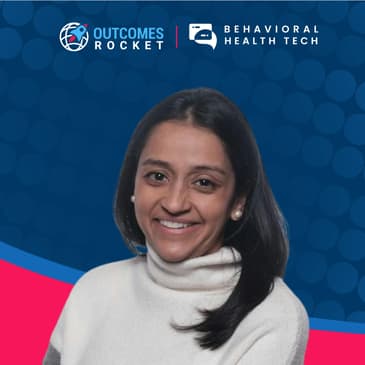
In this episode, Tasneem Sanwarwalla, Director, Healthcare Presales at Workday, explains why behavioral health organizations need a unified platform that connects HR, finance, and operations in real time. She highlights how fragmented systems contribute to burnout, limit visibility, and force leaders to rely on outdated data for critical decisions. Tasneem shares how modern platforms enable better workforce planning, scenario modeling, and early detection of staff strain while aligning staffing, care delivery, and financial performance. She also discusses how AI can reduce administrative burden by automating repetitive tasks and allowing clinicians and leaders to focus more on people than paperwork.
Tune in and learn how unified systems and thoughtfully applied AI can help behavioral health organizations scale access, support staff, and make better decisions.
Resources:
[00:00:01] Welcome to Expanding Access, a podcast by Behavioral Health Tech, where we explore the cutting edge of mental health, substance use, and autism and IDD care. Each episode features insightful conversations with industry leaders who are driving real change through technology and innovation. Whether you're a provider, payer, or just passionate about expanding access to behavioral health care, you won't want to miss these stories. Let's dive in.
[00:00:29] Hello, everyone. I'm Solomay Timaboo, your host for the Expanding Access podcast, and I am so excited. Thank you so much, Tasneem, for being with us today. Can't wait to learn more about your experience and just a lot of cool stuff that you're working on at Workday. In fact, why don't we get started with just how did you get into this space? Yeah, absolutely. Thanks so much for having me. I'm really excited to be here.
[00:00:55] So I've been at Workday now for 10 years and have always been in a lot of the learning and management space. And so 10 years ago, I had an opportunity to make the jump to Workday and really focus on selling ERP, which has been a really fulfilling journey for me. Started out in really doing all things Workday. And then in the last three years have really focused on the health care space.
[00:01:19] So I now lead our health care solution consulting team, which comprises of our HCM or human capital management solution consultants, our financial solution consultants, as well as our supply chain team. And really responsible for making sure that we're supporting the needs of all of our different health care customers, everything from acute care to behavioral health.
[00:01:41] And I've been really fortunate to be able to work with individuals like you and some of our thought leaders in the space in terms of our customers and being able to work with them to hear and understand what they want to be able to accomplish, what are the outcomes that they're looking for? And then how Workday can really fit into that tech stack and the ecosystem so that we can ensure that we're helping them reach those outcomes in the best way possible. Wow, that's a lot. I mean, you've got HR, finance, health care.
[00:02:10] I mean, of course, you've been involved in helping hundreds of health care organizations really, I guess, modernize their operations with enterprise technology. But can you share from your perspective why a unified tech platform is really a must have for behavioral health and specialized fields like behavioral health?
[00:02:32] Absolutely. A unified technology platform is so necessary because the pressures on these organizations really just sit at the intersection of people, operations and finance. And those intersections or joints are usually where the weakest spots are, right? And that's where those fragmented systems really fail. And when I think about behavioral health organizations and their ability to put the right clinician in front of the right patient at the right time,
[00:02:58] while also making sure that they're financially profitable, you need to be able to see where is demand growing or shrinking? How do staffing patterns affect margins and access to care? And then which programs and locations are sustainable? Which ones need redesign? And without that single system, leaders are really making those high stake decisions off of spreadsheets and oftentimes old lagging data. It's also super important for the employee experience.
[00:03:25] We here at Workday believe that happy employees lead to happy customers. And I think that's true in the health care space as well. Happy employees lead to happy patients. And fragmented systems really do create burnout for the employees and they don't create a great experience. Multiple sort of layers within that. Managers don't have a clean view of capacity or overtime or burnout risks, which could lead to overtime vacancy hotspots, high turnover.
[00:03:52] It also means that HR and operations oftentimes can't really understand where they need to invest in from a retention standpoint or where they're really losing clinicians. And losing a clinician, as you know, it's not just an HR or financial issue. It directly impacts the continuity of care, which is so important in this space. And then I think ultimately I would say that for clinicians, we want to make their job as easy as possible.
[00:04:18] And so manually logging time entry, not having a clear view into their schedules. They've got multiple logins. I just think about even in our sort of day-to-day, like we expect modern consumer-grade experiences and we want to create the same thing for our clinicians in the back office. I would also add to that there's a lot of regulatory and quality requirements and we want to make sure that there's consistent auditable data.
[00:04:42] When people, data, org structures and financials all live in different systems, it can be a risk, right, in terms of compliance, being able to reconcile the data. Leaders can't pull together quality or outcomes. And so how do you really ensure that they're auditing and making sure consistent processes exist across different entities and locations? And I'll share just an example.
[00:05:06] We had a customer community services group and it was really critical for them to combine their HR and financials because they knew that they needed that single unified platform so that they could have a single source of truth where they could make decisions and more importantly, have access to real-time data where they could drill down into the details so that they knew exactly what was happening within their financials as well as within their HR. And then lastly, I'll just say, you know, demand patterns are also constantly shifting.
[00:05:34] So whether, you know, you're adding a new service line or expanding through mergers and acquisitions or adding new locations without a unified platform, planning is really difficult as well. And you're kind of looking in the rearview mirror instead of being able to look forward and do more scenario modeling, like what if we were to add an outpatient program or what if payers cut rates? All of that links directly to headcount and cost, which is, right, HR and finance.
[00:06:01] And so with a unified system, that really all becomes possible because you've got your plans, your budgets, your org structures and everything in the same system. That's a great overview of so many risks of having just all these disparate systems. And I loved what you said earlier. It's like making sure providers are set up to support getting the right clinician to the right patient at the right time. And that's what a lot of them want to be focused on.
[00:06:28] But at least for many of the smaller community-based providers on the finance side, a lot of them are still running their entire organization on just a modge podge complex web of spreadsheets. And so when margins are thin and reimbursement rates are shifting, can you talk a little bit about why a manual approach to financial management and planning is, of course, pretty dangerous? And what could an alternative look like?
[00:06:58] Yeah, absolutely. Well, I'll start out by saying that if you are managing on spreadsheets today, you are not alone. There are definitely many organizations that are doing that today. But it is dangerous because you're really making pretty high-stakes decisions on stale data that potentially could have errors in it. And I think about spreadsheets. There's static snapshots depending on when that data was pulled down, when they were built. It could be days old or weeks old.
[00:07:23] Actually, there's this funny commercial, if you've watched, where there's a bunch of analysts sitting in a boardroom and they spend the first 10 minutes trying to figure out which version they should all be looking at. It's like, are you looking at version 10? Are you looking at version 10.5? Is it 10.5A? And so by the time they actually even agree on the latest file, there's probably another version that they're getting emailed right then, right? And so there's the risk of the fact that it's already outdated data.
[00:07:49] And then every chance you get where you manually are exporting data, you're copying, pasting, you're dragging sheets and cells down, there's a chance for error. Broken links, calculation errors. I know I spent a lot of time building pivot tables in a past life. And one little mess up in the way that you copy-paste that data and it could change all of your different reports that you've built out. So I think there's a lot of risk there.
[00:08:15] There's also a number of assumptions that people built into their Excel sheets. And again, depending on who built it, whether it's finance, it's HR, and what are the assumptions that are being put in there, it could be the difference between profit and loss. So there's that risk, too, of having different individuals who are pulling this data down with those different assumptions. And then, again, we talked about the fact that there's just static data and usually it's at an aggregate level and doesn't really have a lot of drill-down capabilities, right?
[00:08:42] So even when we do pull some of these pivot tables and do VLOOKUPs and all the fun formulas that I'm sure people are familiar with in Excel, you still can't get down to sort of the core data, the transactional data which you get in an ERP system. And so you want to be able to drill down and get to the revenue data or the cost down to clinician or program. And so in cases when you are making these decisions, that granularity is actually quite important. And I mentioned scenario planning previously.
[00:09:12] In spreadsheets, it's really hard to do real-time scenario planning. Each of these scenarios require manual changes, formulas, assumptions. And so this is where, you know, most organizations end up doing this quarterly or annually because it is so labor-intensive to pull all of this down. But with a single unified platform, you can actually do this at any point in time. And a mental health organization that we work with actually had a massive web of different spreadsheets that they were using.
[00:09:41] But with Workday Adaptive Planning, they now are able to do more forward-looking what-if scenarios. And they're actually able to do that live during meetings. And so when there are community crisis or they see a surge or influx of patients, they can actually see exactly how they can plan out for headcount or for demand planning and examine those future scenarios and what that should look like.
[00:10:05] So really helpful to have that real-time visibility versus kind of static spreadsheets that are probably already old as soon as you save them as the 10.5a. That is so relatable. Like, God knows my team has experienced me creating 15 versions of, like, the same doc even. Absolutely. Yes. You were just about to talk about demand.
[00:10:30] Just the demand for behavioral health care, of course, is at an all-time high and continues to rise. Can you talk a little bit more about what, say, a modern platform for HR and finance can do to help organizations that are managing this growing demand for behavioral health services? Yeah, absolutely. I really come back to that intersection and where that disconnect often exists, which is between the people you have, the services that you need to deliver, and the money that it takes to really sustain those services.
[00:10:58] And so, as you said, first challenge, demand is up, right? Meanwhile, talent is scarce. Burnout is real. And traditional headcount views don't really tell you if you have the right skills and licensures where you really need it. And so, what you need is to be able to have a single real-time view of your workforce, and that includes their roles, their credentials, their locations, what does the schedule look like across the enterprise?
[00:11:25] And so, it's really moving beyond just job titles to skills-based visibility so you know which clinicians and staff can support the specific populations and the care settings that they're actually enabled to participate in. And so, once you understand the skills that you have, you can identify the gaps. For example, I need a child psychiatrist in a specific market. And then you can figure out how do you want to close those gaps. Is that through recruiting externally? Is it through internal mobility?
[00:11:54] Or do you just need to do some additional training for the clinicians that you do have on staff? And then, as demand grows, right, it's revenue opportunity. So, organizations are adding programs, they're adding sites, they're adding different modalities. And so, again, you need to be able to do workforce planning and financial planning. So, you come back to planning, right, and understanding the numbers, the types of staff required.
[00:12:19] But also, it's super important to understand what is financially stable and sustainable once the staffing and the overhead are fully loaded. And so, again, having financials, HR, and your operational metrics in a single consistent model is super important. You want to be able to give your leaders P&L views by program, service line, location, and being able to know where the growth is actually healthy, where potentially there's margins that are being eroded, right?
[00:12:46] Like, are your clinics and your different programs profitable? Because that is important. And then driver-based planning and forecasting. So, if payer rates change or if you expand virtual care, what kind of impact do you see on that, on both financial performance as well as from a staffing perspective? So, it means that organizations are able to expand into the right places with the right services with a clear understanding of how that's going to impact their bottom line. Super helpful examples.
[00:13:16] And a little related to this demand topic is on the provider side, there is compassion fatigue. It's really a major risk to patient care, not just a buzzword. And it seems when you talk to a lot of providers, they're finding out that someone has been struggling only during an exit interview.
[00:13:38] And so, maybe you could talk a little bit about how, if and how, a modern HR platform can allow leaders to listen to their staff in real time, learn about issues rather than waiting until it's too late. Yeah, absolutely. I think, again, traditionally, it's been exit interviews or annual sort of reviews where people are given the opportunity to provide that feedback.
[00:14:03] But more and more, we're moving into what I would say, continuous learning and listening instead of the one-off surveys. And if we wait till the annual engagement survey or an exit interview, as you mentioned, that dissatisfaction is already entrenched or they're already taking action on that dissatisfaction. And we want to address that as soon as it becomes prevalent within an individual or an organization. And so, short sort of pulse surveys are a great way to do that.
[00:14:31] Here at Workday, we have what we call PECON, which is really the employee voice, which gives us an opportunity on a weekly basis to really get quick feedback on what's happening within the organization so they can be tailored questions. It can also be sort of a set of rotational questions so that we understand if we do know that there are systemic problems that we're hearing about, that we're addressing those.
[00:14:54] And again, the idea is that if we have a single unified platform, those surveys are already embedded in the same system that people are already using. So it's not something else that they have to go out to to provide their feedback. It's I'm looking at my paycheck and then right here, there's a nice little banner that tells me, hey, provide my feedback. So it's already within my daily work and it's not something separate that I have to do.
[00:15:15] And then I think most importantly, it's not just the being able to share that feedback from an employee standpoint, but actually leadership and the organization at large being able to see those results in real time. Again, with real time reporting and dashboards, it's not a slide deck that's being put together like here are the results of our annual survey. But HR as well as leaders can see those trends as they're starting to happen.
[00:15:41] And if there's a major organizational change, again, send out a pulse survey, know how the team is feeling about it, and then be able to pivot and react as appropriate to make sure that the individuals within the organization are feeling like they're getting the support that they need. So, you know, there's the getting the data from those individuals, but then the data itself also becomes the voice of the employee. So not just seeing the survey results, but also looking at time and scheduling data. Are there spikes in overtime?
[00:16:09] Are there a lot of shift swaps happening? There may also just be a rising number of transfers out of certain teams or high regrettable turnover that we're seeing in specific roles or locations. So a lot of these could be early signs of workload management or maybe culture issues that we want to address. And so because, again, all of this data sits in one platform, you can really surface these patterns quickly. And you've got the context of here's what we're hearing from our employees.
[00:16:38] Here's what the data is telling us. And I'll give you another really interesting example. We actually had a customer who used the scheduling data to pull out the fact that they were not seeing a lot of individual. They were having trouble covering the night shift. People don't want to take the night shift. And if they were getting the night shift, they were trying to swap out of it. And so they did a targeted survey around that. And what they found was that people didn't feel safe walking to their cars at night. They found that the lighting wasn't great.
[00:17:05] And so what they as a company were able to do is to add more lighting to the parking lots and the pathways. And then they added more of those safety call booths so that people felt safer. And so they actually listened based on the data and then sent out a pull survey to be able to understand why were they seeing this change in data. And then they were able to actually take action on it. I think that's a great story of what they were able to do with that information. Really good example to bring that to life. Thank you.
[00:17:33] And Tasneem, I have so many more questions for you. But how are we already running out of time? I can't not ask you about AI. So if I may, there is a lot of anxiety around AI, particularly in behavioral health. Will it dehumanize care? From where you sit, how can AI actually protect this human element of behavioral health by just taking over the administrative tax part? Yeah, absolutely.
[00:18:00] I know there's a lot of noise out in the market around AI, but AI should not replace the human relationship. It's really about protecting it. And the way that we do that is really simple. It is that AI should absorb that administrative tax so clinicians can give their time and attention back to the people, not the paperwork. So what does that really mean? I'll dive into it a little bit more. You know, behavioral health clinicians spend enormous amount of time on administrative tasks that don't really require any expertise, right?
[00:18:29] It's like manually entering time, hunting for policies and benefits, going through credentialing and background checks, making sure their licensing is up to date, mandatory trainings, and so on and so forth. And so with AI in a modern platform, what we can do is help them auto-populate and do a lot of these HR and time data things where then it's sort of managed by exception rather than having to manage everything that's going through. So only the exceptions are flagged.
[00:18:58] Additionally, tracking licenses and certifications centrally, right? And then having AI really trigger workflows based on if something is expiring or there's action to be required rather than somebody having to continuously go in and make sure that they're checking on those things. And then I think even from a learning standpoint, a training standpoint, tailoring that based on your role, your location, the population that you serve.
[00:19:24] And so because this platform knows you as an individual, it knows, again, the role that you're in, the location that you sit in, and so forth. Instead of sort of blanketing out general requirements, AI can sort of say, okay, well, we know exactly who you are and what is the training that you need and let us serve that up to you in a way that's very easy for you to consume and is not something that you're having to go out and find for yourself to make sure that you're compliant.
[00:19:52] And then I think ultimately all the time that they're going to save not having to go into these different systems and digging around and trying to make sure that they're staying administratively compliant, because we do know that that is important, is time that they can spend with their patient. And staffing and scheduling is also a huge pain point. And I think one of the biggest contributors that we see to burnout in behavioral health.
[00:20:14] And so having AI on top of a unified HR, financials, and time platform really means that we can recommend staffing patterns and balance the demand for clinician capacity, labor costs, so leaders aren't having to spend so much time manually trying to figure out who has capacity, who worked last week, who has PTO. So it's the AI is going to take care of that for you. And then furthermore, it's going to optimize those schedules based on certain requirements and exceptions, right?
[00:20:43] If there's back-to-back acuity or there's going to be long commutes in between different sites, things like that. And then ultimately, if there are individuals who are getting overscheduled, it can help identify what are those patterns, what are the gaps where we may need to either, again, recruit or train internally to get more people in with the right skill set, because we're not just looking at role, but we're understanding the individual and the skill set that they bring.
[00:21:10] So, you know, again, a big part of the administrative burden is really just understanding what's happening, right? Pulling the reports, looking at the data. And so with AI in a unified platform, you've got proactive insights into, you know, what I just mentioned, overtime, turnover risk, absence patterns. We talked about engagement when we've got a pulse on the employee voice and then being able to also manage by exception. If there are anomalies, we can flag those and we can make sure that we're addressing those.
[00:21:39] So by making people analytics, if you will, more predictive and self-serve, we can shift our leaders to, you know, more problem solvers and being able to strategically think about how they're running the business versus spending time building out reports and decks and things like that, which could be stale, but really looking more real time at the data. So, again, AI is never going to replace the human connection.
[00:22:03] It's really about reducing that administrative friction so that clinicians can be more fully present with the people that they're serving. And when AI is embedded thoughtfully into the workflows, staffing, scheduling, compliance analytics can actually all really protect that human element of care because it's giving time and focus back to both the caregivers and the patients. Thank you so much. Yes, I mean, people heal in relationships.
[00:22:32] So wonderful insights. I've learned so much and I'm sure our audience has as well. Thank you so much, Tasneem, for joining us today on the Expanding Access podcast. Absolutely. Thank you so much for having me. It was such a pleasure. Thanks for tuning in to Expanding Access. We hope you're feeling inspired by today's discussion. If you've enjoyed the episode, subscribe and share it with your network.
[00:22:57] For more content and opportunities to get involved in transforming care, visit BehavioralHealthTech.com. Until next time, let's keep pushing boundaries and expanding access together.