
Finding the right behavioral health provider can be surprisingly difficult, even with hundreds of thousands of practitioners across the country.
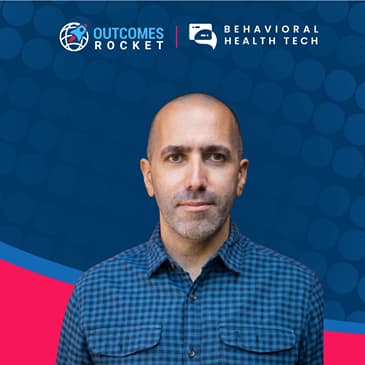
In this episode, Jaffer Traish, Chief Operating Officer at findhelp, talks about the challenges of making behavioral health services easier to find and navigate. He explains why social care and behavioral health need to be integrated into a single workflow and how fragmented, outdated provider directories can create unnecessary barriers to care. Jaffer also discusses the problem of “ghost networks,” where provider listings may no longer reflect who is actually available, and why greater transparency, accuracy, and accountability are needed. Finally, he shares how better matching, closed-loop referrals, and more integrated search tools could help connect people with the care and support they need.
Tune in to hear how findhelp is working to build a more connected and transparent approach to behavioral health access!
Resources:
- Connect with and follow Jaffer Traish on LinkedIn.
- Follow findhelp on LinkedIn and explore their website.
[00:00:01] [SPEAKER_01] Welcome to Expanding Access, a podcast by Behavioral Health Tech, where we explore the cutting edge of mental health, substance use, and autism and IDD care. Each episode features insightful conversations with industry leaders who are driving real change through technology and innovation. Whether you're a provider, payer, or just passionate about expanding access to behavioral health care, you won't want to miss these stories. Let's dive in.
[00:00:30] [SPEAKER_01] Hello, everyone. My name is Solomay Tibibubu. Thank you so much, Jaffer, for joining us today. I can't wait to share your story and the amazing work that you do with FindHelp. Again, we are here on the Expanding Access podcast where we're focused on all things expanding access to high quality mental health, addiction, IDD care, and more. And so this topic is super relevant. Why don't we get started with just a little background about who you are and how did you get into this space?
[00:00:59] [SPEAKER_00] Well, first, thank you so much for having us. It's a real pleasure, and we're really excited about the work happening in this space. A little about me. My name's Jaffer. I've knocked on doors in community health for many years. I've worked in state unemployment offices.
[00:01:14] [SPEAKER_00] I've worked side by side with doctors and nurses using digital health records for the first time, testified in support of privacy to support people's social care records. And community health and wellness really is the long journey. I was probably most influenced by my mother, who was a social worker at the oldest psychiatric hospital in the country for nearly 30 years. So looking to provide our small impact on the world.
[00:01:40] [SPEAKER_01] That's amazing. What a great story and entrance into this space. And in fact, I know you've been doing this work for a long time, even at FindHelp. Why behavioral health and really why now?
[00:01:53] [SPEAKER_00] It's a great question. We've spent the last 16 years really focused on social care and free and reduced cost services and helping people connect with dignity and ease, as is our mission. But we realized that many of the staff that we're helping across the country in their navigation are also looking for behavioral health resources at the same time and in the same workflow.
[00:02:15] [SPEAKER_00] And about 137 million Americans live in a federally designated mental health shortage area, HPSA. And only 20% or so of that need is currently being met in those areas. And of 60 million or more that had a mental illness in the last year, roughly half never received any treatment. So there's a lot of challenges that we have to overcome.
[00:02:41] [SPEAKER_00] At the same time, digital and mental health teletherapy platforms are growing really fast. There's a lot of confusion on where to find the best practitioner, how to get a good match. And at the same time, there's over 700,000 of these practitioners in the country. So we know that there's a lot of help out there. The digital connection process is what we've been great at and what we want to contribute to helping in this space.
[00:03:08] [SPEAKER_00] And I'd say, Solomay, banking has solved this, consumer goods, the airline travel, health records. If any of these sectors can become digitized with front doors and improve search match comparison, we can definitely do it in outpatient behavioral health.
[00:03:24] [SPEAKER_01] Wow. Those numbers are just really astounding. I mean, for our listeners who aren't on video, you can't see, but literally, oh, maybe it's because either lack of video or too much Botox. But my eyebrows are like to my hairline as I'm hearing Jaffer talk about these stats. It's really asinine that here we are in 2026 with the kind of crises we have and still this lack of access to care.
[00:03:50] [SPEAKER_01] I'm curious, though, FindHelp's approach to this issue is bringing together a single place to finding social care and behavioral health. Now, why is that important that care teams have this single spot for finding both social care and behavioral health?
[00:04:09] [SPEAKER_00] Social needs and behavioral health needs have been tightly intertwined for the same people and for clinicians for as long as there's been those challenges. If we can put them into the same workflow for a helper or for a person in need, we can remove a lot of friction. A good example is in Medicare Advantage. Roughly one in four enrollees had a mental illness diagnosis and at least one health-related social need.
[00:04:35] [SPEAKER_00] So people are not experiencing these challenges in isolation and they impact each other. Social vulnerability is associated with a higher prevalence of certain mental health and substance use disorders and in some cases even lower treatment rates. And conversely, untreated behavioral health can make it harder to maintain housing, employment, or even food security. So imagine if you have to find these services entirely separately. You're logging into different platforms.
[00:05:05] [SPEAKER_00] You lose context as a navigator or a social worker helping someone. The follow-up, the closed-loop tracking of did someone show up to an appointment becomes fragmented. Each of those steps makes it harder to really not only serve someone but then prove the work that you're doing is valuable. Probably many of your listeners are aware of Medicaid waivers and initiatives like CalAIM in California or ACOs, accountable care organizations that are serving behavioral health.
[00:05:33] [SPEAKER_00] And they're developing models to serve people with these services together, which is really a whole person care approach. So a website where you can just download a file with names and phone numbers of therapists, that's existed for a long time. We've got to move past this and into the digital age. We just happen to call it OneSearchAllServices. So that's part of the work that we're doing to bring these services together.
[00:05:58] [SPEAKER_01] OneSearchAllServices. Love it. And I might have jumped the gun earlier. I was talking about access, but is access the issue? Is capacity the issue? Or is even knowing what happened in the situation the issue?
[00:06:13] [SPEAKER_00] We see all three, just different scales of the problem depending upon where you live. In some regions, there are a very limited number of practitioners. In other regions, wait lists go on for months because of this. For some visits, the documentation is happening in hundreds of different tools by small practices, and the information never gets back to the care team. We have a lot of experience solving these types of challenges in the community organization space where the same barriers exist.
[00:06:41] [SPEAKER_00] And we're looking to apply what we've learned to provide good tools, documentation, and tracking to start bringing an open network to what we call the helpers, the navigators, and the seekers, the people in need. But again, it's important to recognize that in some places, there's plenty of practitioners, but no easy way to find them and make a good match. In other cases, there just aren't enough, and there's limited supply. So we have to really take a community-level approach, a local approach to solving this challenge,
[00:07:11] [SPEAKER_00] just as much as we can digitize the information.
[00:07:14] [SPEAKER_01] Yeah, really good examples. Now, I know what you're saying. I can't imagine all that goes into it, but it is definitely not easy. That is something I know for sure. So tell us a little bit about the strategy. I mean, we know it's hard to make a national provider directory already.
[00:07:32] [SPEAKER_00] It definitely is. And if we pull back the curtain a little bit, today, there's very much a pay-to-play environment for the hundreds of thousands of licensed practitioners. Meaning, if you want to be promoted and be found by people, you might pay any number of sites to be promoted. They might have different fees and prices to be put at the top of the list, depending upon where you're promoting your practice. And those sites may not keep your information current, or you may not,
[00:08:02] [SPEAKER_00] and they may not decide to participate with everyone. It's kind of like if you're selling cars on 10 websites, but you already sold a few, you might not go back and keep the information current. It's a rudimentary metaphor, but again, it makes it hard to sift through the noise and find the practitioner you need. There's a term for this in the industry. It's called a ghost network, meaning a network where there's ghosts of listings still around, which actually aren't available to serve someone. So we want to add transparency.
[00:08:30] [SPEAKER_00] We want to add accuracy and accountability to this open network where it's not necessarily pay-to-play. And I think we can do this nationally. We have to find good partners to do this work with, those that keep practitioner information current, have update requirements, have good information about the practitioners, their treatment modalities, who they serve, capacity, approach, cost information. All of that's important when making a good match. So we're getting started.
[00:09:00] [SPEAKER_00] We've already selected a few partners, which will allow us to get to about 300,000 of these 700,000 in the country. And that's a big start. The government is also focused on building a national directory of clinicians, but not so much focused on the therapy space. They're more focused on traditional medicine. So there's a big gap and we think we can work to fill it.
[00:09:22] [SPEAKER_01] That's remarkable. And I think so many of us, even just listening in like myself, even that can relate to the pain and frustration of the ghost network piece. And so this is just critical work that you're doing. I'm curious, just as a follow-up, as an aside, how you've seen the impact to care providers versus payers, health plans? Absolutely.
[00:09:49] [SPEAKER_00] There's a different persona that's looking for these practitioners. Meaning, if you work at a payer that predominantly serves the Medicaid population, you may be looking for that limited number of therapists, for example, that can serve your Medicaid population. And that's really where you want to drive folks who are only going to be able to afford potentially an additional co-pay or a low or no-cost offering. That's quite different from a hospital system that may be for profit,
[00:10:16] [SPEAKER_00] that has a payer mix of predominantly commercial pay, self-pay or even Medicare. And they're looking for many more choices with more flexibility to cover some or some portion of those costs. And those practitioners are going to be very different. So understanding the audience and providing a full and complete network are going to allow that navigator or that person to find the best match. And that's the reality of the world that we live in.
[00:10:42] [SPEAKER_00] So knowing your audience is important, but also giving that person the dignity of self-navigating that list of practitioners, given where they are in their own ability to travel, to do in person, to have that commercial coverage. It's all going to make a difference in finding the right match.
[00:11:00] [SPEAKER_01] Thank you. Now, I have been an admirer of FindHelp for a long time. You and your team, I believe, have been pioneers in this space for supporting folks getting access to social care. I'd love to hear a little bit more about what's unique about FindHelp's position that you're really part of this solution, again, right now and in this topic area.
[00:11:24] [SPEAKER_00] Yeah. A couple of things put us in a good position. I think first is we've spent 15 years maturing what we call the curation process of really fragmented information. And we started that work with nonprofit organizations. Who's out there? Who do they serve? What are their eligibility rules and criteria? Is there cost? And developing the technology that allows a federated model of keeping that complex information current and then digitizing it,
[00:11:54] [SPEAKER_00] including understanding healthcare when something's reimbursable from one of the services they're providing. And the second is we also work with hundreds of front doors. And those front doors you may have heard before is the no wrong door approach to care. That could be hospitals, plans, cities, counties, colleges, employers, and many more. And the helpers at each of these organizations are already helped being responsible for helping navigate social care.
[00:12:20] [SPEAKER_00] Adding to that existing workflow, a new window into available behavioral health is just going to make them more efficient, more capable, more valued, not only within their organizations, but for their communities. So I think one other piece, which is less about technology, are the values and principles that align with this work. And that means that we value privacy for the individuals. We have the right certifications to receive clinical information and share it. We have privacy guardrails.
[00:12:50] [SPEAKER_00] We built a lot of trust with communities, and that's really what gives us the opportunity to innovate in this sector.
[00:12:55] [SPEAKER_01] Jennifer, this is really excellent work. I'm so glad that you mentioned trust. It's so critical to operating and being successful in healthcare. And your team at FindHelp has been at the front lines with nonprofits years in advance, which really, as you said, gives you the privilege, frankly, to be able to do this great work. And I'm just wondering, are you beginning to see results or studies that are showing the impact of closed-loop referrals?
[00:13:24] [SPEAKER_00] Yes, we absolutely are. And what's important is our partners, our customers, are marrying the information from the closed-loop referral networks that we support to other activities. It could be recidivism. It could be retention and education for graduation rates. It could be reducing cost of care or improved clinical outcomes in the healthcare space. And once we see 10,000 to 20,000 referrals in a particular community or region,
[00:13:54] [SPEAKER_00] we begin to have sufficient data to start studying those outcomes. So we've been working with, for example, Highmark and Johns Hopkins and the Camden Coalition and Trinity Health and many others who are beginning to show some of these core clinical outcomes and cost outcomes, which are giving them the ability to justify deeper investment in grant giving and community partnership to really deepen their impact. So we're excited to see that happen. Those same rules of the road can apply to this work in behavioral health,
[00:14:23] [SPEAKER_00] where we may begin to marry the information about someone who finds a match, shows up to an appointment, stays connected to that practitioner over time, and then we can begin to track whether it be impact to mental health resource adoption or overall trends in PHQ-9 scoring and support from a clinical perspective. So we're really on the cusp of some of this deeper ROI work.
[00:14:47] [SPEAKER_01] That's excellent. And I wish I could ask you more questions, but just for the sake of time, if we can wrap up with a little bit more about what you expect to see in the months ahead and where folks can learn more.
[00:15:00] [SPEAKER_00] Reading the tea leaves a bit from policy changes, I think we're going to continue to see more demand of consumer choice, consumer-driven choice, information and access by consumers. Folks want a way to sort through the noise and find their best match in behavioral health care. And so I think we've got to meet this demand for a national search that includes filtering by insurance, in and out of network, telehealth, in person, treatment modality and costs.
[00:15:26] [SPEAKER_00] And I think when we get that right, we'll be able to connect into direct appointment scheduling, calendaring, and then tracking those closed loop outcomes. So there's 500 community-based health centers across the country, and they serve anyone regardless of cost. And it's important for folks to know that. There's the 988 line where people can call for crisis support. And then, of course, we offer findhelp.org for anyone in the country to find many, many types of services.
[00:15:53] [SPEAKER_00] I think we've got to not only keep solving the challenge of this provider directory and access, but we've got to surround people with all the other support as we do through FindHelp.
[00:16:03] [SPEAKER_01] Yes, couldn't agree more. Thank you so much, Jafar. Really a pleasure learning from you and hearing what's next for FindHelp and just your experience and sharing all this with our audience.
[00:16:14] [SPEAKER_00] It's been a pleasure. Thank you so much for having us.
[00:16:20] [SPEAKER_01] Thanks for tuning in to Expanding Access. We hope you're feeling inspired by today's discussion. If you've enjoyed the episode, subscribe and share it with your network. For more content and opportunities to get involved in transforming care, visit behavioralhealthtech.com. Until next time, let's keep pushing boundaries and expanding access together.