
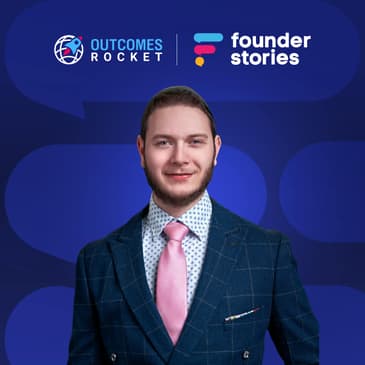
The future of healthcare lies in the seamless integration of AI with human compassion to improve care delivery.
In this episode, Mendel Erlenwein, CEO of CareCo and Previva Health Group, shares his journey into entrepreneurship, emphasizing how it’s not just about making money but about transforming struggling companies and creating meaningful impact. He discusses the evolution of care coordination, particularly in preventive care, and how AI technology is enhancing care coordinators' roles, allowing them to focus on empathy and compassion while AI handles tedious tasks. Mendel touches on overcoming setbacks, the importance of setting clear expectations, and the value of building strong relationships in business. He also highlights the importance of aligning with one's talents and continuously learning from experiences.
Tune in and learn how AI is reshaping healthcare, improving patient outcomes, and creating happier, more fulfilling careers for care coordinators!
Resources:
[00:00:02] Hey everybody, welcome back to the Outcomes Rocket. So pumped that you joined us again. Today I have the privilege of hosting an amazing healthcare leader, entrepreneur, trailblazer. Let me introduce him to you. His name is Mendel Erlenwein and he wears a lot of different hats. He's the founder and CEO at CareCo. He also serves as the CEO of Previva Health Group, focused on the ACO space with optimization and also is the host of the Outcomes Rocket.
[00:00:32] Healthcare Trailblazers. And it's very appropriate because he is blazing trails himself. Mendel, so great to have you with us.
[00:00:41] Saul, thank you so much. It's an absolute honor to be here today.
[00:00:43] Hey man, it's a pleasure. And look, we did a recent rebrand of the podcast. We are now Founder Stories and many of the conversations that we have are with founders.
[00:00:52] And so with that lens, you know, the first question that I'd like to kick things off with is what inspires your work, not in just healthcare, but also entrepreneurship? What got you to do this?
[00:01:05] Hmm. That's a great question. I think it's just where life kind of took me. I don't think I necessarily went through a bunch of chapters of having bad experiences at jobs and decided to finally take the plunge and start my own thing.
[00:01:17] It kind of was always important to me to be financially independent. It was something ever since even as a young kid was always important to me.
[00:01:23] And so as a teenager, I was always doing whatever I needed to do in order to make enough money to go on the trips or whatever, whatever you need money for as a kid.
[00:01:30] So that was kind of always important to me. Something that I now in retrospect really appreciate is kind of the difference between just going to become an entrepreneur for the sake of being an entrepreneur.
[00:01:42] And what I mean by that is these people that think that that's the way and that's the best way.
[00:01:47] So in order to be an entrepreneur, they go, they buy ramen, they go to their parents' basement, they sit on the floor and they eat the ramen raw.
[00:01:54] They don't cook it because this is what entrepreneurs do. And then the proof of them, the proof of them being entrepreneurs is the fact that they have a website for $9.99 on Wix and they're done.
[00:02:02] They're set. So I think that in retrospect, because I took over this company, Praviva Health Group, I didn't actually start it.
[00:02:08] It was in a place where it kind of wasn't scalable and definitely need a lot of transformation and was actually losing money.
[00:02:14] And so it was an incredible experience to kind of turn it around. But what's so interesting to me is now having spent five years in that space and then taking that kind of natural instinct to move into what's now Careco,
[00:02:24] which is really, you know, an AI technology that's really based on care coordination from my understanding of building Praviva.
[00:02:31] That evolution is, I think, really interesting to me and I think serves as a lesson to me in retrospect and I think for a lot of other people that you can absolutely be, quote unquote, an entrepreneur by being in an industry.
[00:02:42] Go get yourself a meaningful job in a meaningful space that has growth and has areas for you to be creative and then go spend time in that industry.
[00:02:50] Learn the industry. And if you're actually an entrepreneur, there will 100 percent be a time where your talents, your experience kind of intersect with an opportunity that you see in the market and you're going to go take that plunge.
[00:03:04] And that's what I'm kind of in the midst of right now. And I'm really enjoying it.
[00:03:07] That's awesome, Mendel. I love that lens. And the best way to succeed in business is to be in business, not just to sit in your basin with ramen.
[00:03:16] I love that. I love that, by the way. And, you know, you're doing a lot of really cool things.
[00:03:22] I want to get you an opportunity to really uncover some of the things that you're up to.
[00:03:27] And so where do you want to start, Mendel? Do you want us to hone in on to CareCo?
[00:03:32] Maybe that's where we need to spend a little time at first. Or do you want to start with Praviva Healthcare?
[00:03:37] Like I said, it's kind of an evolution. So we could start with Praviva. Praviva is a service based company in the care coordination space.
[00:03:43] So we've got about 30 care coordinators and growing. We talked about 5,000 patients a month currently.
[00:03:48] And we act as an extension for a lot of doctor's offices. You mentioned optimizing ACOs.
[00:03:54] Some of our favorite partners are ACOs because the ACOs need their members to be doing programs like chronic care management,
[00:04:01] like transitional care management, like annual wellness visits.
[00:04:04] But both the ACO and the individual members don't have the resources to do these programs, which can be quite tedious.
[00:04:09] And so at Praviva Health Group, we offer a span of services, either absolutely full service.
[00:04:13] So the majority of our business is coming in, acting as an extension to your office, adopting to your workflows, to your communication preferences,
[00:04:20] integrating with your EHR, fully customizing the program to you as the doctor, and then providing that service to your patients on your behalf,
[00:04:27] triaging that care accordingly with you and making sure that you get all the relevant info that you need on your patients.
[00:04:32] And then obviously giving you the opportunity to bill for those services, which brings in revenue to the practice.
[00:04:36] On the flip side, I've happened to just be a big proponent of the programs in general.
[00:04:40] So this is not as well known, but we actually also offer kind of DIY tools.
[00:04:44] So if you're somebody that says, hey, you know, I have the staff to do this.
[00:04:47] I have the time for my staff to do some of these programs. I just don't know where to start.
[00:04:50] We actually filmed like an entire course. It was a lot of fun. We built sets and studios and we had a lot of fun with that.
[00:04:55] But we built this whole course on exactly how you can actually do these programs in-house as well.
[00:04:59] So my side on Praviva Health Group is, hey, there's these really good preventive care programs that CMS put out.
[00:05:04] You should be taking advantage of them. Your patients, you almost owe it to your patients to be doing these programs.
[00:05:09] And so you should be doing them. If you don't have the resources, we'll help you out.
[00:05:11] If you do have the resources, we'll get you set up. But you should be doing these services.
[00:05:15] Love it. Yeah. And there's big opportunities here.
[00:05:18] There's been a lot of discourse around, hey, care in the home and let's get away from episodic care and move to more continuous care.
[00:05:27] I think there's huge opportunities there. And it sounds like your organization is really enabling it, whether it's just done for you or do it yourself.
[00:05:35] You've got the packages for people. Yep.
[00:05:38] Love that. All right. So let's shift to Careco.
[00:05:41] You bought this business. You took it from losing money to making money.
[00:05:45] And in the process, you gained insights and found new opportunity.
[00:05:50] Here comes Careco. Tell us about that.
[00:05:52] Yeah. So it really was exactly as you described about almost two years ago at this point, a year and a half ago.
[00:05:58] I've obviously been watching the evolution of Gen AI as it came out at the end of 22.
[00:06:02] I had used it a bunch in my personal life.
[00:06:04] I had already augmented a bunch of my personal workflows and really optimized a lot of my own time.
[00:06:08] And so I really started thinking, you know, how can we use some of these tools to augment and really help my care coordinators become the best versions of themselves?
[00:06:17] And there's aspects to the job that care coordinators don't like doing.
[00:06:20] There's a lot of like in any part of health care.
[00:06:22] There's a lot of the job that's very tedious, very time consuming and not really in the spirit of what care coordinators want to be doing.
[00:06:30] Care coordinators, just like anyone else in health care, just want to be caring for their patients.
[00:06:33] And so understanding that and then also looking at the general landscape and watching maybe a lot of other people coming out with the promise of like fully automated care and automated care coordination.
[00:06:43] And noticing that it seemed like a lot of these people didn't actually know their end user very well.
[00:06:48] There are hundreds of thousands of care coordinators in this country.
[00:06:50] We're not just flipping a switch and turning them all off.
[00:06:53] And then on the flip side is all of those care coordinators are talking to hundreds of patients every month.
[00:06:57] And so there's millions of patients that are getting care coordination and they're not all flipping a switch and just talking to some sort of bot.
[00:07:03] Or some sort of AI bot.
[00:07:05] And so we started thinking, what can we create from the user's perspective?
[00:07:09] Coming from understanding our users, what can we create a piece of technology that would wrap around their workflow, support them and make them so much happier in their job, create better patient outcomes through care coordination and really just create this incredible partnership, this incredible augmentation between technology and humans.
[00:07:26] And so CareCo is named that because it's a co-pilot for care coordinators.
[00:07:30] And our mission became build the brain to amplify the heart.
[00:07:34] And I say that because I think that technology is clearly a lot better at the brain aspects of care.
[00:07:39] And what I mean by that is massive memory, massive amounts of data, pattern recognition, you know, the ability to use those pattern recognition and use that data and create personalization.
[00:07:48] And that's all better when you use technology.
[00:07:51] We're just not capable as humans of competing with that.
[00:07:54] But on the flip side, the heart is, I think, where we actually have the edge.
[00:07:58] And that's the actual delivery of care, the empathy, the compassion.
[00:08:01] And I think that that's where we really shine as humans.
[00:08:04] And so that became our vision for how we go about creating the technology.
[00:08:08] And I think that was really important because it's imbued every single step of how we've created CareCo, where it really at every single level just wraps around an existing workflow, supports it, takes the tedious parts out of it.
[00:08:19] But at no point does it cross over that line where it starts doing your job for you.
[00:08:22] That's great.
[00:08:23] And so you sort of lived the experience.
[00:08:26] You saw what your care coordinators were going through and you said, this could be better.
[00:08:30] This could be more efficient.
[00:08:31] We are literally in a time right now, like I was chatting with a friend about this.
[00:08:37] It's probably like best compared to when mobile apps were coming out.
[00:08:42] Like everybody was trying to get on mobile apps.
[00:08:47] And there was this huge shift in how business was being done because now you could do it from a phone, right?
[00:08:52] And there's so much you could do.
[00:08:54] Now we're in this space, and I think it happens every 10 years, where a new technology comes out
[00:08:59] that we could make massive improvements at the small level, but also at the enterprise level.
[00:09:05] And what Mendel's pointing to here is this huge wave, which is LLMs.
[00:09:11] It's AI, and it's changing the way that we do business.
[00:09:15] And so Mendel, I love your comparison to the analogy of the head and the heart,
[00:09:21] because you're not taking away the empathy.
[00:09:23] Nobody wants to talk to bots.
[00:09:24] They still want to talk to people, but we want to power the people that are providing the care.
[00:09:28] So talk to us about building the company.
[00:09:31] And we learn more from setbacks oftentimes than we do from our wins.
[00:09:35] Talk to us about a big setback and what you've learned from that setback that's made you guys even better.
[00:09:41] Wow, great question.
[00:09:42] I think the biggest setback that I had was early, early on.
[00:09:46] I had kind of brought in an external team to, and this is maybe very specific to founders,
[00:09:51] but I had brought in an external team to kind of MVP out the products.
[00:09:56] And they dropped the ball majorly right before a huge deadline.
[00:10:01] And they basically, it was a couple of young people that were doing this.
[00:10:04] And they just got on a meeting with me and basically said, you know,
[00:10:08] we decided we have better opportunities.
[00:10:09] And so we're just not going to do this.
[00:10:12] And it was like, right as...
[00:10:14] At what point?
[00:10:15] So first of all, thanks for going there, right?
[00:10:17] Because there's a lot of people right now, given what's happening with technology,
[00:10:22] they're building stuff or maybe considering building things, right?
[00:10:25] So talk to us timeline.
[00:10:28] How long had you guys been working?
[00:10:30] And then they dropped this on you right before the deadline.
[00:10:33] Yeah.
[00:10:34] So this was last year.
[00:10:35] It was actually about a year ago.
[00:10:37] So I was going to do this big announcement, which I did on LinkedIn.
[00:10:40] I did like a...
[00:10:41] I did a whole live talking about my idea because I really wanted to just throw it at people
[00:10:45] and see what kind of what the feedback was.
[00:10:47] And I also remember I have the service-based company, so they were all going to start using
[00:10:51] it.
[00:10:51] And I think it was literally...
[00:10:52] I think if I recall correctly, it was literally August 1st.
[00:10:54] And these guys had been building, you know, what was going to be implemented internally
[00:10:58] for my team and what I was going to talk about.
[00:11:00] And I'm not the kind of guy that talks about something that I don't know actually exists.
[00:11:03] And so July 15th was when they just dropped it.
[00:11:08] And how long had you been working with them until July 15th?
[00:11:11] Like, how long had you been?
[00:11:12] It had to be a couple months.
[00:11:13] Yeah, I don't recall exactly, but it had to be a couple months.
[00:11:15] So like two weeks before the deadline, they drop it on you.
[00:11:18] We got another priority.
[00:11:20] Yeah.
[00:11:20] They're like, you know, we think that we could do other things.
[00:11:23] And yeah, it was pretty wild.
[00:11:25] And what was cool is this is actually...
[00:11:27] You know what?
[00:11:28] No one's ever asked me this question.
[00:11:29] This is actually a really interesting story.
[00:11:30] And it's going to become more interesting as Careco grows.
[00:11:32] So this is an early on kind of look into this.
[00:11:35] But let's go.
[00:11:36] We got an exclusive here.
[00:11:37] Throughout that entire time.
[00:11:37] Turn off the volume.
[00:11:39] Get the popcorn.
[00:11:40] Yeah.
[00:11:40] So during that entire time, like throughout all those months, when I had this idea in
[00:11:45] my head and then I found this team, I got to know somebody who's an extremely talented
[00:11:50] engineer.
[00:11:51] And I started working and I would just talk to him, talk to him about my idea.
[00:11:55] And I am like from a technical perspective, I'm almost completely illiterate.
[00:11:59] So I was talking to him and he was just providing value.
[00:12:02] Like he was just there.
[00:12:03] He was thinking through my ideas with me.
[00:12:05] He was also like hearing what this team was doing and kind of warning me and making sure
[00:12:09] that I was kind of covered.
[00:12:10] And he was one that actually came in in his off time and actually picked up the ball and
[00:12:15] really like cleaned up, even like cleaned up the mess for me.
[00:12:18] And he wasn't expecting anything.
[00:12:19] There was no expectations there.
[00:12:21] He was just willing to use his knowledge and his talents to kind of to provide value just
[00:12:25] to help out.
[00:12:25] There was no end game.
[00:12:27] And fast forward to today, he's now my co-founder and partner at the company and CTO.
[00:12:32] And I'm a huge fan of his.
[00:12:33] And so, you know, I was obviously really lucky, but to kind of have that going on in the background
[00:12:38] so that he was able to kind of step in and really build this thing.
[00:12:40] And he's just tremendously talented.
[00:12:42] Now we've grown out the team a little bit and we have a really talented team and everything's
[00:12:44] in house.
[00:12:45] So there's so many lessons here as far as like if you're going to do something serious,
[00:12:48] maybe don't outsource it.
[00:12:49] Bring people inside.
[00:12:50] Bring people that understand, you know, you understand that the company, that the beautiful thing
[00:12:54] that I appreciate about where I'm coming from is I really, really, really understand our
[00:12:57] users.
[00:12:57] I understand our customers.
[00:12:58] I understand their, you know, the pain points.
[00:13:00] So all this kind of comes together to a really good recipe to being able to create a very
[00:13:04] fast and a very effective product.
[00:13:05] So that's all cool.
[00:13:06] But just to focus on because you asked about kind of the mistakes.
[00:13:09] I think that that was an area that was obviously a very scary time.
[00:13:12] And I'm sure I'll have we'll have more of those.
[00:13:13] But I'm a huge proponent of just focusing on value from your contracts, your agreements with
[00:13:18] your clients, the way you structure things, the way you structure employment.
[00:13:21] Everything should be value based.
[00:13:23] It's not just about value based care, but value based life.
[00:13:25] Right.
[00:13:26] And so this was such a cool example where I was lucky enough to kind of have somebody
[00:13:30] that was just there to provide value.
[00:13:31] And I think and now we're both, I think, very happy for it.
[00:13:34] So that's awesome.
[00:13:35] Mendel, thanks so much, man.
[00:13:36] Yeah, it's really great.
[00:13:38] And how many of you are watching and listening to this thinking, damn, I'm in the same spot?
[00:13:43] Well, you know what?
[00:13:45] You're in the same spot, maybe.
[00:13:47] But Mendel's sharing some value here on how you could overcome that.
[00:13:50] How could you have identified it sooner, Mendel?
[00:13:54] For those people, what were the signs now that you're looking at it in the rearview mirror
[00:13:57] that maybe it wasn't working out?
[00:14:00] And what would you have put in place that maybe you didn't have like check ins and
[00:14:04] things like that?
[00:14:05] That is such a good question.
[00:14:07] I think that the biggest problem with everything in relationships and business and personal
[00:14:12] life is really about setting expectations from the outset.
[00:14:14] The less expectations you have set, the less processes you have in place, the less paperwork
[00:14:18] and the less exit strategies and the less you have of that and where everything's kind
[00:14:22] of just friendly.
[00:14:23] Like, hey, I'll do this.
[00:14:24] You'll do that.
[00:14:24] We'll figure it out.
[00:14:25] But, you know, that's where you lead to it.
[00:14:27] That's where you end up with serious problems.
[00:14:29] So I would say that we actually did a pretty good job of setting expectations.
[00:14:32] I think it could have been much, much, much worse if we weren't very clear about what
[00:14:36] our expectations were.
[00:14:37] Yeah.
[00:14:38] And so it definitely could have been much worse.
[00:14:39] All being said.
[00:14:40] But if I had to avoid it, I mean, look, to be fully honest, and maybe this is the lesson,
[00:14:44] I don't know if I could have avoided it because I was trying to MVP at a product.
[00:14:48] I wasn't going to go and convince somebody to leave a really high, you know, really, really
[00:14:52] good job to come join a company when it was like not even a half-baked idea.
[00:14:56] Right.
[00:14:57] So I don't know if I could have avoided it.
[00:14:58] To be honest, it's probably just part of the journey.
[00:15:00] And maybe that's a lesson.
[00:15:01] Like some of these little pitfalls that you find yourself in, you know what?
[00:15:04] It's going to be that tiny little dip in your chart that you don't even see because
[00:15:08] two years from now you did this.
[00:15:10] You know what I mean?
[00:15:10] No, totally, man.
[00:15:11] But is there anything that like if you really press on it, you would say was a sign that
[00:15:17] maybe it was coming?
[00:15:19] Like not looking back, right?
[00:15:21] Just looking back.
[00:15:22] Now, when you when you look back, you have different perspective when you're in it.
[00:15:25] It's a different thing, right?
[00:15:27] Right.
[00:15:27] Right.
[00:15:28] Hmm.
[00:15:29] I mean, they were pretty young and inexperienced.
[00:15:31] And I think that maybe the actual sign was kind of them being a little bit all over
[00:15:37] the place.
[00:15:38] You know, they thought that they were like God's gift to mankind.
[00:15:41] Kind.
[00:15:41] It was at this time where like if you could say that you even like knew what Chachibati
[00:15:45] was, you were like an absolute God and you knew like a little bit of development.
[00:15:48] You were like absolutely incredible.
[00:15:49] So I think they thought that they had like this.
[00:15:51] They were very cocky about it.
[00:15:53] And yeah, I mean, maybe those were.
[00:15:56] Yeah, that's it.
[00:15:57] I'm just pushing it to try to get a nugget out here.
[00:15:59] You're providing a ton of value.
[00:16:01] I'm like, OK, if we could share with the listeners and viewers like that nugget.
[00:16:06] So I feel I feel like you've gone above and beyond.
[00:16:08] Let me summarize it like this.
[00:16:09] I'll summarize it that like you should always feel good about the relationship and you shouldn't
[00:16:13] feel like the people that you're working with are doing you any kind of favors, especially
[00:16:16] if you're paying them.
[00:16:17] Yeah.
[00:16:17] Just feel good.
[00:16:18] Feel good about your relationships.
[00:16:19] Make sure that your expectations are set and you feel good about it.
[00:16:21] And the second something doesn't feel good in that pit in your stomach, go do what you're
[00:16:26] doing right now.
[00:16:27] Go push on that and go figure out what's going on.
[00:16:29] I love it, Mendel.
[00:16:30] Thank you, man.
[00:16:30] Super valuable.
[00:16:31] And look, fast forward, you found an amazing CTO.
[00:16:36] Now you guys are making some moves in the space.
[00:16:39] Talk to us about what you're most excited about today.
[00:16:42] You know, things that you want us to really know Careco for.
[00:16:46] Yeah, I think I'm really excited in general.
[00:16:49] I mean, it's really cool.
[00:16:50] Again, I think the biggest blessing that I have is coming from the user's experience.
[00:16:53] So I've got a company of 30 or so care coordinators that test every single thing that we do and
[00:16:59] we get feedback from them.
[00:17:00] So talking to our users every single day and saying, do you want the button here?
[00:17:04] Do you want it here?
[00:17:05] And there's so many tech platforms that don't do that.
[00:17:07] And they end up with just building things in an echo chamber that are completely non-practical
[00:17:10] to their users or really cumbersome.
[00:17:12] And so doing that.
[00:17:14] And then now, so we've actually, we're still kind of like stealthy mode.
[00:17:17] I'm not like going full out with it yet because I want to be able to come up, pop my head
[00:17:21] up over water with like a bunch of things behind me, not in front of me.
[00:17:25] But things are moving very quickly.
[00:17:27] We've integrated with a care management platform that has about 800,000 patients.
[00:17:30] We've got some of their first pilots that are using the program.
[00:17:32] We had a catch up with one of the first pilots a couple of weeks ago and we measured their
[00:17:36] numbers from before and after.
[00:17:38] And we saved them 25% of their time, which is insane.
[00:17:42] So they literally saved an entire week of their life in one month from using our tech.
[00:17:47] So we think it's an absolutely no brainer.
[00:17:48] We're building it in a very, very, very tailored way to our users.
[00:17:52] And it's super exciting to me.
[00:17:54] No, that's really great.
[00:17:55] A, so like going into that 25%, like, so what does this mean?
[00:17:59] It just basically frees up the care coordinating team for capacity.
[00:18:03] So now these businesses could grow without having to spend as much?
[00:18:07] Yeah, exactly.
[00:18:08] You know, I was talking to somebody yesterday who was kind of saying, lamenting how AI is
[00:18:12] going to take everybody's jobs and things like that.
[00:18:13] And he was pointing to the fact that I just said, I saved 25% of time.
[00:18:16] So that means that you're going to cut down your workforce by 25%.
[00:18:19] And my response to him is, I don't know about your industry, but in healthcare, I've never
[00:18:24] met anyone, even specifically in the care coordination space.
[00:18:27] But our problem is not patients.
[00:18:29] There's more than enough patients.
[00:18:30] It's staff, right?
[00:18:31] At every level of healthcare, we're running out of staff.
[00:18:33] So I don't know one care coordination company that doesn't have tens of thousands of patients
[00:18:38] that are waiting to be serviced.
[00:18:39] And they just can't catch up to that kind of capacity.
[00:18:42] So I think that we're going to allow care coordinators to get so much more done with
[00:18:46] happier patients and happier themselves and make their life happier.
[00:18:49] Because at the end of the day, there's a line that I saw recently from, I don't know if
[00:18:53] it was Sam Altman or Steve Jobs or somebody, but he's basically saying that like stress
[00:18:56] comes from doing things that you don't want to do.
[00:18:58] When you're doing something you love, you're not stressed, right?
[00:19:01] And so all this burnout that we experience comes from when you're doing all those tedious
[00:19:05] parts of the job that you don't want to do.
[00:19:07] When you're spending all day doing the parts that you love and the technology just works
[00:19:11] around you and supports you the entire way to do all the tedious parts, you're having
[00:19:14] a pretty good life.
[00:19:15] So that's definitely what we're excited about.
[00:19:17] Well, here's to doing more of what we love, folks.
[00:19:20] Mendel, you're awesome at what you do.
[00:19:22] I'm so glad that we had a chance to connect.
[00:19:24] Before we part though, I do want to give you a chance to plug your podcast.
[00:19:28] I'm a huge fan of the healthcare trailblazers.
[00:19:32] You're making waves.
[00:19:34] Recently, you had Mark Cuban on.
[00:19:35] Checked out that episode.
[00:19:37] Tell us about it.
[00:19:38] Tell us why you do it.
[00:19:39] Tell us how to listen and view it.
[00:19:41] Yeah, I appreciate you.
[00:19:43] And for all of Saul's listeners, definitely look out because we'll be having a very,
[00:19:46] very interesting guest named Saul on very soon, hopefully.
[00:19:50] But yeah, I mean, I started about two years ago.
[00:19:52] It really was because I wanted a content wheel for LinkedIn and I didn't think I'm smart enough
[00:19:56] to come up with something brilliant to say every single day.
[00:19:58] So I figured if I could talk to interesting people like you, then I could use that.
[00:20:02] That's pretty much it.
[00:20:03] But that's actually really important because in order to achieve that goal, I didn't need
[00:20:09] any views.
[00:20:10] And that's really important because if you're doing things for views, chances are you won't
[00:20:13] get them and then you'll burn out.
[00:20:14] So that was about two years ago.
[00:20:16] Since then, it kind of snowballed.
[00:20:18] Hey, Mendel.
[00:20:19] Yeah.
[00:20:19] Mendel, you know what we say about that?
[00:20:21] Because we also, we produce a ton of podcasts for people, right?
[00:20:24] Yeah.
[00:20:24] We say, and folks, you've probably heard this.
[00:20:26] You've heard me say this.
[00:20:27] We say downloads are vanity, contacts and contracts are sanity.
[00:20:32] Yep.
[00:20:32] All day.
[00:20:33] All day.
[00:20:34] But no, go for it.
[00:20:34] Keep going.
[00:20:35] So I love that, by the way, because your North Star wasn't the downloads and most people's
[00:20:40] North Star is the downloads and it shouldn't be.
[00:20:42] Yeah, it shouldn't be.
[00:20:43] You're asking to be burnt out if that's your North Star.
[00:20:45] So for me, it was just getting, it was all really selfish.
[00:20:47] It was about getting to connect with people and learning from them personally and putting
[00:20:50] that stuff out there.
[00:20:51] And thank God that was two years ago.
[00:20:53] We recently passed 8 million views on the YouTube channel and we had Mark Cuban on it.
[00:20:56] You know, so in a lot of Mark Cuban is interesting to general people, but in healthcare, we've
[00:21:00] had some really, really cool rock stars.
[00:21:02] And so it's been a lot of fun.
[00:21:04] That's awesome.
[00:21:05] Mendel, where can they find your podcast?
[00:21:08] And obviously we're going to link all these things here.
[00:21:10] So folks, check out the show notes.
[00:21:12] You're going to find all the links to get in touch with Mendel, his companies, his podcasts.
[00:21:17] Definitely want to check all those out.
[00:21:18] But if you have to leave folks with one audible call to action, what should they do?
[00:21:24] What should they think about?
[00:21:25] Leave us with a nice close.
[00:21:27] Just value, man.
[00:21:28] Just focus on value in every aspect of your life.
[00:21:30] Don't worry about money.
[00:21:31] Don't worry about clicks.
[00:21:33] Don't worry.
[00:21:33] It's the answer to everything.
[00:21:35] Just focus on providing value in your relationships and your business and your work for your clients.
[00:21:39] Everything else will follow.
[00:21:40] This is outstanding, Mendel.
[00:21:41] Thank you so much.
[00:21:42] You're just like an awesome guy.
[00:21:44] I just love talking to you.
[00:21:45] Thank you, folks.
[00:21:46] Mendel Erlenwine, founder and CEO of Careco, CEO of Proviva Health Group, and host of the
[00:21:53] Healthcare Trailblazers podcast here with us on the Healthcare Founders Stories on the
[00:21:59] Outcomes Rocket.
[00:21:59] Mendel, I'm so excited you joined us.
[00:22:02] Thank you so much.