Billing doesn't start in the billing department.
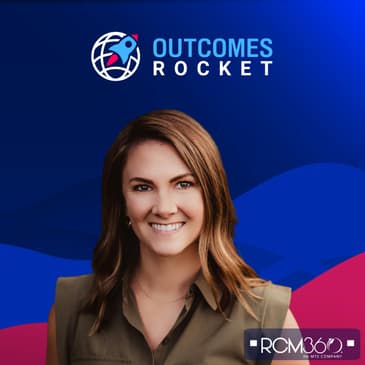
In this episode, Kristin Van Natta, Business Development at RCM 360 a Med Tech Solutions Company , discusses how staffing shortages and rising adoption of technology are reshaping healthcare revenue cycle management. She explains why clean claims start at the front desk and how accurate data, coding, and documentation can help prevent denials. Kristin also explores how organizations can thoughtfully implement AI and automation while ensuring new solutions integrate with their EHRs and deliver real operational value. She shares how practices can use RCM analysis and benchmarking to identify inefficiencies and strengthen their financial performance.
Tune in to learn how smarter technology and proactive RCM strategies can help healthcare organizations prevent denials, improve efficiency, and strengthen access to care.
Resources:
[00:00:03] Hello everyone and welcome back to the Outcomes Rocket podcast recording live from CHI 26. Really all topics community health at this conference and today I have the privilege of hosting Kristin Van Natta. She is at MedTech Solutions RCM360. So I'm excited to chat with her about what her and her team is seeing at the event in community health and overall. So Kristin, thanks so much for joining me today.
[00:00:31] Hey, we're having me. Of course, of course. How's the event going so far? It's good. It's really good. We're in Las Vegas. Yeah. You behaving? Yes. Always. Good. Good to hear. Good to hear. Talk to me about you. What got you into healthcare and in particular community health? So I have been around healthcare a lot of my life. My family owned a medical billing company that was started back in 1991 when billing was still on paper. Yeah.
[00:00:59] You did your rounds to your house or to your provider's office and you pick up their face sheets for the day and then we'd bring them back. And so I've been around it my whole life. I used to sort HICFAs, the ABC counters. And so I just, I worked a lot of that because I thought it was when you're young, fun to do stuff like that. And it just evolved from there. I, out of college, decided I wanted to get back into it and went into more of like a sales business development role. And that's what I've just been doing since. Wow. So it's been in the family.
[00:01:26] Yeah. Basically my whole life. I'm very passionate. I love, I really enjoy RCM. I think it's, I think it's a way to, you're able to help a practice stay open and seeing patients. And I think that's the most important thing is to have the patient care available to everybody. Totally. And are your folks still in business? Are they still running or? No. So my mom sold her company. Okay. Gosh, back in 2006. And so I continued to work there for another 10 years. Oh, wow. After the sale? Wow.
[00:01:53] And then I came over to RC 360. They were just starting up. And so I've been with RC 360 basically from the beginning. Wow. Okay. Very cool. So you helped get them up and running. Yeah. Yeah. It's been exciting to see really the growth and just the evolution of RCM has really changed, I would say, over the last three to five years. You know, when you think about billing, it's very manual. And so I think during COVID, a lot of growth happened and a lot of technology came into play.
[00:02:20] And so that's been really exciting to see take place and transform really RCM. And every aspect of healthcare is different and community health. We were chatting before hitting record on this that doesn't get covered enough.
[00:03:00] Yeah. Patients who are in an area where they maybe not have access to that. And so I think it all goes together. And I think it's a very important space to focus on. Yeah. And what are some of the biggest challenges that folks are dealing with today? From a patient perspective? Yeah. Patient or even back office reimbursements.
[00:03:19] Yeah. I think from a back office perspective, it's staffing. It's been an issue since COVID. And the mindset always was, we'll just add more people to the task to become successful and to work all of these claims and to work our denials. And so I think we're now shifting away from that because there just isn't the staff there to hire. And so we're trending more towards technology and how we can implement that in a smart way.
[00:03:43] It's not going to replace the human task, but I think there's ways to use technology to say, can I identify claims before they go out the door? Yeah. And so we're getting a clean claim out the door, which on the back end means less touches, which means less people. Yeah. And so I think it's using technology in a smart way to really enhance RCM. Yeah. If the humans aren't there to help, you got to use tech. Yep. Yeah. I love it. What's top of mind for you and the company heading into the back half of the year?
[00:04:12] I think, again, technology, how can we integrate that into our service, but also just within community health? So we had a really great conversation at dinner last night with a community health center that we work with. And it's all of, there's tons and tons of AI out there, right? And so it's being smart about what you're picking and does it make sense? And does it integrate into your EHR? Is it going to create more manual work because it doesn't integrate?
[00:04:35] And so it's all of those things and trying to get the best solution to make sense financially and operationally too. Yeah. And I've been hearing a lot about the data. If you're going to use technology, you got to have clean data. You do. You got to have up-to-date data. It's true. What are you guys doing around that piece and helping some of these providers make sure that they have clean data? Are there any best practices there? I mean, it's always good to look at your system. Yeah.
[00:05:02] Because what you're putting into your system is your truth, right? If your providers aren't picking the right codes or they're pulling in a template that was created five years ago and it's pulling in old codes, it's not good information. And so it's not only is it from a revenue cycle perspective, but I think it's also clinical as well. You got to look at both sides of it. You got to look at your front desk. I think billing starts at your front desk.
[00:05:26] If they're not collecting the correct insurance information, they're not collecting correct demographics, you're going to have a bad claim. That's bad data. I think their billing, I think, comes from a lot of different aspects within the organization. Front desk, providers, MAs, all of that is leading into a clean claim. Yeah. That's great. Clean data. Clean data. At the end of the day, that's what we have to be focused on if technology is going to help us move faster.
[00:05:53] So what exactly brought you to CHI this year? For us, it's meeting clients. We have a lot of clients here. So it's always really good to come face-to-face with them and hear what they're doing. All things that we're trying to implement in our RCM, they're trying to do as well if they do their billing in-house. And so it's always nice to hear what products they're looking at. It's the challenges that they're hearing. But it's also to showcase what RCM 360 can do and how we are helping other health centers and having those really good conversations with practices that stop by our booth.
[00:06:23] I love that. Any highlights so far? Gosh, our dinner last night was so good. Was it? Yeah, just a really good conversation. Did you guys go anywhere fun? We went to Ocean Prime. Oh, nice. Yeah, so it was just right around the corner from the ARIA. But just really good conversation to hear what they're doing and the challenges that they're faced with and how they're combating those challenges and what products they're implementing. And then I think a lot of it is how can we partner with them? Because all things that they're facing in the RCM world, we're facing as well.
[00:06:50] And so how can we work together as a partnership and say, hey, we tried this and it failed. And now we've pivoted and we're moving here and it's working really well. And so save yourself some time and look at that. And I think that is what a true partnership is and really helps. I love that. And that's what I love about conferences is like you can have a 30 minute, even a two hour Zoom call with someone or a Teams call. And you're not going to get what breaking bread, chatting with each other is going to get you. And that's how we move forward faster.
[00:07:21] I agree. Yeah, I agree. So Kristen, how do you see things shifting in the health space here, especially with RCM? Yeah, I think to kind of reiterate what I said, I think it's shifting away from we're just going to add bodies to fix the problem and moving more towards how can I implement a product, an AI product, a automation or whatever it may be to help kind of combat those issues. I think it's now looking at, OK, we received a denial, but why did we receive that denial?
[00:07:49] What can we do on the front end to prevent that denial? What kind of automation can we put in there? What kind of AI can we put in there to catch those things before it goes out the door? Because, again, if that claim goes out the door, it's going to require more touches in the future, which requires more staff. So it's trying to find the root cause of issue and analyze that and try to put some kind of stops in before that claim ever goes out the door. And so I think it's getting away from just adding people to fix the problem.
[00:08:18] It's let's get to the bottom of it and let's fix it before that claim ever leaves. I love that. You're seeing a lot of ambient AI solutions, voice note solutions. Are you finding that those are helping in giving a cleaner note? I think in some cases, yes. I think you have to put the time and effort in the beginning to train it, so to speak. And I think if we have some providers who are doing that and it's working really well, some that it's not working so great.
[00:08:46] And I think it's what you put into it in the beginning is where you're going to see the results. So it's not like, all right, automatic. Awesome. It's going to work great. It's got to actually be trained. The right inputs have to be in place for it to solve the problem up front. OK. OK. Fascinating work. I really appreciate your perspective that you've shared here, Kristen. What's the best place that people can reach out to you and your team if they wanted to learn more? Hi. You guys can come to our website, which is medtechsolutions.com.
[00:09:15] Lots of information about all the things that we do at MedTech. I specifically focus on RCM 360, which there's a lot of information on the website for RCM. But yeah, it's a great way. We are here at the conference as well, if anybody sees this before we head out. But we also do an AR analysis for anyone. So if you're not sure how well you guys are doing or if you just want to kind of a second set of eyes, we do a free AR analysis for practices. And so, yeah. And what does that entail? What does the analysis entail? So it's just us running some reports, putting together KPIs for them.
[00:09:45] Here's what industry standards are. Here's what RCM 360 are. Oh, that's so key. And it just gives you a lot of insight into how well is your billing being worked? Is it efficient? Do you have a lot of claims sitting out there? How big is your AR? When was the last time your AR was touched? And so it's very insightful. I have never ran those reports and put that analysis together. And someone said this wasn't helpful. Wow. Okay, cool. And you guys do that free of charge? Yep. Anybody who is on eClinicalWorks or NextGen or Epic. Oh, okay. Those are the three? Yep. Okay, got it.
[00:10:15] eClinicalWorks, NextGen or Epic. Yep. If that's you and you're wondering how you're doing and you want a second pair of eyes or a third pair of eyes, definitely something to consider. Thank you for offering that, Kristen. No obligation. Just really good information. I love it. Folks, there you have it. Kristen Van Netta with MedTech Solutions 360 here at the CHI26 conference. Check out the show notes where you can get in touch with her and her team. We'll leave everything in there. Thank you all for tuning in.
[00:10:44] And Kristen, thanks for being with us. Thank you for having me. It's been a pleasure. Thank you.