
To succeed in dentistry, practitioners need clinical skills, leadership, communication, and business knowledge while understanding the mouth's role in overall health.
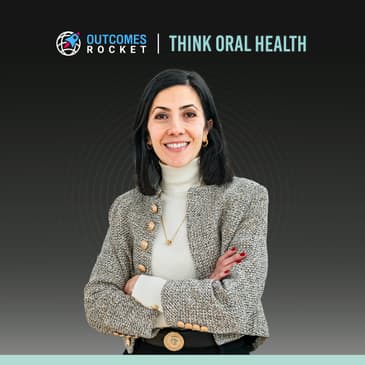
In this episode, Anabella Oquendo, Associate Professor at NYU College of Dentistry, shares her journey from an international student to a leading academic role. She emphasizes the importance of mentorship and surrounding oneself with like-minded individuals to drive meaningful change. Professor Oquendo advocates for transforming dental education by encouraging future dentists to take a holistic approach that considers nutrition, sleep quality, and the link between oral and systemic health. She also highlights the role of technology, including AI, in improving diagnostics, enhancing efficiency, and strengthening patient relationships while promoting sustainability and prevention in underserved communities.
Tune in and learn how education can redefine dentistry and elevate lives!
Resources:
- Connect with and follow Anabella Oquendo on LinkedIn and Instagram.
- Follow the NYU - College of Dentistry on LinkedIn and explore their website!
- Watch the entire episode on YouTube and get more details at Think Oral Health.
- Mariya Filipova - https://filipova.health/
- Systemic Health Investor - https://www.4100dx.com/
- Care Convergence Thought Leader: Dental Economics
- Forbes Technology Council Member
- Jonathan Levine - www.drjonathanlevine.com
- Founder - JBL New York City www.jblnyc.com
- Founder - GLO Science LLC www.gloscience.com
- Co-Founder - GLO GOOD Foundation www.glogoodfoundation.org
[00:00:01] This podcast is produced by Outcomes Rocket, your healthcare exclusive digital marketing agency. Outcomes Rocket exists to help healthcare organizations like yours to maximize their impact and accelerate growth. Visit outcomesrocket.com or text us at 312-224-9945.
[00:00:31] Welcome to Think Oral. Where we connect the interconnected between oral and physical health. I'm your host, Dr. Jonathan Levine. And I'm your host, Maria Filipova. Let's get at it. Hey everyone, and welcome to another episode of the Think Oral Health podcast, where myself, Maria Filipova, and my co-host, Dr. Jonathan Levine,
[00:01:00] explore opportunities to connect dots across care teams in oral system health. We're very happy to be joining you today, and we're very happy to introduce a remarkable guest to us today, Professor Anabella Oquendo. She's joining us from New York, and she's a critical voice in the way education is shaping and accelerating oral systemic health today. So I'm very excited to welcome Professor Oquendo.
[00:01:29] If it's okay with you, we will continue the conversation and refer to you as Anabella, if that's okay. We're friends here. And hello, Jonathan. Hello, Maria. Excited, excited to introduce Anabella and have Anabella on our podcast, on our Think Oral Health podcast. Anabella is emblematic of someone who has come to this country to study and found a place for herself within New York University of the Dental School and has had a huge impact.
[00:01:57] She's currently the associate professor at NYU. She has an academic role where she's the assistant dean for all of the international programs. She's also the director of the APA Advanced Clinical Fellowship in Aesthetic Dentistry, which has been built over in the last few years. And I will say, for me, she was a participant in our Advanced Aesthetics program.
[00:02:23] And it shows that where you begin is not where you kind of end up. And the journey for all of us is so interesting. She's from Venezuela, graduated from Central University of Venezuela Dental School in Caracas. And she successfully completed that advanced program and kept moving up in the NYU dental school ladder, which is not so easy if you understand the politics of academics. Sorry for everybody out there on that one. She's got a prominent role as full-time faculty.
[00:02:53] And she's also in the faculty of the Aesthetic Dentistry at NYU Dentistry. She was appointed director of the AACFAD in 2014. No, beyond her academic, and I can go on and on, but it's very exciting. She received the President's Lifetime Achievement Award. There you go. Someone who came to this country and international. She received the Lifetime Achievement Award from the office of the President of the then United States of America,
[00:03:22] recognizing her lifelong commitment to building a stronger nation through her volunteer service. And by being here in the United States, God bless America. So with that in mind, Maria, we welcome Annabella to our podcast. Annabella, great to have you. Thank you so much. Thank you for the introduction. And thank you for having me. It's so exciting to be here sharing this morning. Thank you for your service and for everything you've done.
[00:03:47] I couldn't be happier to have that conversation with you today and with Jonathan, because it's a very personal story to me as well, coming in from a different country and having a vision and a dream and choosing this country to call your own and contribute and build something new and remarkable. So maybe let's start there, Jonathan. If it's okay, indulge my curiosity.
[00:04:13] Annabella, tell us a little bit about your path to your current role and your experience. How does your international experience shape your work today and the impact that you're making? Great. Okay. Well, back in my country, I always wanted to make meaningful impact and meaningful change. So at some point, I decided to pack those dreams 16 years ago, and I moved to this country to turn them into reality.
[00:04:42] And I decided to enroll as a full-time student in NYU to afford my education, to see how I was going to make it happen, right? And that's when I met Jonathan. As you mentioned, he was one of my faculties. And of course, apart from learning how to transform lives and give smiles to people and everything about aesthetics, which is a fantastic field, I also understood the importance of having mentors in life. Because mentors like Jonathan can help you see things that you don't even see on you.
[00:05:12] They can push you. They can guide you. They can really, they are able to get the best out of yourself out there. And that was super, like till today, 16 years after, we continue to do wonderful things together. So I consider Jonathan my mentor and has been wonderful in every step of my process and my journey. And I also understood the importance of surrounding yourself with like-minded people,
[00:05:38] because that's exactly when true change happened, when real change happens. And of course, it wasn't easy. As an international student, you face the challenge of navigating a new culture, missing your loved ones and striving for excellence in an unfamiliar place. But rather than letting those struggles define me, I use them as fuel. And they give me the laser focus I needed, the discipline to get things done and to really find my purpose and my why in dentistry.
[00:06:06] Alongside, again, the most amazing people and the most amazing mentors in NYU. And fast forward, I could tell you that today I'm one of the deans at NYU College of Dentistry. And it does feel surreal to think of how far this journey has taken me, right? From an international student to one of the deans at NYU Dentistry with responsibilities now to give back, because that's really what I want to do. I want to give back to my students the opportunities that I had and the way things happened for me.
[00:06:34] I want them to also have this opportunity. So I'm always crafting exceptional experiences, finding a way to expose them, to get them, you know, a little bit of what I got, right? So it's part of my responsibility to really give back. And of course, elevate dentistry through education. What an inspiring story. Isn't that special? Maria, you have a very interesting story. Just to do a little segue of people like you and Annabella who've come to this country
[00:07:03] and made a way for yourself. But also what Annabella is saying, surrounding yourself with like-minded people and really doing great things. You're flying all over the country with these amazing meetings that are looking to elevate our profession, bringing innovation to our profession. It's fairly resounding what Annabella is saying for you. That has impact, hasn't it? It hits home. It hits very close to the heart. Right. It makes me very happy to, first of all, hear you share that.
[00:07:32] And secondly, I've been very lucky just like you to meet, well, Jonathan, of course, but also other open-minded people, mentors who never looked at me as, well, Maria is an international student. Clearly, she should be in the international student category. No one ever really perceived me that way. They saw me as a talented, driven person who is looking to make an impact.
[00:07:58] And that was really the magic of this country is because you attract people who are smart, hungry to change, and eager to go after big, audacious problems and make a life for themselves. And I think being an international student gives you that extra drive to do it and that extra motivation. But I think fundamentally, this is a reflection on the fact that in this country, you could
[00:08:26] do anything and be anyone you want to be. And it doesn't matter where you come from. It really matters where you're going and who you're taking with you. And so that's been really profoundly powerful for my two decades in the U.S. And I recently became a U.S. citizen. And I chose to continue to be a European Union citizen on top of my U.S. citizenship. And I called this country my home because of people.
[00:08:55] I mean, Jonathan, you're going to have to tolerate us raving about you. But you were a representative of a lot of those mentors who see talent. They don't you don't see where somebody comes from. You see what they could do to with you in this country and how you could shape things together. So that's exciting. That's the stories we need to remind ourselves that these are the stories that built this country. And that's I'm very excited. So tell us a little bit about what we where you're going next.
[00:09:22] What is the exciting experiences that you have been crafting with my partner in crime, the troublemaker for good here, Dr. Levine? Of course, back right. We want to make an impact. We want to redefine dentistry. We're going to elevate dentistry and the life it touches. And we can do that through, of course, caring for our patients as dentists. We are mentoring the students, shaping the next generation of leaders and also expanding access to oral health in the communities in need.
[00:09:49] All of that together and through education, being able to be in an institution like NYU. Let me tell you something super interesting. Out of every 10 dentists in this country, one comes from NYU dentistry. So imagine the impact we have, the seeds that we can plant, right? Every 10, one comes from NYU plus all the ones that we have all around the world. It's an amazing network. And the idea really through education is to continue to connect the dots and to continue
[00:10:19] to elevate dentistry. How? I would say I have three main dots that I want to connect. The first one, and Jonathan knows a lot about this because he's a big helper on this mission. And it's that fake reality that dentistry is all about the clinical skills and the margins and the preparations. Yes, they are important. Obviously, we need to have amazing clinical skills to get for our patients, to care for our patients. But it's not limited to that.
[00:10:46] To really be successful in life, we have to be well-rounded individuals. So education has to be transformed. We need to teach the next generation how to become effective leaders, servant leaders. We need to teach them about communication, about business. And on the top of that, we need to tell them that the mouth is part of the body, has been isolated for too long.
[00:11:13] So we need to empower them with the tools we have in a place like NYU. We need to empower them to feel comfortable talking about nutrition with their patients, sleep quality, airway. And they need to understand that inflammation in the mouth is related to systemic disease. But we need to empower them because right now it's not really a strong part of the curriculums. So they need to understand that. They need to believe it. They need to breathe it.
[00:11:42] They need to practice it and understand that we are part of the overall health of the patient. As Jonathan called us, we are not teeth dentists. We're oral health physicians, right? So we need to train that generation that is going to get away from that reactive model that we have. We just see that cavity. We clean it and reactive, reactive. And be part of a more comprehensive, holistic approach where we collaborate with all the professions
[00:12:10] to really take care of that human. Talking about longevity of the human, right? And the overall health and wellness in general. And the third one, two there, right? And the third one, I think technology. Because if we embrace technology, it's going to help us accelerate this process. Technology is here as a tool to help us be efficient, consistent, and unread for that. In AI, when AI comes, we are going to really get a transformation and we need to embrace it.
[00:12:40] I know that some people is afraid of technology, right? It's going to take away our role. And the dentist, what else are we going to do? But we have to see it completely different. It's the opposite. It's going to be here to strengthen what we do. And maybe we'll chip away from that manual operational work. But we're going to have more time to diagnosis, complex treatment planning, that patient relationship, that collaboration with other specialties, complex decision making.
[00:13:08] So I would say technology is also something that I'm, you know, embracing, incorporating, and making sure that we use it so that elevates everything we do. The impact is just going to be wider and stronger and more efficient and effective. I think that's a summary, right? Oh, great, great summary. I feel like we should be taking notes and writing the playbook of how this stage is. Well, you know, like-minded for sure.
[00:13:34] And look, you know, we are in this golden age of healthcare from a standpoint of innovation and basically science where we have such a different level of understanding because of so many things coming together and a lot of it around computer science and quantum computing. So we learn, we know so much more. Technology from medicine is now incorporated deeply into dentistry and also outside industries, what we call the digital workflow.
[00:14:00] Annabelle is a person who I deeply admire deeply because she not only talks about things, she's a doer. Maria Filipova is a doer. And people like that, for me, it's kind of where my head is always at. And yes, that description of like-minded people put them together and some cool things happen. So from a doer perspective, Annabelle, tell our audience, tell the young dentists, tell these dental companies, what have you done without everything you just said, what were your action
[00:14:28] steps that you've taken and you're going to take to make education the forefront of developing this next generation of debt? Oh, yes. Yeah. At this moment in all my programs, the curriculum has been transformed. Of course, we cannot take away the clinical skills. I don't want anybody to misunderstand me, right? So the clinical skills are crucial and we are shaping extraordinary clinicians. But next to that, we have curriculums for business.
[00:14:57] We teach them how to incorporate high-performance habits in their life. It's not easy. We all know that personal growth is painful, but it's part of the process. It's not just the hard skills. We need to also teach them to see the soft skills and how to adopt them because we all understand in this goal how hard it is. It requires constant work and it requires painful, you know, growing and learning and incorporating habits.
[00:15:22] We also incorporated how to create a business because at the end of the day, they graduate with amazing clinical skills, but they have to run their practices. Or if they go to academics, they have to run the programs. Wherever they go, they need to understand business. And it's actually very exciting right now because Jonathan and I, we put together a session for them that it looks like chart tank to excite them a little, make it fun.
[00:15:48] But we are pushing these students to come up with amazing ideas. But it's not just the idea. It's once you have the idea, how do you execute? What is the next step? And with all the experience that Jonathan had, it's amazing. And when they listen to him talking about all the companies, all the things that he's done, he talks about the world. All the mistakes I made, Maria. All the mistakes. That's how you learn. It's called learning opportunities, Jonathan. There is no mistakes. They're learnings. That's right. I love that. Learning opportunities.
[00:16:18] I'm going to remember that, Maria. That's the entrepreneurial language. You don't fail. You pivot. And you don't make mistakes. You learn. That's how you call it. I love that. I will use that. You'll fail forward, right? So that's the theory. Right. As long as you go forward. But when you push them that hard, at the beginning, you notice that they go like, why do I need to know this? But when they realize the ideas they shape and when they start envisioning how they can really
[00:16:45] become a reality and we give them the tools and at the end of the day, we're going to have a wonderful competition. We call it short tang or smiley short tang, right? And they're going to compete. And the winners, guess where the winners are going to go? To Eleuthera. Oh, fantastic. Eleuthera. Yes. Yes. To be able to help. Our listeners know a little bit about the mission, but could you, the two of you share, just give us a quick reminder of all the good work that you're doing in Eleuthera.
[00:17:15] And you just came back a couple of weeks ago from another round of the mission. So tell us, remind our listeners about the work that you're doing there. Okay. Okay. So part of my responsibilities as a dean, apart from the fellowships and international programs, is to oversee global outreach, which is a program that we design to expand access to oral health for the communities in need. But what is crucial about doing this, and Jonathan knows this more than anybody, is that it's
[00:17:43] not about getting on a plane, helping people by removing a tooth, filling a cavity, and going back home, because honestly, you're not doing much like that. It has to be attached to education. And when I talk about education, it's not just education of the next generation of leaders that we need to teach them to take action and to lead with compassion and pass the bat to him. It's also educating the community. So we need to establish a prevention system where we start fixing the root of the problem.
[00:18:12] And we have to educate the communities, educate the schools, educate even governments. Talking about government, the other important pillar is sustainability. Because if you do the other two, but then you don't partner with the locals, whether it's the government or the healthcare providers or the teachers, the principal, it's not going to be sustainable. So it was amazing when I got this role, because then Jonathan has been running this mission
[00:18:41] forever, doing wonderful things. And what we did is that we made it one of the trips for my programs. That's amazing. So I have about seven trips or seven locations that we've helped, and one of them happens to be Eleuthera. We go Glow Good and Let Rough Rule. Volunteering feeds your soul. That's, I just, it's, it nourishes your soul and your overall health, actually, in a very, very unique way.
[00:19:11] But you see, it sounds like you're, you're, frankly, and Eleuthera is a small island, right? It's a couple of hundred. How many people on the island? Not that, not that big. You could drive from one end of the island to the other end in like an hour, maybe? No, no, it's long, but it's skinny. It's tight. Yeah. And so you can see the bullshit. It's a little south. North Eleuthera, and you go to Harbor Island, where all the hotels, people get married, quite beautiful, very expensive. You go to the left.
[00:19:39] You go to Gregory Town and these other areas where people don't have access to care, as we always call the dental desert. It's a healthcare desert. They had no access to care at all. They're on a cocktail of sugary drinks, no education, you know, ultra processed food, and we know how that story goes. So when we started 10 years ago, it was quite an oral health and overall health mess. And Abela and what we deeply believe, Maria, for us in doing this podcast is what we learned
[00:20:09] is that when the physicians and nurse practitioners are working together under one roof with dental specialists and with new technology, and that took 10 years to evolve, we can provide care at such a high level, this whole integration of dentistry and medicine, which puts a spotlight into the future. And Abela brought her NYU team digital designers on computers.
[00:20:35] We're now able to do 3D printing prostheses that we can do six, seven of them in an hour and a half that used to take a day to do two. So the efficiencies are quite incredible. You've been to our mission, Maria. You know the feelings, and you're right. It feeds the soul. But we also, we always say we get more out of it, right? Because we serve the people, but we also look to serve the people who are serving the people. We serve them too, and we do it together collectively.
[00:21:04] And having Annabella, Catherine Hayes from Harvard, Alexander Bendayan from Nova, Michelle Henshaw, who's been there from the beginning from Boston University. We have four amazing, amazing leaders of these schools leaning in. And now we're into what Annabella is talking about, which is sustainability. How do we build more and more and more? Exactly.
[00:21:30] Even in a small scale, like an island that is narrow and long, you still have to think about the systems and what you leave behind you. So yeah, please tell us more about what that looks like in the next phase. One thing that I want to add, because I do several missions, different missions, different countries around the world. And now that I want to compare, now that I have a favorite one, but I have to say that
[00:21:56] our mission in Elutera is so sophisticated, so sophisticated. Reasons, first, because they meet all these pillars, the education portion. Jonathan is taking it to a level that he even trained the leaders. So he brings people to talk about the dentists, how they are going to take this to another level and to plant that seed. So he's covering all the bases, but the technology is what really is guiding things.
[00:22:26] The access to technology in a mission is what I see as a big difference. Because as he mentioned, if you go, even if you want it, you have all the skills in the world, but how do you give teeth to somebody that is missing teeth in a place that is not your office, right? He's not just giving them teeth. They give them the teeth the same day, thanks to technology and having the right people in the room, because he's also the who.
[00:22:53] And I don't know how he does it, but he gets the most amazing humans concentrated in that room from all over. So it's the right people, the right time, the right place with the right technology. And what comes out of there is so amazing that I cannot stop smiling for the next month. I come back home and I feel that I have this silly, stupid smile in my face because it's so rewarding, everything that we get to accomplish. It's very interesting what you just said, though. How did he do it?
[00:23:22] And I have to tell you, there's no magic here. But it is very true about water sinking its own level, cream rising. So if I did anything, it was the ability to just create an environment that could grow. But then it became this environment that becomes like a magnet for people that are like-minded. Think about it. Henry Schein, Sprint Ray, Death Flight Serona, Three Shape. These companies donated equipment.
[00:23:52] Henry Schein built out of this 14 chair. Henry Schein Cares, amazing organization. What I'm just saying is these are people that we share the same idea that we have to help each other. We have to help people who are underserved. And there's an inequality in healthcare. And the people doing the serving, we get more out of it. Could you imagine how special is that? So we create this environment. So people from Harvard and BU and NYU and NOVA really helped us step up. And we're just getting going, right?
[00:24:20] We're really just getting going because now, you know, now we have this whole physician group. So Jeannie Baza from Commodore and Miles Vance from Pinnacle Health, the CEO, they're bringing a whole medical team. In April 25th, 26th, 27th, 28th, we're going to be there four days with a very, very strong medical and, of course, a key dental team. And we always look to bring new people on. So anybody listening, reach out to us. Anybody listening who wants to come on this mission, it's an extraordinary experience.
[00:24:48] And all you got to be is like-minded to the things we're talking about. And you're in. You are in. And I could testify that you don't need to be a clinician on the dental or the medical side. There's plenty of work to go around to keep you busy. And so open-minded people who want to do an impact, plenty of work to go around. So that would be my additional invitation. Everybody can contribute. On the business side, on the creative side, on the logistics and operations side. I mean, this is a huge undertaking.
[00:25:19] Annabelle is talking about this room. And Jonathan references 14 dental chairs. This is the community center in the village, in the town. This is not the operatory of a dental office. This doubles up as the church and the town hall and the place where people get married. It's just you work with what you have. It's quite unbelievable to see the level of operation, the logistical coordination that needs to happen on top of all these people to come in.
[00:25:49] So yes, reach out. You can help with donations. You can help with your time. You can help with your expertise. There's so many ways. Great. Okay. Amazing. Amazing. It's amazing. I have a quick question. And Maria, this is going to be your question because we talked about this. What does the future look like? If we say to Annabelle, give us your idea of that future dental education. Let's go out. Let's go out five or 10 years. There's so much change. Maria, you're a change agent in dentistry. I mean, there's so much change happening.
[00:26:19] And there's a way to look at Annabelle who's so innovative. What does it look like? Right? It looks like, imagine this individual that is well-rounded. He's an amazing clinician, of course, but he's well-rounded. He's a leader with purpose. Communicates like nobody. Right? So it's a well-rounded individual that understands their role in healthcare as an overall, right? Not just as teeth doctors and limiting ourselves to this part of the body.
[00:26:48] But that individual also understands the role they have in the overall well-being of a patient. And he works in a very holistic and interdisciplinary approach where he incorporates, of course, concepts like aesthetics, structure, function, biology when it comes to putting together a treatment plan, but also collaborate with the other healthcare providers.
[00:27:11] And this amazing individual will be able to elevate dentistry and all the life he touches by incorporating longevity to our patients, light quality, and at the end of the day, wellness. It's just healthier. And that individual is going to get away from a reactive approach that we have in dentistry. And it's going to be part of this proactive force and this holistic, interdisciplinary way of looking at our profession. And that individual is going to be called an oral health physician.
[00:27:41] Right, Jonathan? So well said. Oh my God, that was beautiful. That's beautiful. That was inspiring. I'm getting goosebumps. It's exciting to think about the change. We are like-minded individuals who actually appreciate change and get excited about change. Change could be scary, but I also think that that beautiful future that you described, it's inevitable because the current state, the way we're delivering care is unsustainable.
[00:28:11] And so I love the excitement around it. And I love the, I'm seeing already some of the signs of the momentum we're building because that well-rounded individual you described, Anabella, needs to be part of our overall care team because there's dental deserts, there's healthcare deserts, medical deserts.
[00:28:33] And we need to find ways to work together with the dental team and the nurse practitioners and physicians because we're headed for a huge cliff in availability of primary care doctors. Independent primary care doctors are becoming extinct species. And we're seeing precipitously how that primary point of contact access to the care team is disappearing. And so we need to think about how do we expand the touch points for people to get care.
[00:29:03] Jonathan talks about the hygiene room being the tip of the spear for dentistry. Is there, can we expand those touch points to start looking at, can we take blood pressure readings? Could we talk about nutrition, basic wellness exams, so you could start triaging to the rest of the specialists on the care team? So that's why I'm excited about your vision.
[00:29:24] And that's why, frankly, I think we don't have any other choice but to go there, given what we're experiencing, where I'm seeing the dots and the dominoes lining up. One more thing. That individual will embrace technology. You just said that change, people are afraid of change. A lot of people continue to be very afraid of technology. And they want to stay the way it was working for them for so many years. It's comfortable, convenient. But we need to embrace technology because it's here to help us. Exactly.
[00:29:53] So great. I say, Maria, I'm so inspired by this conversation. And we got to have Annabella come back as she continues to build out her programs. Because I know she's got some really cool things for the 25-26 season over at NYU at this international and graduate level. Very, very exciting to hear from someone who is really a change agent, Maria, like yourself. Very exciting conversation.
[00:30:23] Thank you for joining us, Annabella. And if there's any way our listeners could stay connected to your programs or if there are any resources, please share with us. We'll add it to the notes. And as usual, what a great, uplifting conversation. I'm very happy that we got to spend some time with each day and get to know you. Thank you again for all the work that you do. Thank you. Thank you for having me. It has been such a pleasure.
[00:30:50] Thanks for listening to the Think Oral podcast. For the show notes and resources from today's podcast, visit us at www.outcomesrocket.health.com or start a conversation with us on social media. Until then, keep smiling. And connecting care.
[00:31:20] This podcast is produced by Outcomes Rocket, your healthcare-exclusive digital marketing agency. Outcomes Rocket exists to help healthcare organizations like yours to maximize their impact and accelerate growth. Visit outcomesrocket.com or text us at 312-224-9945. www.outcomesrocket.com www.outcomes immersive digital marketing agency. www.outcomesppings.com