What if every cancer patient could have the information and technology needed to find the right clinical trial or treatment option, regardless of where they live or what they can afford?
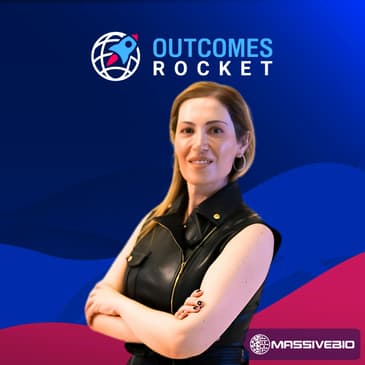
In this episode, Dr. Selin Kurnaz, co-founder and CEO of Massive Bio, shares how a personal family experience with cancer prompted her to leave a successful career in transactions and build a company dedicated to improving cancer care. She describes Massive Bio’s mission to empower patients to take an active role in their care by making clinical trials and treatment options more accessible. Kurnaz explains how AI agents, conversational technology, and partnerships with specialized technology companies allow Massive Bio to create a scalable, end-to-end cancer patient journey. Looking ahead, she envisions Massive Bio becoming both a global access point for cancer patients and a real-world data infrastructure that helps pharmaceutical companies develop better, more personalized medicines.
Tune in to hear Dr. Selin Kurnaz discuss the future of AI-powered cancer care, patient empowerment, and the role of real-world data in developing better treatments!
Resources:
[00:00:03] Hello, everyone, and welcome back to the Outcomes Rocket podcast. I'm excited to have another awesome conversation today with an outstanding person and leader in healthcare. Her name is Dr. Selin Kurnaz, and she is the co-founder and CEO at Massive Bio.
[00:00:27] They're an AI-powered platform that's transforming the way that cancer care is delivered for patients, the way that oncologists can deliver that care, but also how novel therapeutics and pharmaceuticals can actually reach the people that could most benefit from them. So I'm really thrilled to be digging into this important sector with Selin. So Selin, thank you so much for joining us today.
[00:00:55] Thank you very much, Sol, for having me. It's a pleasure to be here and basically spending this time together with you. Well, I know you're a very busy woman, so I'm glad we were finally able to carve out a little bit of time to make this happen. For sure. So let's get into it. You know, Massive Bio, tell us a little bit about it. Tell us about why you started it.
[00:01:17] I started Massive Bio based on my family's frustration in cancer care. I was working in transaction advisory, and my basically goal in life is to do different transactions for private equity companies. And I was also considering to open up my own growth equity fund and invest in companies at different growth stages.
[00:01:37] I come from a very different background. I come from a very heavy engineering background, and I fall in love to the world of transactions and dealmaking because I finished a PhD in 2006. And then 2007, I found myself in a management consulting firm, and there has been. That were the years where the private equity was really forming itself, especially for the leverage buyout.
[00:02:00] And since I was in a unit with 60 people, and there were 59 MBAs, and I was the only PhD in that group. Since I had a PhD in engineering, I had a little bit more superiority in terms of my analytical capabilities, and they put me in front of the private equity guys. And they said, this is probably your best bet if you wanted to do analytical work and understanding business dynamics. And the rest is history. So I spent quite a lot of time there.
[00:02:27] And then I switched companies because I wanted to go into a company where I focused more and more making deals and transaction, which was somehow I fall in love to the idea. But then I had a family situation in cancer that completely changed the trajectory of my life and in my career. That's how I have founded Massive Bio. Frankly, Massive Bio has not founded with the thought process that I was going to start a company.
[00:02:51] My Massive Bio has been started just to make sure that I can solve a family situation and I can solve this thing well, and then try to understand the problem. Because until that point in time, although I have seen a lot in my career, I did not see that dealing with cancer and going through that environment. It's going to be that difficult, even in the very large cancer centers. There's like, for one case, there are three different opinions. There is no clear answer.
[00:03:20] And especially for those people that's coming from an engineering background like us, you know, there's only one plus one equal to two. We don't, we're not used to a lot of point of view in one problem. It was very, very interesting times. And then it became very clear that this is not something that I can do as a part-time, as a hobby or as a side thing. I said, OK, I think this is very important that you need to change the lives of cancer patients.
[00:03:49] And we also need to self-activate the cancer patients. And I make that big and bold decision to leave everything behind to a certain extent and going into this side, setting up the company, onboarding the co-founders, onboarding a team, starting with a problem to a certain extent, making modifications on the problem and the solution over time. And it keeps going until now.
[00:04:15] Frankly, there has not been a lot of companies that have survived in our vertical or in similar verticals. We are probably one of the very few that's still out there and keeping the mission forward. Yeah. Thank you for sharing all this, Selin. So then I guess, so somebody in your family got cancer. My uncle has been diagnosed with cancer. OK. And I lost my aunt to cancer a couple of years ago. I have three cousins that are going through their cancer journey.
[00:04:45] Oh, my goodness. As we speak, unfortunately. And my co-founders, they have at least one family member that has been dealing with cancer. And our team members, we have cancer survivors. We have people that is going through their cancer journey as we speak. Or the spouses that are going through their cancer journey, unfortunately. This is unfortunately not a matter of if. This is a matter of when.
[00:05:08] So before it becomes a matter of when, we wanted to make sure that we can find the most appropriate ways to fight with this challenging disease, with the advancement of clinical information knowledge as well as technology, and combining them and bring it at scale and trying to bring it to the hands of patients by their self-activation. Well, it's a very personal mission for you. And I can feel it. You're in. You're all in on this.
[00:05:37] What's been going on, right? I know that there's reticulum nexus and trial relay, AI agents helping coordinate patients, physician trials, site sponsors, all this stuff. Like, where must human clinical judgment remain central? Right. So in a nutshell, we are trying to develop that massively scalable cancer patient journey. And I can tell you why we are obsessed in cancer patient journey. There are two reasons.
[00:06:07] One reason is that we wanted to make sure that those self-activated patients have the ability to get democratized access to clinical trials and drugs by leveraging the information in that journey, providing some use cases and algorithms on top of that journey, and evaluating some options for these patients, either in the form of trials or drugs, and helping them to get to where they need to be.
[00:06:36] So that's one side of the equation on the whole aspect of the technical infrastructure behind the reticulum nexus. The other aspect is, okay, we're trying to do this very important work for cancer patients. But at the same time, we are not a drug manufacturer. So we wanted to make sure that the pharmaceutical companies are also learning from these important patient journeys from the real world data.
[00:07:06] And utilizing those patient journeys for the development of better and cheaper drugs for the next generation of cancer patients. Because when you go into these mega conferences in the world of cancer, the American Cancer Society's, you know, ASCO annual conference that happens around late May, early in June. You know, I am heading to ASCO in October in Madrid. And then there is ASH later this year in December.
[00:07:35] When you go to these conferences, when you kind of get these mega discoveries in the world of cancer, you still see that there are very limited number of patients that has been put into these clinical trials. When I started Massive Bio, I was seeing more on the phase three trials, about 350 to 400 patients. And then now we see more on average about the 800 patients for the trials that we receive on our site from the pharma sponsors.
[00:08:02] But still, those are very, very large volumes. If you look at some other trials, you can see very, very low volumes. Okay, so every cancer patient's life is important. But with this level of informational access and technology, we should be able to understand the journey from a clinical and operational aspect of those cancer patients and utilize that information.
[00:08:29] Okay, what is the outcome that has been generated and how we can improve the next generation of drugs from those journeys? What has worked for the patient? What hasn't worked for the patient? And how we can simulate that next best step of action. So that's what we are trying to do. That is a fantastic goal.
[00:08:51] But as I was kind of, we were chatting prior to the podcast, you have to have a tactical plan of action, execution to take that goal into action. And reticulum nexus is the foundational model. To generate that cancer patient journey at scale by integrating every aspect of generative AI.
[00:09:16] So, for example, yesterday we announced a new investment for a company called Revy. Oh, yeah. And they're the one that is fairly advanced in their conversational AI. Because we wanted to make sure that the conversational AI has been integrated into the patient workflow. Because we are, at the end of the day, a young and junior company.
[00:09:40] I don't have thousands of people that can be on the phone to look after thousands of cancer patients. Right. So, what we basically use is that we use conversational agents in order to do certain conversations with the patient. We use conversational agents in order to be able to call the hospitals for some of the medical record related matters. We use some agents in order to be able to manage some of the last model related matters.
[00:10:07] So, but the interesting part about the, I think, this evolution of AI and evolution of this technology and the speed at which that they're developing is that there is much more vertical integration right now than before. You know, like, we are not a call center, quote-unquote, company. We are not a navigation company. But I had to do some of that work.
[00:10:31] And in order to be able to do that work, I had to integrate these different technologies into my architecture. And in order to be able to integrate those different technologies into my overall architecture, I need to develop that flexible and scalable architecture that is plug-and-playable so that I bring those different technologies, either homegrown or acquired from outsiders, to develop that end-to-end.
[00:10:57] Because with all transparency, I don't have the ambition to develop everything by myself. This is so good. It's huge. It's going to happen by one company trying to do every single thing internally. I basically respect whoever is a subject matter expert on the other area, but I want to bring it into my architecture so that I am the one that is working all day long on the full journey.
[00:11:26] If the call center capability needs to be outsourced, needs to be integrated with another subject matter expert or with another company that is doing this thing for a living, then I have to bring it there and combine all these things. Because to me, instead of me doing a half-baked job in 25 different things, I try to bring 25 experts and try to integrate them. And to your architecture and your system. Exactly. Some of them, I still have the expertise.
[00:11:56] Don't get me wrong. I'm not kind of throwing the towel to outside all the time. But at the same time, you know, I wanted to bring the best and the brightest in that journey. And I wanted to make sure that because there is this constant, you know, like the understanding in our space that direct to patient is not scalable. You will be surprised how many people that has told me that, how many investors that has told me that. Well, yes, to a certain extent, it's not scalable, but it is not fully true.
[00:12:26] Right now, there is technology. Right now, there is all the information out there in the world. We should be able to try and do our best. You know, maybe it's not 100% scalable, but I believe it's 97% scalable. So that's what we are basically trying to do instead of complaining about this is not a scalable thing. Because you have to give the power to cancer patients.
[00:12:51] You cannot just rely on the healthcare system and just the physician. So they have to be on top of this, but you also need to make sure that the cancer patient is activated. Cancer patient is informed. They're fully aware of all of their options. They're fully aware of everything that's available for them. Then it is their personal decision to select what they wanted to move forward with consultation with their physician.
[00:13:19] And we basically help them to execute on that. That's fantastic. I love it. And with technology today, so much of this is possible. You're able to integrate all of these different things, whether it be through APIs or bringing in the experts themselves. What's your vision for this, Selin? Like if you're successful in your mind, like 10 years from now, what do things look like? What's possible? Well, there are two things I think that's going to happen.
[00:13:49] One of them is that historically, one human being was a one human being. Now, one human being plus one cellular phone is one human being. Okay? So I wanted to have one cancer patient plus massive bio equals one cancer patient. So I want to make sure that every cancer patient has been onboarded to massive bio to get access to trials and drugs.
[00:14:15] And I want to make sure that every cancer patient gets that access regardless of their location and or their financial stability. Okay. In the world. In the world. However, while doing that, I'm not even stopping there. Okay. Okay. What I wanted to do is that I want massive bio to be the DNA command center of drug development in pharma. Okay.
[00:14:43] So we bring all these very large data sets from real world data and then try to make sure that how fast and you are also using the power of artificial intelligence so that you have better ways to mine the data, understand the correlation, understand, you know, what kind of assets is going to make sense.
[00:15:03] So I want to make sure that you have to make sure that you have better ways to make sure that you have better access to the data.
[00:15:26] So that's a lot of data infrastructure for them to bring drugs faster and cheaper and also more customized. So right now we're on the era of precision medicine, but precision medicine is still not an A1 in my perspective. Do you know what I mean? So again, this is definitely much better than a traditional histology, but still there are X number of patients that has the same biomarker that you are.
[00:15:55] And those kind of the precision medicine treatments are determined based on your biomarker presence. And there could be more even customization of that drugs based on your particular type. Even today, I was in a conversation, we were talking about a patient and this person's cancer is so rare.
[00:16:17] We were talking about their treating oncologist and the treating oncologist said she has only seen four of these patients in her lifetime, in her practice. With the type of cancer that she had? Exactly, exactly. And that is very unfortunate. So every cancer patient is important. So we are not going to give up. Like, I don't know if there's a precision medicine treatment available for this patient when there are only four patients that the physician has seen in their lifetime.
[00:16:45] So I want to make sure that we build the cancer care in such a way that you can be one in the four in the lifetime versus you can be an early stage breast cancer patient. Almost a lot of women are going to experience that in their lifetime. So we wanted to be able to fight this thing at that level, regardless of the complexity of the cancer.
[00:17:09] So that's the other thing that I'm trying to do, because you need to have the two sides of this marketplace. You need to have the patient side to make sure that they get the right treatment at the right time, at least based on their self-activation. Because not all of us are lucky enough to go into the best cancer care institution and like have the best level of financial freedom and so on and so forth.
[00:17:37] You know, unfortunately, we have been come to life differently and life has given us different its own projections. And also cancer is like a lottery. Some people get it. Some people don't get it. It's not someone has made a mistake and they ended up being cancer. And then on the other side, I want to make sure that this is not just happens in my lifetime. This happens once I die. Okay.
[00:18:00] So that we develop these long lasting drugs so that maybe we cannot completely erase cancer in my lifetime. But at least we say that even if you become this unfortunate disease, that the prognosis was for five years, if it was 6%, we increase it to 58%.
[00:18:48] Okay. Totally. Yeah. You got to get the patient side and then you've got to get the therapeutic side. And of course, the healthcare delivery side as well. Exactly. For it to work. Love it. Ultimately, the democratization of access to Massive Bio as a tool where patients can self-activate.
[00:19:11] And then secondly, that information system that life sciences companies can leverage to inform with real world data the future of medicines that could best serve patients. Yeah. You put it extremely well. Yeah. Yeah. No. Well, hey, you explained it. You explained it well. I just want to make sure I understand. I love the vision. I think it's a beautiful vision. And I don't know why I'm thinking about Jeff Bezos.
[00:19:38] Because what he's doing was a big idea, but it wasn't mission driven. But it was because he went from transactions to a big vision that he had, right? You're doing the same thing. You know, you went from transactions and in a field that is profitable and you'd be doing well to now you're taking some moonshots here. And I love that. I love that you're going for this. Yeah.
[00:20:07] I think the difference between Jeff Bezos and myself is that to a certain extent, what I'm trying to do is also associated with the God. What I mean about that is that, you know, at the end of the day, we're trying to influence a person's biology to improve their outcome. Their life. Okay. Like at the end of the day, we're trying our best to make sure that that clinical outcomes that has been improved and we are kind of doing everything at our disposal to create that best outcome.
[00:20:35] In Jeff Bezos' case, if your package don't show up, it's... What happened to my same day Nespresso? It's not here. Yeah. Yeah. I think if that package doesn't make it, I think it's challenging, but it's not the end of the world. You know, you're still going to be alive. And that's why I hesitated with the example, but I went with it anyway. No, I think, believe it or not, I'm a huge fan of Jeff Bezos. Believe it or not.
[00:21:00] So I think the fact that I like about the guy is that, you know, about that very relentless execution and an operational strategy to make things efficient, to show that it is actually scalable for the things. That people think it's not scalable. And he has kind of created one of the most scalable direct-to-patient models in the entire history of Earth. And we are trying to do that as well. Well, I think that's not a good thing.
[00:21:24] But in an area where there is God intervention more than the things that we can control by ourselves. Well said. If you had to think about the thing that you're most proud of in the company's 11 years thus far, what would you say that is so far? I know you're not done. You're just getting started here. But what are you most proud of? Well, I think there are two things that I am proud of. One of them is, of course, the number speaks itself. Okay.
[00:21:53] So right now we have on the direct-to-patient more than 200,000. In fact, we are about 220,000 cancer patients. We onboard about 5,000 to 7,000 cancer patients per month. And we are going after about like 10,000 cancer patients per month. Okay. And on the physician side, we have about 525 hospitals where we have business associate agreements. We have about 7,000 physicians where we have been engaged through our patients.
[00:22:22] We have about 60 pharmaceutical companies. That is our customer. And we're working with 16 out of the top 20 pharma. I have 96 employees and we are in 17 countries. All right. And we have basically built a three-layer business from clinical to commercial to real-world data. And there are some of the other new verticals that is on the horizon that is going to be launched later this year.
[00:22:50] So I think from the numbers, we have made the case that this is... A lot to be proud of. Yeah. Yeah. This is something... I sometimes talk to my team and I say, if there are no numbers in mold, my brain doesn't take it. So tell me the numbers. Show me the numbers. Show me the numbers. So I think that is one side of the equation. The other side of the equation is that I can tell you that there are so many people that has told me that this is not going to work.
[00:23:18] From probably the first 15 days from the formation of the incorporation of the business until now. And then I'm sure that the more that we push that this is going to happen, the more enemies that we are going to generate. And the more people are going to think that this is not going to be working. So I think I'm really impressed with the level of the perseverance and resilience that this company has.
[00:23:47] Aren't we had bad days? Tremendously large amounts. Like, aren't the things that are going bad? Tremendously large amounts. But we never, I think, say, OK, this is not going to happen. Let's don't push enough. Let's don't push the envelope enough. All that stuff. So we always say, OK, this is another day. Let's take a deep breath. Another day is another opportunity. Let's push for it. Let's move forward. Let's learn from the mistakes.
[00:24:16] And let's kind of make sure that this is a marathon, OK? Yeah. And this is not a sprint. You have daily sprints, but this is at the end of the day marathon in the long term. We believe, because I look at some of the consent numbers from a couple of years ago, you know, like we were getting like maybe a couple of dozen consents. Now thousands of consents, you know, on a monthly basis. You know, if you look at that trajectory, it's a lot.
[00:24:45] So I think the resilience and perseverance aspect of staying in this business. And frankly, it's not about just kind of the from a missionary standpoint, believing in it. Also, it took us a lot of time to convince the investors and all that stuff. You know, like you're also doing this thing in a poor environment. You know, it's not that you're doing in here is like hundreds of millions of dollars in huge amount of prosperity. You know, you're poor and then you basically try to change the world.
[00:25:15] That is not very easy thing to do. Right. So those are the things that was very impressive in my perspective, especially on the co-founder side. Like we came together and we said, whatever happens in this world, we are moving forward. And whatever the challenge that happens, it is another day for us. We clean it out. And then next day we'll start all over again. Well, that is kind of the, frankly, the motto from almost like the day two till now.
[00:25:44] And I think it just continues. I love that, Celine. And it is about mindset. You know, if you're going to be in this business, you got to have the right mindset and that persistence and that resilience. So congrats on the numbers. Congrats on the growth. Where do you get all your energy from besides that Diet Coke? Well, I have to admit that Diet Coke is a huge component of my energy. I can tell you that.
[00:26:13] So I think I am going to write a message to the shareholders of Diet Coke because, you know, I'm making huge potential revenue. So I think this should not go unnoticed. So in my loaded salary, I think they are going to be a lot of money from me. So I think that's a discussion for another time for sure. I think I'm getting my energy for a couple of things. One of them is, you know, when you have a cancer patient and they go through the journey and
[00:26:40] when you get that thank you note, you know, like they see one more thing in their life. They see one more engagement. They see one more graduation. They see one more positive thing. Unfortunately, not all of them are like, you know, have a remission or a good story, sometimes challenging stories. But at least, you know, their family said, you guys have done everything at your disposal in order to be able to make it happen. Those kind of things. There is no way to compare the positive driver of those things in your life.
[00:27:10] So that's kind of very important. The second point is that you have your team. And when those team members, you know, they are saying that they're very proud of being a part of this mission. And they believe in everything that we're doing and they're kind of carrying the torch and going into the next layer. That's what I am kind of extremely proud of. And I get my energy. And then the third part is my mom.
[00:27:37] Unfortunately, my father passed away about two years ago. He was a chronic nephritis patient for more than 50 years. And he is probably the longest living nephritis patient in the world because no one has survived that much. And I think carrying his genes is definitely very important. And if you basically meet my mom, you know, she's like anything. She doesn't hear me for like two minutes. Okay, what happened? There's no, you know, like action on your side.
[00:28:07] There's this mom, like I'm sleeping. She's the kind of woman that took me to hospital because I slept for a couple of hours. And then the doctor said when I was a baby, this baby is sleeping. You need to just let her sleep. Let her sleep. So I think if you have that kind of a chief at home, you definitely make sure that you have some energy. Otherwise, you know, she's going to ask a very difficult question that I cannot even answer. Oh, yeah, I get it. Yeah, you get it from your parents, too.
[00:28:36] For sure. Yeah, for sure. For sure. For sure. Definitely, I'm privileged enough to have good genes. Oh, that's awesome, Celine. That's awesome. Well, look, I've really enjoyed our conversation. And this is tip of the iceberg for everybody listening. You know, there's an opportunity for you to learn more about Massive Bio and Dr. Celine Cournaz here. If they want to learn more about you and the business, Celine, where can they reach out?
[00:29:02] They can go into our website, you know, htcpmassivebio.com. We have significant presence in LinkedIn. We have significant presence in X. We have significant presence in other social media platforms. Or they can just go into the contact us section in the website. And we absolutely read every email, every inquiries to us. I believe you. And for patients, if they wanted to reach out, the platform's accessible via... For sure.
[00:29:30] So in the website, there's a section where they can start their journey. And then they can start that journey at any moment. Love it. So there you have it, folks. And one more thing, June. This is a 100% free service for... I was thinking it and I didn't know it, so I'm glad you mentioned it. Yeah. So this is a 100% free service for a cancer patient. We don't charge a penny from any cancer patient. What we do is for 100% free for a cancer patient and also 100% free for physicians too.
[00:29:59] So we only, you know, get our compensation from pharmaceutical companies. It's free for everyone else. Yeah, that makes sense. That makes sense. I love it. Folks, there you have it. An incredible conversation with the outstanding and energetic Dr. Selin Kurnaz, the co-founder and CEO of Massive Bio. All the ways to get in touch with her on the team are going to be in the show notes. If you're a patient or if you know of someone with cancer that could benefit from this platform,
[00:30:29] help us help Celine to her goal of getting everybody on the planet with this unfortunate disease, the help that they need through Massive Bio. So check all that out in the show notes. Thank you all for tuning in. Celine, thanks for being here. Oh, thank you very much for having me. You know, this was an amazing conversation. I really enjoyed it. Get to know you better as well as kind of reaching out to your audience. I'm looking forward to the opportunity to have further conversations. Likewise, Celine. We'll talk soon. Have a great day. Bye-bye.