The future of medtech is built by the people who keep moving ideas from concept to care.
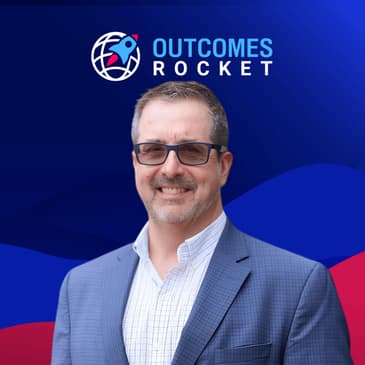
In this episode, Tom Salemi, editorial leader, podcast host, and longtime medtech community builder behind DeviceTalks, shares how his path from community journalism eventually led him into healthcare reporting, medical devices, conferences, and podcasting. He reflects on discovering purpose in serving industry communities and launching DeviceTalks Weekly during the pandemic to keep conversations going when in-person events stopped. Tom also discusses the importance of continuing to move forward during career pivots and uncertain moments that require people to bet on themselves. He explains why DeviceTalks focuses on the people behind medical innovation and shares his excitement about advances in neuromodulation, stroke care, clot removal, and surgical robotics.
Tune in to hear how community, persistence, and purposeful storytelling continue to move medtech forward.
Resources:
[00:00:03] Hello everyone and welcome back to the Outcomes Rocket. So excited you tuned in to another episode. Today I have the privilege of hosting a guest that needs no introduction. His name is Tom Salemi. He is the host of DeviceTalks. I've been following and listening to Tom for many years now. And a couple weeks ago I had the opportunity to finally run into him.
[00:00:30] Right? Like, man, why did it take us so long, Tom? We've been circling each other, I think, since the pandemic when you and I were both doing podcasts and we were just kind of like, oh, there's another guy doing it. There's another guy doing it. But it's amazing we've never met before. Yeah, well, I'm glad our paths finally crossed at Medtech Innovator. Love the work that Paul and his team is doing with that organization. And so, man, this is so cool.
[00:00:54] Now we get to help you tell your story to our audience, many of whom which already know about you and listen to you. But for those that don't, talk to us a little bit about you, Tom. Tell us your background and what inspired your work in healthcare and in particular medical devices.
[00:01:09] Yeah, I had followed a kind of serendipitous path into Medtech. I started off in community journalism. I just enjoyed the whole newspaper experience. But then I came to realize later that I really just enjoy serving and building communities. So the newspaper stuff was going in the direction I thought it would. So I had the opportunity to join a newsletter that focused on healthcare and venture capital. And from there, I discovered medical devices. And it was much better than biotech. Biotech, I could not grasp. A small molecule versus a large molecule and all that other stuff.
[00:01:37] But medical devices were like, oh my gosh, they stimulate this and it does that. And it's just something that really is sci-fi and wonderful and important and helpful. So I latched onto that pretty quickly. Did writing for a lot of years. Got tired of that. And then had a fortuitous layoff that forced me to course correct. And then I went into conferences and podcasts. So it's been a great, as I say often at my conferences, like I never why I'm doing what I do. Every day feels important. So it's great.
[00:02:07] Man, that is so good, Tom. To feel that way about what you do is so important because we spend so much time working. You got to feel that way. So let's hone into Device Talks. I'm a huge fan of what you and the team have created with both the podcasts as well as the conferences that you do. Talk to us about Device Talks and how do you add value to the healthcare ecosystem?
[00:02:31] Sure. So Device Talks, I joined in 2019 in Device Talks to run our three meetings, Boston West and Minnesota. And then of course the pandemic hit in 2020 and we weren't doing our meetings in that year or the next. So we could have had a pivot. And March 2020, I emailed Chris Newmarker at MassDevice and said, hey, we're doing a podcast this week. He's like, great, let's do it. So we launched Device Talks Weekly. I had already done those before.
[00:02:55] We already had a channel set up and I just knew I was worried that I would just be, I wasn't writing anymore. I had no reason to interview people anymore. I'm like, I got to talk to folks. I got to remain engaged or I'm just going to be hanging out here. So we launched the podcasts. We launched Device Talks Tuesdays, which is our kind of appointment webinar meeting, which was a replacement for our in-person events with the plan of at least getting rid of the webinars once conferences came back.
[00:03:20] But when they did, people were still buying the webinars. So we're doing all of that now. We're doing in-person meetings. We're doing digital meetings on our webinar platform. And we're still doing our podcast for a time. We were really rolling with a lot of strategic focus podcast, Striker, Medtronic, Boston Scientific. I think we've cycled through that and we're just focusing on Device Talks Weekly right now with Women in MedTech.
[00:03:40] But all of our events, all of our webinars, they're all really built for, in our podcast are built for the folks in the industry, the engineers, the manufacturing folks, the marketing folks, the commercial folks who are working to get life-saving devices into the hands of physicians. We love to work with MTI, MedTech Innovator. I love startups. I love venture capital, but our focus is really on the makers of medical devices.
[00:04:05] That's great, man. Well, you guys have definitely put together a beautiful community. Interesting to hear that, man. You were in this situation where it's like, oh my gosh, everything has stopped and I've got to do something. And so how true has that been for many of us where you're up against the wall and you have to get creative?
[00:04:27] I feel like, yeah, I believe we all run up against that. And I feel like in conferences and podcasts in particular, there's a lot of that. There's a lot of leaps of faith in conferences because I don't know if this is a post-pandemic thing or not, but folks don't really register until the last month or so. Because we never know. We're all like, I'm not committing to anything until I absolutely know I'm going. So you put six or seven months into planning this thing and you're like, all right, this is a good program.
[00:04:56] I believe in it. And I trust the community response. A lot of trust falls in conferences. But yeah, to your larger point, I think I've learned and I share this lesson with my kids. Like the most important thing is forward movement. It may be the wrong movement, but for me, staying put isn't really an option because you, even if you move forward in the wrong direction, you learn quickly that door is locked and you move to the next door.
[00:05:23] If you're just standing in the hallway, looking at all these doors, you're not going to, you're not going to find the right one. That's great, man. Yeah. Good friend of mine. Mark says survive in advance. Survive in advance. That's absolutely right. I love it. Shout out to Mark Zemo at Ray Tia for that one. So when you think about the community, the podcast, the conferences, what would you say is different or better from what you guys do than what's already out there?
[00:05:52] Oh, that's a great point. Better is a, I think there's a lot of great meetings out there and I know I should be like thumping our chest, beating our chest as to why we're better. I think that we're really just trying to, again, give a place for, we're not a higher, this is getting, we're not a super expensive conference that is really drawing like folks to signature locations. And it's a real exclusive and I love those meetings. So I'm not saying it in any way is critical.
[00:06:21] I think we build our meetings for, again, the folks who just need two days to go out and meet folks and recharge and reconnect and be reminded why they're doing this. Because when we see each other, I saw you at MTI and it was a great meeting and we carried it forth and now we're doing this and like it keeps building and building. So I think our conferences really create those opportunities for someone who's a product developer to meet another person in product development and move forward or an engineer to meet an engineer or a manufacturer to meet a manufacturer.
[00:06:48] We're not going to have a lot of conversations about starting a company or exiting a company or attracting venture capital. There's a lot of great events that do that. But we are focusing on how I got this device designed, how we got it manufactured, how we got it sold. So that's, I think that's our very important focus. Well, look, two words that I would describe device talks with, practical and impactful. Yeah. Like you guys are so focused. And by the way, folks, we talk about this all the time.
[00:07:18] Like conferences and healthcare are still the number one pipeline channel. They represent basically 44% of GTM budgets go to that. So like the reality is, as Tom just mentioned, like if I hadn't run into him, we wouldn't be doing the stuff we're doing now. So like I believe in it, Tom, and I love that you guys exist. So thank you for doing what you do. Let's talk about setbacks because I feel like we learn more about our setbacks than our successes.
[00:07:46] Give us one that comes to mind and a key learning that came out of it. Well, the COVID experience was definitely one, but six years prior, I alluded to the layoff. We were, my company was acquired by and Informa decided that they didn't want the editorial staff that we had anymore. And they laid everybody off and I was one of them. Which one was it, Tom? I was with InVivo and Startup Magazine. So it was part of Elsevier Business Intelligence. That was acquired by Informa. I worked for them for three months and then they just did what they did, which it happens.
[00:08:15] But I was grateful because I wasn't grateful immediately, but I became grateful. Silver lining, right? Yeah, because I was ready to move on from writing. I felt like there was more I needed to do. And it really afforded me the opportunity to look around and consider it. It was scary. I probably was not working for three months, although I had a lot of great conversations with people. So I felt like I was moving forward.
[00:08:41] But I was given an opportunity to do what would have been a lateral move, a lateral one half step back move. But it was safe and secure and I knew it. Or I could roll the dice and go become a contractor and work with this other person who I'd never met and do this thing I'd never done. And I felt like any time before that moment, I would have gone with plan A, the safe and secure. But that was the one time where I was like, no, this is the time I need to really better myself. And that's where I survive in advance.
[00:09:10] That's where I kind of realized you got to just keep stepping forward and finding the next thing. If you slip and you slide off the rock a little bit, you'll find another rock to step onto. So you'll learn to trust yourself at some point. So I hope everyone finds that moment in their life where they trust themselves. That's so cool, man. Thanks for sharing that. And you've now created such a beautiful community. Your brand alone, Tom, is a brand in itself, right? Like the Tom Salemi brand because of that risk you took. And so it's paid off for you.
[00:09:40] So kudos, man. Appreciate that. Thank you. Absolutely. And so the market is constantly changing. AI shifts in kind of how people are investing. What's a health tech trend that you think is going to change the game as we know it in healthcare and in net tech in particular? Wow. Okay. AI, I won't bring it up. You mentioned it and it obviously will have an impact, but I don't really understand. I mean, I think it's going to be interesting in how it really creates a tighter connection
[00:10:08] between patients and their devices and physicians and their patients. I think as data becomes more manageable, folks, devices become more and more useful. But I'm just really excited about some of the old standbys that are really kind of hitting their stride, neuromodulation, any kind of neurostimulation. Some of the stuff that's going on in stroke and clot removal is just amazing. And this is the kind of thing. This isn't low hanging fruit's not the right term, but like an important device that can
[00:10:35] clear a stroke safely or a surgical robotic system that can elevate the skill set of an interventionalist to be able to clear a clot. You're saving lives like right away with that. That's going to be like just a huge impact, not only helping those individual patients, but all the care that they would have needed afterwards if the stroke hadn't gone treated. So I'm still excited about the bread and butter coils and things like that really make people better. The tech stuff is cool to talk about and it will absolutely have an impact.
[00:11:04] But man, I just, I'm excited about, I'm excited about robots because I think there's there. I wasn't sure for a long time, but there's there for sure. I think there are a lot of surgeons who could use the support and I think they'll do a better job and we'll all have better outcomes. So I think the next 10 or 15 years, I think we're going to see better outcomes. And I think just, just hopefully I don't want to bring the economical aspect into it, but something's going to happen on the healthcare side of the health, the cost side of things. So hopefully it will help with that as well.
[00:11:34] I love it, Tom. You know what? There's a lot of fancy sort of sass and AI at the end of the day, like biology, right? The tangible is what moves us. Where the metal hits the road, so to speak, or the nitinol hits the vascular or whatever. That's odd. That's so geeky. I love it. That's so geekymetic. I love it. That's great, Tom. Well, look, man, really, I respect and admire the work that you do and the work that the
[00:12:03] Device Talks team does. If people wanted to learn more about the podcast, the conferences, about you, where can they reach out? I'll share that happily in a moment, but so I just wanted to tip my cap to you as well. As I said, we got to know each other four or five years ago. And I lost touch with you for, I don't know, a period of time that I looked up and I was like, oh my God, look what he built. Even your website, I was looking at your website before we go on. And I'm like, I'm jealous. Like, you got it going on. So great job. They can go to devicetalks.com. We've got everything there. You can find our conference pages there.
[00:12:33] And please connect with me on LinkedIn. I love LinkedIn conversations. I get two or three messages a week from folks who just have the nicest things to say. And it always gives me a little spring in my step to know that someone's enjoying. I got one this morning. This young woman said that, oh, my fiance and I listen to your podcast every week. It's just like, I'm just imagining this happy young couple listening to my stupid podcast. It's like, how else do you get to do that in B2B journalism?
[00:12:58] So I'm really grateful to be serving such an impassioned and caring community as well. MedTech's the best. Absolutely. I double on that one for sure. Agree with you, Tom. And thank you so much for joining us. And for anybody that hasn't had a chance to listen to Tom's podcast or check out the broader team's work, including their conferences, make sure you check out the show notes. We'll link up always to get in touch with Tom via LinkedIn, as well as the Device Talks
[00:13:26] team on their various things that they do for MedTech. So make sure you check them out. And if something in today's episode resonated, share it with your friends, because ultimately that's how things get discovered. It's that one degree of separation. So make sure you share it. Hit that share button. Text it to them. Make sure they listen. Thank you all for tuning in. And again, Tom, I want to thank you for joining us. My pleasure. Thank you.