
A business cannot scale beyond its founder unless the founder is also willing to evolve.
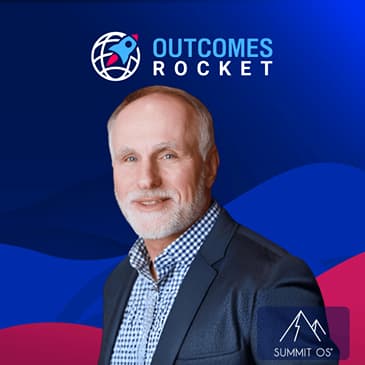
In this episode, Steve Preda, Founder and CEO of Summit OS Group, discusses the systems founders need to build scalable, leadership-led companies. Steve shares how business operating frameworks helped him grow and sell his investment banking firm, which in turn inspired him to create Summit OS. He explains how the system establishes execution momentum, develops leaders into “mini CEOs,” and helps businesses progress from operational discipline to strategic differentiation. He also touches on why healthcare professionals must understand the business they lead, even when they delegate its daily management, and why continual reinvention is essential as companies grow and face disruption.
Tune in to learn how the right systems can help founders strengthen execution, empower their teams, and build businesses that can scale beyond them!
Resources:
Connect with and follow Steve Preda on LinkedIn.
Follow Summit OS Group on LinkedIn and explore the Summit OS website!
Visit StevePreda.com to explore Steve’s books, podcasts, videos, and other resources.
Explore the Summit OS book library, including Summit OS: A Fable.
Preorder Steve’s upcoming book, 5 Climbs: That Take Your Business to the Top of the Mountain.
Listen to Steve’s Management Blueprint podcast.
Download the free Summit OS Starter Toolkit.
[00:00:03] [SPEAKER_01] Hello everyone and welcome back to the Outcomes Rocket. I'm excited to have you here with us today because we have an outstanding leader to showcase on the podcast. His name is Steve Preda. He is the founder and CEO at Summit OS Group.
[00:00:23] [SPEAKER_01] I had a chance to be on his podcast and I just couldn't stop asking him and he wouldn't answer me about the poster behind him, Summit OS and A Fable. So I was like, all right, let's get you on the podcast so you could talk about it because I want to learn and I want to share with all you guys. So Steve, I'm excited you were able to join us today.
[00:00:46] [SPEAKER_00] Thank you. It's fun to be on a podcast and actually being a guest. Don't need to prepare and I just have high anticipation of interesting questions that's going to be very stimulating.
[00:00:56] [SPEAKER_01] That's awesome, man. Look, I love your approach because you're a frameworks guy, but you're also an author and a consultant. So before we get into the discussion, tell us a little bit more about you.
[00:01:08] [SPEAKER_00] Yeah, so that's a good question. So I started life as an investment banker. I guess I did other stuff, but the important thing, I started an investment banking company when I was 35 years old, which I grew for 10 years and sold to a private equity group 10 years later. And then I came to the United States with my family and started doing business coaching and getting into it. Where are you from? I'm from Hungary. Oh, Hungary? Oh, very cool.
[00:01:38] [SPEAKER_00] Yes.
[00:01:39] [SPEAKER_01] Sorry to interrupt you. I was just curious.
[00:01:40] [SPEAKER_00] Yeah, and I got into different business frameworks and I got really excited about it. I mean, I built my investment banking firm also using business frameworks, the E-Myth and EOS, and they really helped me empower my team and put systems in the business and eventually sell it. And when I came over, I started dabbling in different systems, implementing them. And then I realized that there were things that I couldn't do with those systems.
[00:02:08] [SPEAKER_00] They seemed to be of a limited scope. And I was wondering, why would I have to stop working with a company when I'm just getting started? Yeah. Maybe there's a better way. And so it was what I was hoping to be a better way, which allows me to work with companies in a much more customized approach and in an evergreen format. So I can stay with them longer.
[00:02:30] [SPEAKER_00] I can help them overcome more complexity in their business and have them not just transition from a founder, a led business to a leadership led business, but also to a scalable business.
[00:02:41] [SPEAKER_01] That's awesome. I love it. I love how you think. And congrats on the success thus far. And now you're developing the playbooks for other founders to do it as well. So, yeah, you know, a lot of the community runs on things like EOS. I know we run on EOS. The e-myth is actually fascinating. I love that read. It's actually one of my favorites. So tell us how your business is making a difference for founders and your particular approach.
[00:03:09] [SPEAKER_00] Yeah. So the business operating systems went through an evolution. The e-myth was the original in 1986 and then the great game of business and scaling up and Les Ione's work and OKRs and others. And what I wanted to do is a couple of things. So I thought that it was really important for a business to implement the basics of good management quickly, to create momentum. I call it the 45-day execution momentum.
[00:03:36] [SPEAKER_00] So what maybe takes a year, year and a half without the systems, we can do it in 45 days. We are much more hands-on in that 45 days. We have a digital portal where we make sure that we upload all the information. We make it really easy for our clients to have everything at their fingertips and not be bogged down with losing elements or not understanding everything. We also work very closely. And I say we because I have other, we call it celltoise architects.
[00:04:05] [SPEAKER_00] We have other coaches that implement the system in my community. So we work with them to get their execution cooking within 45 days. So they have their strategic plan and they have their quarterly objectives. They are implementing them. They have the scoreboard. They have a good meeting rhythm, which goes beyond the weekly tactical meeting.
[00:04:26] [SPEAKER_00] And during that time, it's also an opportunity for me and my fellow celltoise architects to figure out, okay, what's going to be the next step for this company when execution is working? What are the levers that you need to hold? And every quarter will come back and pull another lever and being much more tied in with the business, following what they are doing, understanding them at a deeper level. So we work with fewer clients than an EOS implementer would.
[00:04:55] [SPEAKER_00] And we are much more digging deeper and we want to make sure that we really help them. So it's much more hands-on approach as opposed to let them to their devices and showing up once a quarter and run kind of a predetermined process.
[00:05:11] [SPEAKER_01] That's great. No, I appreciate the insight. And so ultimately, you're a differentiated offer that could be used in place of an EOS or a great game of business.
[00:05:23] [SPEAKER_00] It can be in place or it can be on top of.
[00:05:26] [SPEAKER_01] Okay, got it. Okay, so it could be either or.
[00:05:29] [SPEAKER_00] So what happens is the first 45 days, we implement everything that is important and still relevant from EOS. Plus, we put in place a more robust meeting framework. We have a ROC process which helps clients to be successful with the ROCs in the first quarter rather than wait for them to figure out the kinks.
[00:05:50] [SPEAKER_00] And then, implementing Summit OS depends on the company, but it takes somewhere between two to three years for them to get really good. There are 50 business growth practices that we implement. And then when we go to that stage where you have a systematized business that really has many CEOs in the main functions and it's firing on all cylinders, then strategy OS is the next level.
[00:06:18] [SPEAKER_00] So it's what I always wanted to do when I was a new EOS implementer. What's the next level? How do we take this company from the local Fast 50 to an Inc. 5000 to a Fortune company? Then we help them build these unique activities that Michael Port talks about that differentiates your business and allows you to be at a sustainably high margin in your business. This part of strategy OS is to build these unique activities. I call it the strategy stack. It's kind of a puzzle of these unique activities you have.
[00:06:46] [SPEAKER_00] And then we help them expand the business geographically into multiple products, spawn new businesses, and then build a good M&A engine and an innovation culture in the business, and ultimately figure out how to reinvent. Because more and more companies, they get disrupted. The creative destruction that Joseph Schumpeter talked about, it's accelerating. It's coming faster with AI. And there are 11 ways to reinvent the business. I found 11 ways.
[00:07:15] [SPEAKER_00] Of course, there are more. And we basically teach our clients, okay, what are those ways and which one might fit your business? So when you get disrupted, you can move on and take it to the next iteration.
[00:07:27] [SPEAKER_01] That's awesome. I love it. You're a thinker. You're a systems thinker. I appreciate that kind of thinking. And I know our listeners do too. Talk to us about the poster behind you, A Fable. There's people, there's purpose, there's perform, there's playbooks, and there's profit.
[00:07:45] [SPEAKER_00] Yeah. These are the five climbs. So actually, my newest book is coming out on September 15th. Oh, on the 15th? Oh, man.
[00:07:55] [SPEAKER_01] That's exciting.
[00:07:56] [SPEAKER_00] And the five climbs. So I had an earlier book. I like that. This is Rebranding the Early Book. And the poster that you have behind me, this is a Fable version of the system. So what I realized was this is our Bible, the 50 business-host practices, and we have strategy-wise. But Summit to Us, a Fable is an easy-to-digest story about a medical practice that is going through all sorts of challenges and how they overcome those challenges and build this
[00:08:24] [SPEAKER_00] business and bring in Friday equity and IPO the business eventually. with characters, which are actually one of my clients inspired it. I changed the names and the business, but this is a story that is fast-moving and it's a much easier way for people to get engaged with something like that. And then if they like it, Patrick Lencioni inspired the approach. Then they can get to dig in with the Bible, with the tools and- The five climbs.
[00:08:50] [SPEAKER_01] And do others. Which will be out on September 15th. If you're listening to this and it's already September 15th, we'll have a link for you in the show notes. If you're catching this beforehand, then stay tuned. I'm sure Steve's going to share with us a site where you could go learn more. And we'll include that in the show notes. So this is awesome, man. I love this. What's one thing that most business leaders and owners get wrong?
[00:09:15] [SPEAKER_00] I think what people don't realize is that, you know, Michael Lurie talks about the technician working in the business, on the business. But what people don't realize is that there are different phases. It's an evolution to being a successful entrepreneur. You have to keep reinventing yourself. You can't do the same things. You know, first you start as a technician, then you become a manager because you will have some people that you will have to evolve in your work so that they can help you.
[00:09:43] [SPEAKER_00] And then you become an entrepreneur where you are delegated most of the functions running the business and you are working on innovating the business and putting more energy behind it and spreading the gospel. And at some point, you have to grow beyond that and you have to bring in visionary people in your business so that they can grow their function like you did the business. And it requires a constant reinvention.
[00:10:10] [SPEAKER_00] Now, some people don't want to change and they don't want to reinvent themselves because they love just being engaged with the technical part of it. And even when they have built a business that is successful, they'd rather go back into it than to keep growing it. Because when you keep growing it, there's more pressure. There's more stress in your life. And it's not for everyone. I think that's what people don't necessarily see when they start the business.
[00:10:38] [SPEAKER_00] And many people think because if they did see it, maybe they would never start the business.
[00:10:44] [SPEAKER_01] Yeah. What does Gerber call it? The entrepreneurial... Seizure. Seizure. That's right. That's right. I think that's fantastic. Well, this is great. And so for leaders and you know, our audience is a healthcare audience. So a lot of the folks listening to this are healthcare. And if they're not, they're interested in the business of healthcare. What advice would you give them in particular?
[00:11:09] [SPEAKER_01] And just to give you context, Steve, software as a service companies, medical device companies, but also health system leaders.
[00:11:17] [SPEAKER_00] So actually, some of the last a favor. So I have a few healthcare medical practice clients actually. And sometimes a favor is about the dermatology practice.
[00:11:27] [SPEAKER_01] Oh, really?
[00:11:28] [SPEAKER_00] Okay. My mother is a dermatologist.
[00:11:30] [SPEAKER_01] She is still practicing at the age of 83. Dude, that's awesome. Good for her. Is she in the States or in Hungary? No, she's in Hungary. She's in Hungary. Okay, cool. Shout out to your mom. Shout out, Dr. Preda. Shout out to Dr. Preda. She's not Preda. She didn't take my wife then. Oh, okay. All right. Well, what's her last name? What's her last name? Let's give her a shout out. It's Podanyi. Podanyi? Yeah. All right, Dr. Podanyi. There you go. Shout out to you.
[00:11:57] [SPEAKER_00] I don't think you're listening to this, but I'll...
[00:12:00] [SPEAKER_01] Forward it to her.
[00:12:01] [SPEAKER_00] What? But anyhow, so it is a challenging thing in the medical... Depends. They're different. You said there are medical equipment manufacturers, there are distributors, there are hospitals. And wherever there are expert professionals involved, those businesses are always challenging. Because, you know, those people are often... They don't want to be business people. They want to do their profession well. Technicians.
[00:12:27] [SPEAKER_00] They want to stay technicians and they are very high value-add people. So there's very high opportunity cost for them to do anything else. And they much rather hire someone. But then when they hire someone and they don't supervise a person, then things can get out of head. So that is a challenge. So if you are a physician and you think that you can just delegate running the business, yes, you can delegate many part of it.
[00:12:53] [SPEAKER_00] But it helps understanding the business so that you can keep control of the race. And also, the business always will need you for your vision and for your imagination and for your understanding of the audience. And that is hard for a business manager to replicate. So just keep that in mind.
[00:13:15] [SPEAKER_01] Well said, Steve. Well said. There you have it, folks. Just an incredible opportunity to get into the mind of Steve Preda. He's a thinker. And if you feel lost or if you feel like there's an opportunity for you to gain an edge, you don't have to leave that to chance. One of the reasons I love Steve is because he's actually been there and done that. There's folks that actually read a book and then they claim to be an expert.
[00:13:39] [SPEAKER_01] But Steve's actually been there, done that with his own business, which is something that I respect. Steve, if people wanted to reach out to you, where can they do that?
[00:13:48] [SPEAKER_00] So they can come to summitos.co. Summitos.co, that's the Summit OS system. Or they can check out my website, steveprada.com. And from there, you can find my books and podcasts and everything else.
[00:14:02] [SPEAKER_01] Awesome. There you have it, folks. This is the tip of the iceberg, the tip of the iceberg that will get you to the tip of the summit. If you go check out that website, we'll leave it in the show notes. And the book, it might be live today. So make sure you check out the show notes for that book as well. Thank you all for tuning in. And Steve, thank you so much for being with us.
[00:14:25] [SPEAKER_00] Thank you, Saul. I much enjoyed the conversation. You're a very good interviewer.
[00:14:28] [SPEAKER_01] Thank you.
[00:14:29] Thank you. Thank you.