
Healthcare interoperability fails if the data moving through the system isn't accurate.
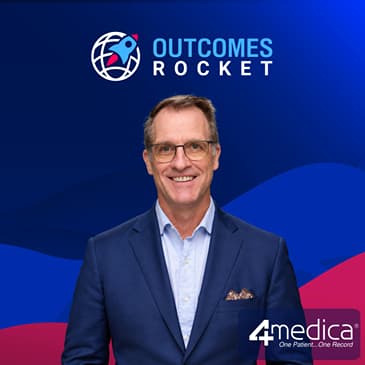
In this episode, Saul Marquez, Founder and CEO at Outcomes Rocket, speaks with Martin Cody, Senior Vice President of Sales and Growth at 4medica, about the overlooked but critical issue of patient identity accuracy. Martin explains how duplicate, incomplete, and mismatched records lead to costly downstream denials and shares how 4medica combines technology, data, and human expertise to clean and maintain patient data at scale. Because the company understands the cascading effects of bad data, it brings a proactive approach to fixing identity issues upstream, especially during hospital mergers and acquisitions. Martin is also candid about the clinical risks of patient record overlays and why strong human relationships still matter in a rapidly changing healthcare industry.
Tune in to hear what it takes to make clean patient data the foundation of safer care and true interoperability!
Resources:
Connect with and follow Martin Cody on LinkedIn.
Follow 4medica on LinkedIn and explore its website.
Stay tuned for 4medica’s upcoming podcast, Dirty Data Done Right.
[00:00:03] [SPEAKER_00] Hello, everyone. Welcome back to the Outcomes Rocket podcast. I'm excited to be hosting Martin Cody on today's episode. He's a friend. I don't feel the enthusiasm. As I say, he is a friend. Let me just give you his background. Senior Vice President of Sales and Growth at Formedica, where they're working on data.
[00:00:32] [SPEAKER_00] Patient data, that is, for health systems. Had a chance to work across different projects with Martin at his work with Matic Health and a lot of things that you guys will learn about him in this podcast, including his time in the wine business and maybe some of his music preferences. So, Martin, thanks so much for joining, finally.
[00:00:54] [SPEAKER_01] Yes, it's been long overdue. Saul, great to see you. And we're humbled with the opportunity to speak, and I really appreciate it. So thank you so much.
[00:01:02] [SPEAKER_00] Of course. It's my pleasure. So, Martin, before we get into talking about Formedica and having more fun conversations here, talk to us about what got you into healthcare and what keeps you in health.
[00:01:16] [SPEAKER_01] What got me into healthcare and what keeps me into healthcare are two radically different things. So I've been in healthcare nearly four decades, and it's the only industry I've ever worked in outside of wine. And what got me into it was I grew up in a suburb of Chicago as a caddy. So I worked at a private country club and-
[00:01:35] [SPEAKER_00] Where did you work? What club was it?
[00:01:37] [SPEAKER_01] A country club called Briarwood Country Club in Deerfield, Illinois.
[00:01:40] [SPEAKER_00] Cool, cool, cool. I was a caddy, too, as a kid. Did I tell you that? Get out of here. No. Yeah, yeah. I caddyed at Medina for a couple years. Oh, that's a good place to caddy. It was. It was good, man. It was good. Yep. Yeah. That is an awesome place to caddy. Sorry, I didn't mean to interrupt you, but- No, no, no, no. That's perfect. I didn't know we shared that. I didn't know we shared that.
[00:01:58] [SPEAKER_01] Well, as you realize, you start out as a caddy, and at 13 years of age, you're either bagging groceries, painting houses, you're in your older brother's lawn cutting business, or you could become a caddy. I chose the caddy route. But I didn't last long there because three years into it, I turned 16, and I jumped up to parking cars. And then after parking cars at the age of 18, 19, I jumped into the dining room and was tending bar. And then running the bar and running the back bar and bar manager and that sort of stuff.
[00:02:26] [SPEAKER_01] And that's kind of where I got introduced to wine at a relatively young age. And then that was 10 years, but one of the members there owned a healthcare company. And he had sort of a quasi-underground railroad of exceptional country club employees that he would bring over to his healthcare firm. So I was not the first individual he kind of pulled aside and said, hey, what are you going to do after college type of thing? There was many of us that went to work for him.
[00:02:53] [SPEAKER_00] That's awesome.
[00:02:54] [SPEAKER_01] That company was a company named Medline Industries. And when I joined, they were $256 million. And I think in the last couple of years, they sold to Blackstone for $33 billion. So an amazing run for a privately held family-owned business. And I learned a lot of my early healthcare sales techniques, sales processes, certainly product knowledge during those 10 or 11 years that I was there.
[00:03:24] [SPEAKER_00] Man, that's awesome. I love that story. And yeah, what a Medline. What a business. So it was the founder that took you in?
[00:03:32] [SPEAKER_01] Correct. They had the original founders. He and his brother were the son of the original founders. And then their children took it over. And I knew all four of them. That's amazing. So that's what got me into healthcare. What keeps me into healthcare is just the endless opportunities of problems to solve. And I think other than clinical or technology, people in healthcare, you know, you have the clinicians that are curing people and in it for the care aspect, which I love. And we need more of them.
[00:04:00] [SPEAKER_01] Then you have the technology folks that are building things on how to help the clinical folks perform better. And then you have, I think, where I fit in is looking at current point solutions and understanding, okay, is this enterprise scale material? Can this help more people at a larger scale faster? And how do we bring that to the marketplace to make the clinicians and the technical folks their job a lot easier?
[00:04:24] [SPEAKER_00] Yeah, there's certainly a lot of friction and a lot of problems that need solving. So I love it. And so, all right, you're at Formedica. Talk to us about Pharmetica. What are you guys doing there?
[00:04:34] [SPEAKER_01] It's hysterical, quite honestly, because we've been around 27 years and I've been in healthcare nearly 40 and had never heard of them. But they deal in a particular point in the industry that I can't believe is still a problem and it's patient identity accuracy. And when you think about it, it's the year 2026 and you would think that this problem would be resolved. But I've got a perfect name that's a problem.
[00:05:00] [SPEAKER_01] I can be at a hospital's databases, Martin Cody, Martin A. Cody, Martin A. Cody at this address, Cody Martin. And that happens a lot that I'm in the registration systems. Total swap. I get registered one way in the emergency department. I go to an imaging center. I go to an urgent care center. All those different ingestion points for registration to occur. And registration is still a manual process for the most part.
[00:05:27] [SPEAKER_01] And if there's four or five people at the registration queue, that person's key punching away, typing things in. And if they fat finger a phone number, fat finger a social number and stuff like that, it's a problem. That's just one area. And then when you look at it higher up from a larger enterprise size, you have hospitals buying each other and merging. And so you've got one database of hospital patients that has four or five million records in it, acquiring another one that might have three million.
[00:05:57] [SPEAKER_01] And then they get gobbled up by an ascension or an advent. And then you have tens of millions of records all sloshing around in the pipes, but no one's verifying the accuracy of the patient identities. I was dumbfounded that this problem exists. But not only is it so pervasive, Epic will not go live on a hospital conversion until the patient duplication rate at a hospital is below 3%.
[00:06:24] [SPEAKER_01] So you've got 10 million records and there's 30,000 of them that are duplicates or they have overlays, which is even a bigger problem. And then those cause denials. They cause rejections, huge friction in the gears of RCM and processing. And it's just a nightmare because then a physician could actually be acting on information in the chart that's wrong or not the right patient. And so that's when the hair on the back of your neck goes up and just says, wow, this could really have a bad outcome.
[00:06:52] [SPEAKER_01] And there's been well-documented scenarios where it does have a bad outcome. So that's what we solve. And we solve it at scale. And it's a lot of fun when you get the right people in the room for them to see the light bulb go off in their heads and go, holy cow, this would make things a lot easier.
[00:07:06] [SPEAKER_00] So Martin, thank you for that. You said Epic won't go live unless duplicates are under 3%. Correct. It makes me wonder how anybody even goes live ever.
[00:07:20] [SPEAKER_01] It's a good question. That I don't know. We've had a recently large, well-known facility that was kind of delayed going live because Epic enforced this contractual obligation. And because here's what happens. The final mile of resolution, shockingly, is still manual. So Martin Cody, Martin A. Cody, Cody A. Martin may get kicked out and it gets put on what's referred to as a work list. Still, I didn't even know this existed.
[00:07:47] [SPEAKER_01] A work list is just a manual queue where humans actually compare. Is this the same person with this same DOB? Same SOC. The SOC is one digit off. This one lives in Florida, used to live in Chicago. Could this be the same person? But it's a human making that decision. And this hospital out on the East Coast recognized that their duplication rate was so high that it was going to take them 11 months before they could manually resolve it and get it below the 3%.
[00:08:17] [SPEAKER_01] They were supposed to go live in 60 days. And so we came in and got them cured, if you will, or cleaned up in 45 days. And they were able to go live. But that's just one use case with regards to the master patient index at the hospital and the duplicate and the overlays that we can resolve. And we do it very quickly.
[00:08:35] [SPEAKER_00] Got it. Now, that's fascinating. What's the secret sauce? How do you guys make it happen? That's a great question.
[00:08:42] [SPEAKER_01] Because there's probabilistic matching, referential matching. These are all table stakes. There's a lot of great companies out there that do that. There's data enrichment where I can take social data and information to say, okay, let's bring this in and add it to the mix and some of these fields to see if that sharpens the record. At the end of the day, there is some proprietary tech. There is some things that we do differently. And the folks that we have working on it and the tech that we have, like I said, 27 years.
[00:09:11] [SPEAKER_01] So there's a lot of subject matter expertise, if you will, in knowing when to merge records, when it's a twins situation, because they may have the exact same last name, same address, and it's a set of twins. Or another one that gets by a lot of organizations is Senior Junior. So Robert Smith Senior and Robert Smith Junior, they have the same phone number. They have the same address, but they're 22 years apart. And people don't understand that gets kicked out of systems a lot.
[00:09:39] [SPEAKER_01] So someone has to manually look at that and make that determination. But the group that we have doing it, very, very good at it. And there's a couple other things underneath the hood that they deploy to make certain it's accurate.
[00:09:50] [SPEAKER_00] So it's process, it's technology. You guys also have a data set? Yep. And it's people. Data set and people. Cool, cool. I love it. Yeah, this stuff gets sticky. And it definitely doesn't need to be built by partner. And the reality is, you're oftentimes too close to the data to build something to solve for this. This is where you partner. Like, you're not going to buy this technology. You partner. So who does this work best for, Martin?
[00:10:19] [SPEAKER_01] A great question. And it's interesting because you're right. This does get sticky. And I'll give you a couple examples. I was recently at the Becker's Healthcare IT and Revenue Cycle Conference in Chicago. And there, there was probably a hundred different panel and breakout sessions or more from some of the top C-suite IT folks at healthcare systems that are Mayo, Hopkins, Cleveland Clinic, UPMC.
[00:10:44] [SPEAKER_00] Did anybody say anything interesting or like different?
[00:10:48] [SPEAKER_01] Well, what's interesting is, yes, they did.
[00:10:50] [SPEAKER_00] Or was it a bunch of back slapping?
[00:10:52] [SPEAKER_01] No, no, no, no. That's what I like about this conference is that they drew on failures as well as successes. But one of the things that was so prevalent in the sessions was how to reduce denials, how to reduce rejections, how to collect faster. And I asked a lot of people, well, why is that rejection coming into your data set to begin with? Why is it getting kicked out of the revenue cycle process to begin with? Why not correct it upstream?
[00:11:20] [SPEAKER_01] And people start scratching their heads going, that's a very good question. Why did we process or try to process this claim only for it to get kicked out because it's a duplicate patient? And so who uses this is health systems. Health systems use this all the time. And we are the MPI for many, many, many state HIEs. So in that health information exchange network, hospitals send the HIEs all sorts of patient information. We see that information.
[00:11:48] [SPEAKER_01] So we are actually kind of cleansing and curating the patient information at the HIE level. But we can identify who are the biggest offenders. Who is sending data sets that have 18, 19, 20% duplication rate? And it would surprise you to hear some of the names of these places. These are household names in the healthcare industry.
[00:12:10] [SPEAKER_01] And so we can now reach out to them and say, not only can we help the HIE clean up their data and remove the downstream manual processes, let's go to the source. Let's help them clean up their data so that the connectivity and the pipes and interoperability is working on clean data. Because we spent 30 years on interoperability and connecting everything. But connecting doesn't mean it's correct. So that's where I scratch my head and say, well, this is great. You're just moving around bad data.
[00:12:39] [SPEAKER_01] So how do we cure that?
[00:12:41] [SPEAKER_00] That's great. Yeah, I think about this like water too, right? Like you're moving around a bunch of dirty water. And you need clean water to run a clean system. So it's exactly right.
[00:12:52] [SPEAKER_01] You can look at it as a cholesterol, right? Or you don't know your cholesterol level or if there's any point of danger until it gets tested. And then you can get tested. Then you can find out, okay, what is my HDL? What is my LDL? What is my protein level? What is my platelet size? You can start distilling into the data where the seriousness is. We do the same thing. In fact, we even can do an assessment on a system's data to say, okay, here's the health of your data.
[00:13:22] [SPEAKER_01] And I think that's going to start taking off as these systems get bigger and bigger. You have Sanford buying the clinic in Wisconsin, Marshfield. They're now 50 or 60 hospitals, 60 hospitals. So they're building these giant integrated delivery networks. They're just buying all sorts of data. Do they know that data is clean? And I think that has a real material value to clean it up on the front end. And I'm interested in a theory I have with regards to M&A and private equity buying these hospitals.
[00:13:48] [SPEAKER_01] Because it's almost like when you buy a house, you have a home inspection. Everyone's had a home inspection, I think, most everyone. Because you want to find out in that home if there's any underlying problems that are going to come back to bite you in the future that are going to be costly. Like I live in Florida and the term black mold is thrown around quite often because that is a dangerous, costly thing to remediate.
[00:14:14] [SPEAKER_01] Why wouldn't an M&A firm or a PE firm want to analyze a hospital's data set before buying it to see if there's going to be any millions of dollars of remediation and data problems in the future? It would actually help them with negotiations. It could probably increase margin of the transaction. I mean, I really think, to your point about getting clean water flowing through the pipes, that's a big, big idea that can have some legs with regards to, yeah, this makes sense.
[00:14:41] [SPEAKER_01] Let's make certain everything flowing in this health system is clean before we acquire it.
[00:14:45] [SPEAKER_00] Yeah. Due diligence, M&A. At the end of the day, this stuff matters to the value of the enterprise in a big way. No, this is great, Martin. You know, you got to tell me about the wine break, though. Because, like, how did that fit in? Did you do that while you were doing some healthcare stuff or you took a break from healthcare to go into wine? Tell me about that.
[00:15:06] [SPEAKER_01] No, I did it simultaneously. And I joke, but it's really not a joke, that if you're going to be in healthcare, you're going to have a vice. Because this is not an easy business to be in. A de-stressor. It could be a de-stressor, absolutely. At first, we owned a bricks and mortar wine store for seven years in Chicago. And that led into...
[00:15:25] [SPEAKER_00] Was it one of those franchises or what was it?
[00:15:27] [SPEAKER_01] It was a franchise. Which one was it? I'm not telling you. They are paying me for advertising. That's right. And then it led into a direct-to-consumer business that we ran online for 13 years, which actually dealt with the kind of the best wineries in Napa and Sonoma that don't have distribution. And so we made those wines available on a platform. And then we gave portions of all... Every single transaction to charity. So it was pretty cool to give people access to great wines that are not in the stores.
[00:15:57] [SPEAKER_01] And then at the same time, raise money for some worthy causes. And we did that for 13 years. You can look at LinkedIn profiles. And as you get higher up in the food chain, people are into wine. They might have a second house. They might have a boat. They might have a third house. But at the end of the day, they also probably have a wine cellar. And they like access to quality and greatness without paying a premium. And it's a great conversation piece. I love that, man.
[00:16:21] [SPEAKER_00] That's such an interesting background that you have. And, you know, I've had the chance to sit with you at dinner. And I've had some good wine experiences thanks to your skills.
[00:16:32] [SPEAKER_01] It's been fun. And, you know, healthcare is a very, very difficult business. And I love... I actually try to work in it as often as possible to eat with people and break bread, so to speak. Because at the end of the day, and I heard this through and through at Becker's, yes, the AI tech is amazing. And yes, it's not going away. And yes, it's moving so fast. But a lot of the moderators and a lot of the panelists said the same thing. Your people matter first. And I think relationships still matter.
[00:17:00] [SPEAKER_01] So I love breaking bread with anybody that's in a health system. Because they're working so darn hard. And they're working a lot of hours. Everything's more expensive. So if we have an opportunity to sit down, talk, get to know each other, I take those opportunities every single day.
[00:17:15] [SPEAKER_00] That's great, man. I'm a big believer in that too. You got to build relationships. This is a relationship game. It's a relationship game in the end. Absolutely. Martin, thanks for sharing that. You used to do a podcast. You used to ask some pretty fun questions. And I think I'm going to bring one of those questions over to this one, just for the sake of old times. So I think one of them you used to ask was,
[00:17:41] [SPEAKER_00] if you could have a drink with anyone in healthcare, alive or past, what would you drink and who would it be? Wow. Now I realize how difficult that question is. Did I get the question right? I got it right, right? Yeah. That's perfect.
[00:17:59] [SPEAKER_01] That's one of them. Yeah. Well, and interesting, and I'll break a little news here, we are actually starting a podcast. So you will see it. Because it actually plays on what we do at Formedica from solving the bad data, and it's called Dirty Data Done Right. And the ACDC fans out there will understand the play on words. But as far as who I would have a glass of wine with, it would certainly be wine. I would probably have to go back some way, shape, or form
[00:18:27] [SPEAKER_01] to the beginning of when payers were given so much regulatory power to influence how healthcare is administered, how healthcare is reimbursed, when it is reimbursed, because the misalignment of incentives in the healthcare system is detrimental to everyone getting healthcare. And so I would want to find out, did that happen from a regulatory perspective? Did that happen from a lobbyist?
[00:18:55] [SPEAKER_01] Did that happen from a payer? Who decided that that was a good idea? I would like to sit down with that person and figure a better solution, and I would be having probably a glass of Napa Cabernet from a mountaintop.
[00:19:11] [SPEAKER_00] Nice. Hey, so I don't know, man. I think it would probably be, some people would argue that it would be Teddy Roosevelt, because essentially during World War II, there was the inability of employers to raise wages, so they started providing health insurance as a benefit.
[00:19:31] [SPEAKER_01] Well, that would be great. I don't think Mr. Roosevelt envisioned what it would become.
[00:19:36] [SPEAKER_00] So you would have a glass of wine with him and be like, yo, ma'am, what are you thinking? Yeah. I would. I'm back from the future to tell you this is a bad idea.
[00:19:45] [SPEAKER_01] Well, it's, I bet you in its original form, it was a great idea. And I think what happened here is, and by the way, this was a huge discussion point in just about every session at Becker's with regards to, people are deploying AI now to keep up with the payers who are deploying AI to slow payments, deny payments, and it's just a giant cat and mouse game. That serves nobody. But I think you have a challenge because the payers are working as designed.
[00:20:12] [SPEAKER_01] They are a for-profit system that have to raise profits and revenue for shareholders. So they're going to be doing things to leverage the float that they get on delaying payments and those sorts of things. But at the same time, that is at odds with providing care. So some people have to come together and figure out a way that those two coexist and that the payers can be happy with maybe not making $800 billion a year, only making $400 billion a year. I don't know. Those are obviously figures from thin air, but you get the point.
[00:20:41] [SPEAKER_00] Yeah, no, it's pretty high. Okay, if you can give your 20-year-old self advice, what would you tell yourself?
[00:20:48] [SPEAKER_01] I would tell myself that there are parallel lines to everything that you want to become. For example, there is the line that is, here's how you are currently operating as a brother, as a son, as a spouse, as a professional, as an athlete, as a civilian in society and a community member. And then here's the line up here, which is what you're capable of being in all of those areas.
[00:21:18] [SPEAKER_01] You need to spend more time or invest more time in closing and narrowing that gap. So figure out what you can do to narrow that gap in all area and to maximize your potential. Then I would say, don't sweat the small stuff. Some of these things aren't as grave as you think they are. I've been riffed. I've been let go. I've been lied to. I've literally had handshake deals with C-suite individuals that backed out on it. So there's going to be setbacks. There's going to be a lot of setbacks.
[00:21:48] [SPEAKER_01] But if you continue to compound 1% gains on a daily basis in a lot of the critical areas of your life, you're going to do okay. That's awesome.
[00:21:58] [SPEAKER_00] That is great. What great way to conclude this podcast. That is a closer right there, Martin. I really appreciate that advice. Yeah. And I love the visual too, right? Like, I mean, you're here, your potential's up here. What are you doing to close that gap? I love that. It's something that I think about a lot, but I didn't think about it that way. So I really love the way that you laid it out for us. Look, this has been a ton of fun.
[00:22:25] [SPEAKER_00] If people have data problems, you know, their patient data could be better and they're looking for a great way to solve it. Where can they reach you and the crew at Formedica?
[00:22:36] [SPEAKER_01] Probably the quickest way is LinkedIn. Hit me up on LinkedIn. I accept almost every single connection request and it's almost the same. I say, thanks so much for reaching out. How may I help? And you'd be amazed at the people that do reach out and then don't follow up. So that's disappointing. But absolutely hit me up on LinkedIn. If you are curious about how can we help with the rev cycle process? How can we decrease denials? How can we clean up your patient data? That's fine too. Or happy to help if you have any wine questions.
[00:23:07] [SPEAKER_00] All the critical questions that you might have. Absolutely. Ask them. To Martin Cody. Love it, guys. Again, just a reminder here, we're talking to Martin Cody, Senior Vice President of Sales and Growth at Formedica. Just an incredible person and leader. In the show notes, you're going to find all the ways to get in touch with him and his team. So make sure you check it out. So if you think somebody in your network or somebody that you know could benefit from what Martin shared,
[00:23:37] [SPEAKER_00] whether it's the data stuff or the wine, forward this podcast to a friend because that's how we make outcomes better. Thank you all for tuning in. And Martin, thank you so much for being with us.
[00:23:48] [SPEAKER_01] It's all absolutely a pleasure. And thank you so much for everything you do. You're one of the hardest working people in healthcare. So I appreciate the opportunity to share some stories and hope the audience found it valuable.