
Managers are often the first people to notice when something is off with an employee. But do they have the tools to know what to do next?
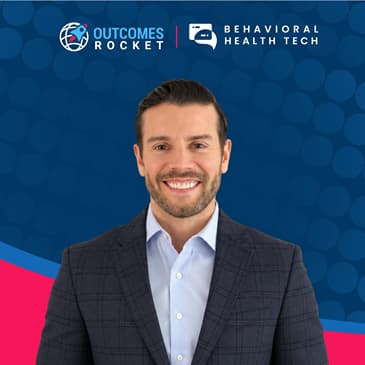
In this episode, Brad Swingruber, CEO at meQuilibrium (meQ), talks about how managers can play a bigger role in connecting employees with mental health support. He explains why giving managers another training course or dashboard isn't enough, and why support needs to be simple, practical, and available where managers already work. Brad also shares examples of how meQ has helped organizations make these resources easier to use, including work with Citizens Bank that led to higher engagement and lower burnout. He discusses what organizations should measure, why psychological safety is an important place to start, and how understanding the needs of different groups within the workforce can shape a more effective approach.
Tune in to hear Brad's take on what managers actually need to support their teams!
Resources:
[00:00:01] [SPEAKER_01] Welcome to Expanding Access, a podcast by Behavioral Health Tech, where we explore the cutting edge of mental health, substance use, and autism and IDD care. Each episode features insightful conversations with industry leaders who are driving real change through technology and innovation. Whether you're a provider, payer, or just passionate about expanding access to behavioral health care, you won't want to miss these stories. Let's dive in.
[00:00:29] [SPEAKER_01] Hello, everyone. I'm Solomay Tibibubu, your host of the Expanding Access podcast, where we're focused on all things expanding quality behavioral health care. And today, we're going to be talking about mental health in the workplace, particularly around manager enablement. And today, to help me with that, super excited to have Brad here from Equilibrium. Thank you for joining us. Why don't we get started with just a brief introduction and tell us a little bit about how you got into this space?
[00:01:00] [SPEAKER_00] Yeah, absolutely. Thank you so much for having me. Super excited to be here. But as you said, I'm Brad Swingrum, the CEO at meQ. And I've spent the last 15 years in the human capital management workforce technology space. I've had the pleasure of working with a lot of different companies, different shapes and sizes, and helping them scale and grow. But really, I think what's excited me about meQ is the fact that there is a huge focus on people.
[00:01:30] [SPEAKER_00] And I am a big advocate, and I am a big believer that people are truly the game changer at the end of the day for these companies. So what I care about and what we at meQ built around is fairly straightforward. But resilience, you'll see the term resilience all over our website and our marketing materials. But it's not just a soft skill, especially in today's market. It's really infrastructure.
[00:01:55] [SPEAKER_00] And when I say infrastructure, it's what holds, think of the culture together, and when everything else is changing. And I think we know in today's world, change is the common term, change management. And we're thinking AI headwinds, all the M&A activity that our customers go through, and even some of the economical challenges that people are faced with today. But most companies don't actually know what state that infrastructure is in across their workforce.
[00:02:23] [SPEAKER_00] And we help them identify that and solve for that. So almost all the money in today's market is driving towards culture and supporting behavioral health has gone into more of, I would say, access. And we say access, we refer to think of the point solutions in the market. Like, let me get more apps. Let me default maybe to an EAP solution. And this creates more logins and, frankly, more access points where employees and managers have to go to.
[00:02:51] [SPEAKER_00] And don't get me wrong, EAPs are necessary, and there's absolute solutions out there that are powerful. But access is very important and matters. But access isn't the same as adoption. And adoption is something that has to be measurable and measured with improvement. So there's this gap in the middle, and a gap is vital for overall success. And I'm glad we're talking about it today because we look at that gap as managers.
[00:03:19] [SPEAKER_00] And managers really activate these employees and provide that level of access and bridge this gap that we're talking about. So super excited to dive into this more today and have further discussions.
[00:03:31] [SPEAKER_01] Thanks so much, Brad. I can't wait to ask you more about this. Specifically, where are you seeing this access breakdown happen? And really, why is manager enabling the missing layer here?
[00:03:43] [SPEAKER_00] Great question. So access breaks down at the exact moment someone has to decide. And when I say decide on their own, they don't have those resources. So this could be in a stressful moment, and they have to go find help. That's a lot to ask in a stressful situation for anyone. So now, who are the people who see these employees every single day or engage with them every day? It's their manager. And here's the theme that a lot of people don't think about.
[00:04:12] [SPEAKER_00] And I think that I always like to take a step back and say, all right, if I'm a manager, did I get a playbook? Was I given a playbook to be able to support my employees or am I just winging it at the end of the day? I always use the example because I came from a revenue background, but I use the example of a sales leader. You promote a sales leader or a sales rep into a sales leadership position because they could sell a lot. But can they handle a lot of these areas where it's like a level of psychological safety or communication with employees? That's tough.
[00:04:42] [SPEAKER_00] So you need to be able to give them the human skills to handle this. Because think about it. Managers are trained on compliance. They're trained on the DEI basics. They even have like in-depth performance reviews they're doing. But no one's really providing that level of training to what to do when someone on their team is struggling with burnout or anxiety. So the access exists, which we talk about. It's just usually sitting like several steps away from that person who can actually activate it.
[00:05:11] [SPEAKER_00] And managers need to be that bridge like we talked about before. And I think the distance is longest. And I didn't mention this in the beginning, but it's important with the younger employees, especially the youngest employees, those Gen Zers, which with our customers today are starting to make up majority of the workforce and it's growing rapidly.
[00:05:31] [SPEAKER_00] So when we look at resilience factors in our own data, Gen Z, they score 10 to 15 percent below the norm on stress management and emotional control. So the exact two things a manager is best positioned to notice and support day to day. So this is an interesting fact because Gen Z actually scores above the norm on empathy. So I look at it like this. It's not that they can't engage with this.
[00:05:58] [SPEAKER_00] It's that no one has built the bridge yet, which to me is the manager. The manager is that bridge. And Gen Zers is a great example where if we're not equipping managers to have these discussions, the workforce is going to compound over time. I can't even imagine when we think of Gen Alpha, which is the next group coming into the workforce and how the scores will match up to the Gen Zers. So super interesting.
[00:06:22] [SPEAKER_01] That is fascinating. And I could really relate to so much of that. And I don't come to this place as a clinician or a technologist, but really as somebody with lived experience. And that piece that you said about when you're struggling with anxiety and depression, it's like that's hard enough to raise your hand and say, I need help finding those next seven steps or people or apps, whatnot, to get to the resource.
[00:06:48] [SPEAKER_01] But then just lacking that trust and support from a manager is really critical. But Brad, something we've talked about before is that this is more of a resource allocation problem versus a training gap. Can you share a little bit more about that?
[00:07:07] [SPEAKER_00] Yeah, I love this because training implies the manager doesn't know something. And once they learn it, they're all set. That's not what's actually happening. Managers often do sense something's off. Like this person's been distant on a team or there's been a lack of communication, but they have no idea what to do with that sense. They say, how do I act on this? Usually they just stay distant or they don't engage.
[00:07:31] [SPEAKER_00] And in the moment, without becoming a huge production, because you also don't want to say, hey, are you struggling really bad? I'd really like to talk about all the anxiety I think you have right now. And so there's ways to handle this. And resource allocation means at the exact moment a manager notices something, they have a specific small but doable next step right there. And this isn't a course to take. It's not like I'm going to go look up a policy. It's an actual action appropriate for that moment.
[00:07:59] [SPEAKER_00] And training happens once and it sits old school, sits in a binder, right? And then it gets forgotten. Resource allocation shows up exactly when it's needed. This is an area we're heavily focused on is that real time action that's needed to support those managers. One of our clients, actually, specifically in the healthcare space, they actually lived this as an example. They had been operating with typical combination, as you would think of, like separate vendors for wellness, EAP, engagement.
[00:08:29] [SPEAKER_00] They had manager training across the board. With MeQ, we came in, analyzed kind of the workflows and the processes. We consolidated their strategy and tech stack to make it easier on managers. Our focus was how do we make it easy on these managers first and then it will be easy on the employees. And this was huge for their frontline. Engagement, when we went through this model, jumps to around 30%, roughly 10 times what you typically see with traditional programs.
[00:08:57] [SPEAKER_00] And that's not because managers suddenly got smarter overnight. It's because the resource showed up where they already were. They have a laundry list of things to do. So we don't want to throw more on them. We just need to be there at the right time, the right moment. So you have to make it easy on them with a proven solution. But yes, great question.
[00:09:17] [SPEAKER_01] Yes, why not make it easier for folks? And I sense that even some managers that are listening to this might even be intimidated by it or have experienced these situations where they didn't have that support. Could you talk a little bit about where the line is between, I guess, helpful signal versus just added weight for a manager?
[00:09:38] [SPEAKER_00] Yes. And as I said, if you're adding more weight or more tools or more things they have to go through, it usually doesn't get utilized. I think this is a great question because you can get this wrong in a way that actively makes things worse. And we've seen it firsthand. But if I hand a manager a dashboard that says, here's your team's anxiety risk and it's super elevated in these areas and nothing else. I hand them, which is what's happening today with a lot of companies. Here's all the noise. Oh, look at how your team is performing.
[00:10:08] [SPEAKER_00] Look at all the anxiety. Look at all the risk. I just handed them a problem with no tool. And they have to go figure out. That's just another burden on them. So the bottom line is any signal we give a manager has to come with an action that's within what they're equipped to do. And you cannot ask a manager to be a therapist. Let me be clear. And I think this is in the companies we work with, the employers we work with are very adamant about this.
[00:10:35] [SPEAKER_00] There's a certain line that we want to have a manager go to and then it passes off to something else, whether that's the EAP or someone who has a clinical background. And so you're simply asking them to notice, to check in, to point someone in the right direction. The moment a signal implies they're responsible for fixing it. And that's where it's knowing, does the manager know, what do I have to do here? And it's just, it's pointing that person in the right direction. So, and we don't want to cross that line, as I mentioned.
[00:11:04] [SPEAKER_00] So the moment it says, here's a strategy you can do right now to have a positive impact, we're on the right side of it. Okay, and we're not, I want to be clear, we're not a clinical solution, but we're backed by decades of science and proven results. So think of the human skills in order to support someone in that situation without taking the clinical approach and also putting a company at risk, which we don't want to do.
[00:11:30] [SPEAKER_00] There's too many solutions out there claiming to be, we're clinically proven while trying to automate everything around them and saying, well, we're going to have AI just take over. We absolutely believe there needs to be a human in the loop supporting your workforce. And we build our solution around that manager who we think is the most vital piece and that vital human in the loop.
[00:11:52] [SPEAKER_00] And to me, if you're equipping them, they will be a force multiplier for your company, especially in these situations that can seem stressful, but an opportunity to really support employees and make them feel heard.
[00:12:05] [SPEAKER_01] And force multiplier is such a great phrase for this because we really spend so much time with our manager. I mean, it's really great. Brad, you've touched on this idea of it's got to be right there, ready for folks to be able to embrace in the moment. Can you talk really concretely about just what is an operational fix for a manager look like? Any use cases you can share?
[00:12:35] [SPEAKER_00] Howard, review, well, being or culture report and digging into the analytics. It's a manager getting a nudge right inside Slack or Teams. So that's a great example where our customers were seeing the employees, the manager, they're spending an exorbitant amount of time in Slack and Teams and some of these channels. How do we push a nudge within there to support them when they need it? That says something like, here's a one-line conversation starter for your one-on-one with someone that has been struggling in these areas or you're seeing that anxiety across the team.
[00:13:05] [SPEAKER_00] Here's some quick tricks and tips to utilizing that one-on-one. It's a manager noticing a shift in someone's engagement and having a two-minute script for how to open that conversation without making it awkward and, for lack of a term, weird. And then once again, they take a tough situation and make it worse when they make it awkward or weird. And it's embedded in the flow of work. They're already in. And like I said, it's got to be easy. So it's got to be bite-sized for them. And it's in a separate destination.
[00:13:34] [SPEAKER_00] I've got to go log in somewhere else. And they have to remember to go visit or go through 16 clicks to get there. If a manager has to log into a new system to get this, they're lost. They're already in. They're going to just wing it and do it on their own. It has to meet them where they are. Very, very vital. And I'll give you, you asked for an example. And so one example, one of our clients, Citizens Bank actually, does exactly this. They didn't ask managers to go anywhere new.
[00:14:01] [SPEAKER_00] They took bite-sized MeQ content, pushed it into places managers already were. A monthly manager call. They have like an intranet portal where they go. New manager onboarding, which is a very good time to make sure they're accustomed to the culture and how you're building this psychological safety across the workforce. It really is part of their culture and their values. And over 40% of their enrolled managers ended up sharing these best practices and strategies across the company.
[00:14:29] [SPEAKER_00] And this was unprompted. Okay, this isn't something they say, hey, share it out. And it was unprompted. They're sharing this because they see the value and say, I got to share this with other people so they can utilize these same tips and tricks across the board. And I think that's what it looks like when you fix it from an operational standpoint. And it's part of the DNA of the organization versus here's a mandatory training you're going to take once and we're going to get you up to speed. And then it's out of sight, out of mind until the next year you do it.
[00:14:58] [SPEAKER_01] These are really tangible examples. And I was imagining myself in our Slack and it really makes a lot of sense. You're weaving it within day-to-day practice versus the one-time thing. It really makes a lot of sense. So what about for in our audience, we've got benefit leaders, health plans. What would you say that they should be thinking about and measuring first when it comes to this topic?
[00:15:25] [SPEAKER_00] So when we first work with companies, we try to understand their mission, their vision, and their values. Why is this important? And what outcomes is the company trying to achieve within their culture? I think that's a very important piece that gets overlooked. It quickly goes into what's your well-being strategy when it's much more than that. But culture is built on trust. So it's vital that we start as we do this analysis and we look at the psychological safety gap, okay?
[00:15:52] [SPEAKER_00] And the difference between how many people on the team feel safe enough to say, hey, I'm struggling and I need help, and how many people actually believe their manager would know if they were. Hey, does the manager even know? Do I have to raise my hand or do they already know? Because that's measurable. And in our experience, it's almost always bigger than leadership expects. The numbers are always a little bit glaring when we go through this with the companies we work with. But once you see that gap, you can watch it even closer over time.
[00:16:20] [SPEAKER_00] And it ties back to other things you already care about, which gets the attention of our customers, which is absenteeism, turnover, healthcare utilization, employee engagement across the board, and more. The mistake most organizations make is measuring engagement with a benefit instead of measuring underlying capability of the team. So measure the capability. To me, the utilization numbers follow after that, which is a lot of times we're talking to customers or prospective customers in the market,
[00:16:48] [SPEAKER_00] and they start to think, let me look at the utilization numbers right on the board, but measure the capability first and measure that gap. And I think, to give you another example, so this doesn't just sound theoretical, I think Citizens is an awesome example. So we worked with Citizens. Manager burnout dropped 41%, well above the 23% average we see across our book of business. And their manager stress management improved 30%. And when a manager is equipped with those resilience,
[00:17:17] [SPEAKER_00] and we refer to them as the human skills, their direct reports are 58% less likely to be burned out, and 78% less likely to be thinking about quitting. And that's value that I, I mean, when I say closing this gap pays for itself, because a lot of times we look and we're talking to CFOs, and they looked at soft dollar cost savings, but then they start to look at the replacement costs for these employees at the end of the day, and that gets their attention.
[00:17:44] [SPEAKER_00] Because you're building an environment of psychological safety and trust, and it starts at the top there when we do this analysis. So I think the downstream impact across the board with your culture, and then not to mention the performance side. All of these things, if you're able to have a psychologically safe environment for employees, starts to drive even more performance as well, because people are confident, there's trust, they're buying into the culture, they're buying into your mission, your vision, your values.
[00:18:14] [SPEAKER_00] And companies are highly focused on this, because the human element at the end of the day, like I said in the beginning, is going to be the game changer. There's so much we're trying to automate with AI, but there's so much institutional knowledge and amazing people at these organizations, and that's so making sure the psychological safety is there, so they can focus on driving the business forward is just absolutely key.
[00:18:35] [SPEAKER_01] Those numbers were astounding, amazing, really good examples. And I can't imagine managers and leaders listening to this that wouldn't also just really want those kinds of numbers and retention and employee burnout. So great example.
[00:18:53] [SPEAKER_00] Absolutely. One other thing I was going to mention too, I'm sure you have a couple other questions, but the one thing, sorry, that I forgot, that I think is important, that if people want to actually see what that gap looks like for their own team, so if they're listening here and they want to see the gap, we have a calculator that we can plug in these details and they can actually see the burnout, we call it the burnout impact calculator, so they can go to our website. And I think we could share that out, I think after this or in the chat with folks as well.
[00:19:20] [SPEAKER_01] Yes, fantastic. For those listening, we will have the burnout impact calculator available in the show notes. So I really encourage folks to fill that out and try it out. Speaking of something you mentioned earlier, it's making me think about the leaders of these organizations. It's one thing to hear from peers, another from managers, but how about the executives of organizations? Brad, what advice would you offer to them when it comes to demonstrating
[00:19:50] [SPEAKER_01] that we can embrace mental health in the workplace, that tools are available, you can raise your hand, but while also, I guess, maintaining boundaries and keeping it appropriate for the workplace?
[00:20:02] [SPEAKER_00] Yeah. So I think one thing that I liked for, like as I said, we do a pretty deep analysis. We go into a customer to understand their processes, their workflows, the systems they're using today. And it's not just a well-being strategy. I think that's the most important piece. It's having an understanding that well-being is a part of this, but it really is. It's a culture play. At the end of the day, what type of culture are you creating for your employees
[00:20:30] [SPEAKER_00] that downstream feels like, hey, this is a psychologically safe place? And mind-stealing those best practices. So I think as we look at the populations of our customers, we try to understand, do they know the populations well? What countries are they in? What type of roles, responsibilities? We get down to that layer. And I think an example, I use the Gen Z example, but I think this is top of mind with everyone. When we do analysis, we look at companies,
[00:20:59] [SPEAKER_00] we try to understand, okay, let's say Gen Z makes up 40% of your population and it's growing. Let's start to focus on how do we communicate and work with Gen Z employees in a way that's a psychologically safe environment. They're already the most stressed, most burned out group we see in the data. For example, like job stress up almost 40% in the past couple of years, burnout still climbing for them while it's them in other segments.
[00:21:28] [SPEAKER_00] They're also three times more likely to say they'd rather do only the work they're paid for and nothing more compared to the older workforce. But the encouraging part is once Gen Z employees engage with cultural and well-being support in this, they engage at essentially the same rate as everyone else. And they see the same kind of risk reduction, anxiety, depression, and burnout. And so the willingness is there from these employees. The barrier isn't Gen Z. Again, it's that access.
[00:21:57] [SPEAKER_00] And the manager is still the shortest path to giving that access. And I use the Gen Z as an example because that's how we try to analyze with our customers. It's making sure we have, hey, where are we focused on in your business to have the largest impact? We want to support every employee, but where do we need to focus our time to make sure that we're honed in and that we're giving those managers the support in the biggest problem areas that they're seeing? And so I think that analysis is very important. And everyone always says, go back to the data.
[00:22:26] [SPEAKER_00] And I truly believe that. Start looking into the data. What is the data telling us of the areas we need to focus on with the business? So that would be my advice is really understanding your workforce and the areas of opportunity that are immediate. Use those as the first kind of use cases when you're building this out because you'll see the largest impact. And then you'll start to create a culture and a process that will be effective across the entire workforce.
[00:22:52] [SPEAKER_01] Thank you for highlighting Gen Z as well. Gen Z. I mean, we, as many of our listeners know, there's really a crisis in this population and mental health that's so, so important to ensure we're supporting them in the workplace as they're entering and continuing. Brad, I have so many other questions I'd love to ask, but want to be mindful of time. So if I could just point out one more thing, I noticed that you yourself are pretty new in the leadership role at MECU. Can you share a little bit about
[00:23:20] [SPEAKER_01] where you see this next chapter of MECU going and what we can expect?
[00:23:25] [SPEAKER_00] Yeah, yeah. So I started in the CEO role, I guess, roughly seven, eight months ago. And like I said, I've been in the human capital management benefits learning space virtually my entire career. But I was so excited when I joined MECU because I started using the solution and I started to see a change and an impact in how I manage people and how I could be a better leader. Not just a better leader,
[00:23:54] [SPEAKER_00] but better father, better husband. And so I think, of course, when you use something and you really believe in it and the impact that it has, you want to share with everyone. And so I have never been that way about a product in the past. I've, of course, been with companies with great products, but never where I had this layer of, wow, I can actually provide a solution that can improve people and build resilience in these organizations and make people a better leader or make them a better father or husband.
[00:24:24] [SPEAKER_00] And so I think that's very, very empowering. And I think it gives me a responsibility that I need to make sure I'm sharing this out with as many people as possible. But as it relates to the future and where we're going, to summarize, I'd say, we feel today we're the number one science-backed platform that measures and builds resilience, leadership skills, and culture health. And at the center of that is something I really want people to walk away with today is change readiness
[00:24:52] [SPEAKER_00] isn't just a feeling. Like, I feel like the company's changing. You hear that a lot. I feel this happening. It's really a human skill. It's a dynamic state you can actually measure and build the same way you build any other capability. And it's always seems like it's this distant theme that we kind of talk about, but not really. And it can be measured, like I said, and it can be built. And that's what we mean when we say we're a launchpad. I refer to it as a launchpad for change-ready leaders. And that's truly what it is.
[00:25:22] [SPEAKER_00] So the companies that invest and I truly believe this, the companies that invest in this now in human skills and their leaders are the ones that end up with an agile workforce prepared for the future. And not by accident, but because they built it deliberately. And they took the time, as I said, to understand these aspects of their business and put the right solution in place. So we're adding a ton of new functionality, of course, to support some of the things I talked about today, more in the flow of work and really driving
[00:25:51] [SPEAKER_00] a more seamless process. But I'm thrilled about where the future's headed and what the opportunities we have ahead.
[00:25:57] [SPEAKER_01] That is so well said. And it's like, if there's one thing that leaders can focus on, this great advice. And I know a lot of people are benefiting from your leadership. So thank you, Brad, for joining us. I want to remind our listeners, please check out the impact calculator. Again, we'll have that in the show notes. And again, thank you for your time and sharing this journey and your experience and this great advice with us today.
[00:26:24] [SPEAKER_00] You got it. Thank you so much. Appreciate it. Have a wonderful day.
[00:26:31] [SPEAKER_01] Thanks for tuning in to Expanding Access. We hope you're feeling inspired by today's discussion. If you've enjoyed the episode, subscribe and share it with your network. For more content and opportunities to get involved in transforming care, visit behavioralhealthtech.com. Until next time, let's keep pushing boundaries and expanding access together. and other things
[00:26:51] See you next time. Bye. Bye.