
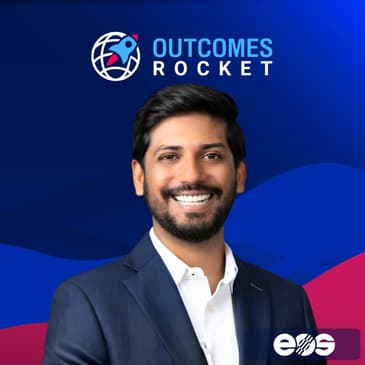
From generic implants to patient-specific solutions: how additive manufacturing is expanding what is possible across medtech.
In this episode, Anekant Jain, Manager, Polymer Technologies at EOS, discusses how industrial additive manufacturing is transforming healthcare by enabling the production of customized implants, prosthetics, dental devices, and other patient-specific technologies. He explains why additive manufacturing extends far beyond traditional 3D printing, requiring scalable production, qualified materials, reliability, and repeatable outcomes. Anekant also explores how advances in sensors, materials, and manufacturing are creating more responsive prosthetics with haptic feedback and stronger integration with the human body. Finally, he examines the barriers to broader adoption, including qualification processes, reimbursement, cost, and access, and explains why the industry must rethink what is possible rather than simply reproducing traditional solutions.
Tune in to learn how additive manufacturing, customization, and cross-industry collaboration are pushing the boundaries of medical innovation!
Resources:
[00:00:03] Hello everyone and welcome back to the Outcomes Rocket recording live from Device Talks Boston. We're having some really great conversations with some of the leaders running MedTech and robotics. And today we have the privilege of hosting Anekant Jain. He is an outstanding leader in the space working at EOS. Anekant, welcome to the podcast. Thank you so much. Thank you for having me. Of course, man. So tell us a little bit about EOS. Tell us about you.
[00:00:33] And I had a blast meeting you last night at the reception with Tom and the crew. The reception was absolutely great. I think I really enjoyed the networking part in the industry. It was a really fun conversation. A lot of engineering services over here, which is always great to connect to when you're in a space like we are. I'll jump into a little bit about EOS. EOS was one of the oldest 3D printing firms out there. Our founder, Dr. Hans Langer, created the company.
[00:01:02] And we differentiate. We are not your hobby desktop printers at all. We focus on industrial, large-scale additive manufacturing, which I personally differentiate from 3D printing. Because when you talk about manufacturing, you talk about qualification, scalability, yield, all the different aspects, right? Turnaround, uptime. That's where EOS specializes. Metal and polymer 3D printing, additive manufacturing.
[00:01:28] So our material portfolio is one of the widest. If you look at metal, we have different grades of titanium, incanel, stainless steel, aluminum, mass, all of the materials and polymer. We have 47 different materials. And a lot of them are actually biocompatible, essentially, very much into the medtechs we've been seeing steadily growing in the last 4 or 5 years.
[00:01:55] We must say, this year seems like the year of defense, more than the medical industry. I've been hearing that a lot lately, at least at this conference. Yeah, no, honestly, that's where the money is pouring in right now. Whether that's NATO governments, whether that's U.S. or all around the planet, just the geopolitical situation that's there. This year, the funding in defense and defense-related projects, the drone space, it's unreal. And I always question, does drones fall under robotics?
[00:02:25] Does it not? It's like a fine line that maybe can be categorized. I think about it as robotics, in a sense. Yeah, the ones that are coming out now on the market, they definitely seem more of a robot than just a drone with a pilot, to be honest. Exactly, exactly. That's interesting. So we're based out of Germany. That's where our headquarters is. But in U.S., we have our headquarters in Austin, in Texas. Amazing tech hub to be in. In Roanoke, yeah. So we got... Roaming.
[00:02:55] Oh yeah, absolutely. We have an entire ecosystem of additive manufacturing down there. A lot of big manufacturers are over there at the same time. Then we have another office in Michigan. Which is where you're based. Which is where I'm based. Which is where I'm based. I must say, I got into steam this winter. And I love it. I went on the jump the first time itself. I was like, let's break bones when it's still heat. That's awesome. But yeah, I think Michigan, all the automotive is over there. Yeah, it makes sense for you guys to be there.
[00:03:25] And you guys are more than just healthcare, right? Healthcare is one segment of your business. Yeah. Healthcare is one segment. It's a huge segment. No doubt about it. We are there in a lot of dental applications. It would look at, remember those massive sleeping masks that people wear for a sleep apnea? Yeah. We're changing that industry through simple, almost a retainer kind of solution with mandibular devices. Oh yeah, I've seen those on the market. Yeah. I've seen those.
[00:03:52] Imagine a soldier or anybody, rather than carrying a massive snoring machine, which makes a lot of noise at night. You have simple retainers that are able to... Sleep architects and companies like that. Changing the space. Yeah. Fascinating, man. And so, as you mentioned, one of the shifts has been like the shift in capital to defense. But what other shifts are you seeing within MedTech?
[00:04:18] So, one of the key things which I can speak from my industry is that people are more and more realizing the value of specific solutions, essentially. Rather than having generic hip implants, generic bone implants. Customized. Customized to your body. Customized to your biology, basically. Even dental dental has always been all about customization. That's true. That's one of the, I would say, low, easy hanging fruits for additive manufacturing. But now we are seeing cranial implants.
[00:04:48] But now we are seeing cranial implants. All the hip bone implants and like spinal cages that are really, really going big. Some of the, even orthotics and prosthetics, essentially. Yeah. And even our Medicare and, you know, Medicaid, there are codes for it now. There are insurances accepting all the AM devices in the medtech space. Most prosthetics in the medtech space, I'd say, has changed a lot recently. Like, especially in the last five years. It's just about having a prosthetic.
[00:05:15] Now it's about having integrated prosthetics where they can basically respond to your nervous system, to your thought process. They can, there is aptic feedback where, you know, what you touch kind of gives you a sensation of what you're touching in the field of prosthetics. I think that's just simply brilliant. It really is. It really is. It's merging those. Hey, I, a couple weeks ago, actually, I was on a, I went to a conference and the speaker was a quadruple MBT. Wow.
[00:05:43] And this guy was literally walking around like just impressive. And of course, his arm. Yep. Was haptic feedback. He does everything with his arm. Wow. In the morning, he straps everything on and then he goes. Yeah. You can do that now. Yeah. I think that full front is entirely changing. Like that space. And they navigate challenges that you see in general day-to-day life. It's firstly a testament to their effort and their will.
[00:06:12] But technology, yeah, pushing the boundary. Even, it's not just, it's the advancement in the sensors, the advancement in the type of materials. The idea that you can feel a different sensation in this part of that prosthetic. This is this part of the prosthetic. Yeah. There was a very interesting company I was talking to a couple of weeks ago. They had a small air bubble in the tip of the fingers. And the way the air bubble was changing was giving the feedback. Like there is just so much innovation over there. Yeah, yeah. People with new ideas.
[00:06:41] People with like, and I think the technology, the manufacturing space, the materials, the capability of these machines. It's really allowing people to innovate and push what is possible in that space effectively. I agree. I think it's amazing. I think another interesting solution in the medtech space, I don't know if that's medtech or not, but medical altogether. I think when Invisalign came along, they completely changed how people viewed braces.
[00:07:09] Like it was no more the traditional acceptance that you need a metal brace and you need to go to your customer, to your dentist, get them screwed in. They are really changing how the path of your care is, how your treatment plan is. And I think the combination that we are able to bring different aspects of the industry, the doctors, the manufacturers, the innovators, the people in the tech space together to achieve a common goal.
[00:07:35] And I think that is what this summit as well at Robotics Summit is like doing very being in Boston this year. The fact that there are so many medical institutes over here at the same time, along with the robotics kind of industry, along with manufacturers. It's a really melting pot of all these to be brought together. It definitely is. Boston itself is an ecosystem of talent, health hubs, just incredible ecosystem for innovation.
[00:08:02] What have you seen as one of your biggest challenges or roadblocks in the business lately? There's a lot more competition in manufacturing. And at the same time, we've seen actually in the last one or two years with making America programs and make America greater game programs kind of things. There has been a lot of focus on having domestic manufacturing that is really spurring the investment into the manufacturing space as compared to the tech space.
[00:08:31] I think AI and manufacturing are the biggest basis of investment. I think more than $900 billion is going to be allocated to capital investments this year. It's kind of exciting, right? It is. And we're bringing some of that stuff back. Yes. I like that. I think it's great. And it's not just that. See, I personally, I work in a lot of different regions. I've worked in Asia Pacific, in Australia, Korea, Japan, India, Southeast Asia. But you've been everywhere, man.
[00:09:00] A little bit, yeah. But in U.S., what I absolutely adore is their people's willingness to take the risk on, to be innovative, to push what the technology delivers to you. A lot of times I see manufacturing in other regions, they want a ready solution. They want something they can hit and play, but they're not willing to take the risk outrightly to innovate at the same time with companies like ours sometimes where we are very willing to push the boundaries of it.
[00:09:28] But as challenges, I think qualification in this industry remains one new challenge at the same time. It takes millions of dollars sometimes, months to a year. When we talk about tech space, right? The difficulties that people in the sleep area and not caught in a lot of places that they had in getting like an insurance code, you actually fulfill the requirements for the patients to actually get the best treatment that is out there,
[00:09:53] that is specific to their arm or their biology in general. It was a huge uphill battle and it remains a battle. I was at a DSM conference a year and a half ago. I kid you not, there were three or four separate sessions just completely dedicated to helping doctors figure out how to actually submit the claims for insurance or for Medicare or any of these programs. That remains a huge, huge challenge for you today, I'd see.
[00:10:22] Access is an issue. As exciting as robotics are, they cost millions of dollars. And for a company making a billion dollar investment to have a platform that then sells units for a million plus dollars, that limits access, right? We have to have these conversations too, right? So I think your point is very well received. We got to think about how these ecosystems and the people within the ecosystems work together, right?
[00:10:51] To think about access and equity with a lot of these things. Yeah, absolutely. And honestly, unfortunately this year, we would have thought that robotics would have had a crazy push, right? Alptana investment, a lot of basically hype around it. We saw the optimists being brought to the platform basically or being like shown to the public in general. But when I talk to companies here, that's not the case.
[00:11:18] Honestly, unfortunately, we would have thought that I could have brought in the numbers as well. But the numbers are not there. We're still talking about a couple of hundred to maybe a thousand robots max. People have not moved to tens of thousands of numbers or like a hundred thousand or a million SKUs kind of thing or quantities in general or the volumes. We've not seen that in robotics this year. I think there's some unique cases here and there, right? Yeah.
[00:11:44] We were chatting with the KUKA folks and they do 60,000 a year units. See, KUKA, ABB, FANUC, these four or five companies, even Boston Dynamics, which is technically Hyundai Group. I don't know, like maybe part of like huge collaboration. I didn't know. I didn't know. They have a huge collaboration with Hyundai. CES, like entire Boston Dynamics booth was actually inside Hyundai's booth. Interesting. What they're doing.
[00:12:10] When you talk about factories at that level, when you're talking about automotive at that level, you are going to place like automotive is an unreal industry. Sometimes when you really think about the manufacturing over there. It's incredible. It's incredible. And you're talking about millions of units and having those robots over there. It makes sense. But when you talk about other applications of robotics other than those in automotive already, I would say they are limited, far and few, even with the KUKA people, right?
[00:12:38] Their game, when they talk about medical industry, for example, they know they're going to do like anywhere between 200 to 300 robots in that segment. But that is... Apparently 10,000. In the medical space itself. That'll be interesting. I'll have to talk to them again. But yesterday, I was talking to them about their pipeline and I was talking to them about the targets for the year. Maybe just the specific... Maybe the numbers are off, but I think that's what the numbers were. Maybe I will check.
[00:13:05] I was talking to a specific salesperson and they were talking about their own numbers. But yeah, we'll check. Well, dude, what a fascinating discussion. Hey, you've been around the block a few times, right? What advice would you give to your 20-year-old self? Interesting. That is very interesting. A lot of things are possible with 3D printing. And to continue questioning and exploring, basically. Like, the ways we can push these things right now, in terms of...
[00:13:35] We have new techniques available to us. We need to stop doing the same old things with the new devices. We need to do new things with those devices at the same time to really push that boundary. That's great, man. I appreciate that. And when we talked yesterday, I asked you to do a shout-out for my son, who loves 3D printing. Yes. He's nine years old, and what advice would you give him? Well, go for it. But you know what? If you can sell it, it's great.
[00:14:03] You're living the American dream, you know? I mean, the fact that he took a printer and he was able to sell the parts to his friends, I think it is the absolute great example and epitome of what entrepreneurship is, what innovation is, what this manufacturing is changing altogether. Like, you don't need to set up a factory, a million-dollar factory, to actually produce things and start making them. And listen to your dad. There is a lot of regulation sometimes. Be careful about it. Do not go along selling medical devices.
[00:14:33] That'll get the fricky real soon. But otherwise, great job, man. You've been doing amazing. Thanks for that. Let him know. He is anytime welcome to come up and try some large-scale industrial 3D printers there. We're making parts to go on actual rockets and spaceships. We have mods from EOS. Do you really? Oh, my God. I would say there is almost no rocket that would be taken off of Earth right now that does not have some additive manufactured part or EOS's pop-up. From you guys? Yeah.
[00:15:03] Wow. It's like good there everywhere. That's impressive, man. Well, son, there you have it. You got advice. And obviously, mom is wise. But there's opportunities. There's opportunities. We would love to have him somewhere. You know what? We will take you up on that. If you're serious, we'll take you up on it. I'll be able to make a trip. Would we visit you in Michigan or in Austin or Germany? Either way? All three of them. We've got amazing tech centers everywhere. Awesome.
[00:15:30] And EOS, we don't focus on just selling machines or materials. The idea is pushing the industry, educating it, the thought leadership that comes behind. Prepping our next generation of people. We have huge programs in universities, schools. We want to push it. So your side of the day is a wonderful example. That's awesome. We would love to have him trained on EOS machines way before. Oh, that's so cool. All right. Well, there you have it, son. You have the message there. And for everybody listening and watching this, thank you so much.
[00:16:00] There's obviously so many shifts happening. And Anekant has given us a really great review on the robotics and 3D printing side of it. Anekant, for people to reach out, where can they find out more about you as well as EOS? So LinkedIn, we have our website. Reach out to me on LinkedIn. Anekant Jain are very happy to connect and further talk about these topics. EOS, we have our websites, eos.info, where you could find everything, our contact details. Yeah, reach out to us.
[00:16:28] And we're very happy just to talk and see whatever's bubbling in your minds. And you want to experiment it, try it out. You want to throw a challenge at us. We love those kind of comments. That's awesome. That's awesome. Anacant, thank you so much. I'm so glad we ran into each other yesterday. I'm glad we got to do this today. Absolutely, Saul. Thank you for having me. And I think this was great. You know what? You're going to be on our podcast soon. Oh, I love it. That's awesome. We're looking forward to it. A little bit more about just in general, how this industry is growing as well.
[00:16:58] That's fantastic. Thanks for the invite. Thank you all for tuning in. And we'll see you all soon. Thank you all.