
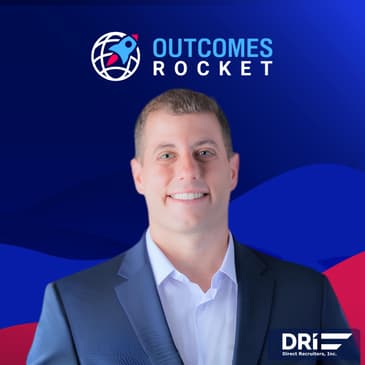
In an AI-driven market, technology may be easier to replicate, but the right people remain a true competitive advantage.
In this episode, Mike Silverstein, Managing Partner of Healthcare IT and Life Sciences at Direct Recruiters, discusses what healthcare companies often get wrong when building their teams. He explains why leaders should value grit over impressive résumés, how passive candidates can strengthen an organization, and why healthcare requires patience, resilience, and industry understanding.
Mike also shares how beginning his recruiting career during the 2008 financial crisis helped him develop the relationships and determination needed to navigate future challenges. He emphasizes that lasting success comes from authenticity, meaningful networks, and consistently putting people first.
Tune in to learn how healthcare organizations can build teams capable of thriving through uncertainty, technological change, and continued industry disruption.
Resources
-
Connect with Mike Silverstein on LinkedIn.
-
Follow Direct Recruiters on LinkedIn and explore their website.
-
Email Mike at mike@directrecruiters.com
[00:00:03] Hello, everyone. Welcome back to the Outcomes Rocket podcast. I'm excited to be back with you all because I've got a gentleman on the podcast that everybody needs to meet. His name is Mike Silverstein. He is Managing Partner for Healthcare IT and Life Sciences, their practice and that focus area for direct recruiters.
[00:00:26] He's been there since almost the beginning and has helped shape the business into one of the best recruiting businesses in the healthcare space. If you're looking for someone on your team or an executive to lead your company, this is a conversation you're going to want to listen to. Mike, welcome. Welcome to the podcast. Thank you, Saul. Appreciate you. Of course, of course. Tell me a little bit about you, man. Like help us understand what got you into healthcare, what got you into recruiting. Give us a story.
[00:00:53] Yeah, thanks. I'll tell you what, I had no idea the recruiting industry existed. I had a big career plan for myself in commercial real estate and had interned for a few different commercial real estate firms and got offered a job by one before I went back for my senior year at college. And that was in 2007, 2008. And while I was a senior in school, their stock price dropped from 55 bucks a share to five bucks a share. They were all tied up in mortgage-backed securities.
[00:01:18] And so I was paying very little attention to what was going on in the world as a senior in school and started in June, was out of a job by August and got into recruiting because a buddy of mine's father had this little recruiting firm. I thought he could help me find a job and give me a job for half what I was making two weeks earlier. And that was the best option I had at the time.
[00:01:36] Man, you never know. Chance meetings. And we had a chance to talk about the business and kind of the growth you guys have had. Just impressive start at the ground level and to be able to build the business you guys have had. And you don't build great businesses without serving clients over and above. Talk to us a little bit about what your company focuses on and in particular your practice and the value you're adding to healthcare leaders listening today.
[00:02:03] Certainly. Yeah, look, we really the value is we try we're building just world class teams and leader leadership teams and all the way down to badass IC level talent in the healthcare tech enabled service and service space, which touches life sciences as well. Started my career recruiting for IBM and GE and the Fortune 500 and 100. And it was like my least favorite thing to do.
[00:02:27] And so I've been very fortunate to very intentionally migrate down market to work with some of the coolest forward thinking investors and companies and founders. And I think similar and market to where you spend your time, just a really energizing group of people and get to mix it up with those folks every day. And I learn new things every day and every day I learn about a new busted piece of healthcare that's this multibillion dollar problem that touches so many people.
[00:02:54] And so I've never I learned something new every day almost 18 years in and been able to help make a lot of connect a lot of dots for a lot of organizations and my almost 18 years in in healthcare search. Yeah, the time flies, man. What would you what do you think? And just kind of putting our practical lens here for a second. Like what's what are the areas where people usually go wrong when they hire one of the most common mistakes?
[00:03:18] Look, I think there's a couple. I think there are founders that come in and don't know what they don't know. And they don't seek out the right kind of advice or they're listening to the wrong people. And I think there is health care is a humbling industry. It just does not grow like FinTech or other consumer tech. It is lumpy. The clinical influence in health care makes it lumpy.
[00:03:45] Because these organizations that we work with, that our clients work with or my clients work with, they are just for profit businesses. They've got the mission of health care intertwined with them. And so especially folks that come from outside of health care, I see them really struggle with that. And look, I think getting really enamored with everything that's on somebody's resume or on paper and not considering the totality of their experience. Sometimes I've got lots of clients over the years who are like, I want somebody from this company and this and that.
[00:04:14] And you know what? Like more often than not, the person that worked at that company, they were no more talented than anybody else. They just happened to work at a place that kind of achieved some product market fit, caught some lightning in a bottle and got on a great run. And it was great for their resume. But I personally love the folks that came from the underdog stories that were not where their business card didn't open a door for them and they had to go scrap and claw and fight and be really gritty.
[00:04:39] And I think under indexing on grit and over indexing on what's on paper is a really, really common mistake. I love that, man. That's a really great call out. And it's like across the field, I feel like at bats and success at bat at this, like it's humbling, right? It's a humbling business to be in. And so the work you do is important.
[00:05:02] As you think about the differentiator that your firm offers, direct recruiters versus others or even versus hiring yourself, right? What's the big difference maker? Look, versus hiring yourself, and I work with a lot of really great talent acquisition organizations that are internal. The primary difference is that those folks are more often than not, they are attracting, looking to attract active candidates. They're posting jobs. They're setting mousetraps.
[00:05:31] They're dealing with inbound traffic. My group, what we do is really specialize in front and complementing the inbound traffic that a company can attract organically with going on and getting passive candidates. So folks that are not looking for jobs, not entertaining, not peeking at the job boards or putting applications out there. They're folks that are frankly really focused on doing their jobs at their current employers.
[00:05:54] And it's the relationships that we've been able to cultivate over a long period of time and a lot of discussions and meetings and touches that allow us to get access to folks by getting them to take a phone call, even though because they respect the relationship and are open to hearing about what we have to say. And so I think we open up that channel for organizations. And as far as what makes us a little different, and I think what I hear from my customers and I take a lot of pride in it, it's like, what you see is what you get.
[00:06:24] If you look at my LinkedIn, I got a picture of my family. I put stuff out there about myself. Just authenticity. Went to public school. You and I shared the same alma mater, actually. That's right. And to shoot people straight, I take a lifetime value of the relationship viewpoint on things. I'm not retiring anytime soon. So if it's not this one, we'll get the next one and we're going to have a good interaction and I'm going to do the best I can for you. And I'm in the people business. It's an inexact science.
[00:06:50] We can measure three times, cut once, and it's still not going to work out a few times a year. Yep. But I really, we go above and beyond for our customers. And we care about the people. I do this because I like people and I love the healthcare business. And so I'm just as energized 18 years in as I was many moons ago. And it's, it's cool to be able to move the needle. And I think we really helped do that in this industry. That's awesome, man. Yeah. And I like the very real approach that you bring to the table.
[00:07:19] Mike, just like, hey, it's a people science and it's not exact, but there's a lot of, there's a lot of best practices. And things that could help you increase your chances of success. As you've been building the practice, it's been 18 years. What's a big setback that you could recall and a key learning that's come from that setback that's, you would say, made you even better? Or made the business better?
[00:07:41] Look, I'll tell you what, I started in a really tough time in 08, 09 in this industry where, look, it wasn't as hard hit as real estate or other, or insurance. But there were a lot of people out of work at the time. And actually, I was able to leverage that in a weird way in that there were a lot of like really senior people that were on the bench in the industry at the time.
[00:08:08] Folks that would have been really probably tough to get to and find time to talk to in a normal economy. And what was really awesome about this industry is those, a lot of those people, because I was calling and trying to take a genuine interest in them, I actually was calling a lot of folks that were out of work. And my thesis was, at some point, hopefully the industry recovers and those folks get back to work. But in the meantime, they really took a lot of time explaining a very complex industry to me.
[00:08:36] And I still hold many of those relationships very dear 17, 18 years later. And I think what that showed me and just grinding and really being on the phone early on, it was 80 calls a day every day. And there wasn't a lot of wins. And I think where I saw that, where that helped carry me was in March of 2020 and COVID when our whole business shut down overnight. None of my clients sold PPE.
[00:09:01] I was two days from heading out to the HIMSS conference and the HIMSS conference that got canceled. I remember that. Which was, wow, right? Yeah. And it was that just kind of starting in a really tough economy where things were really challenging and still some intestinal fortitude in me. And I had a belief in myself that when my back was up against the wall, I made it my position was I was not going to let anybody on my team go. And that's really just that kind of fight or flight.
[00:09:30] I developed that in 08 and I leaned on that in 2020. And I frankly, I wake up every day fighting to keep the doors open, even though I'm fortunate. I don't have it's not the same fight it was. But that's the scared city mentality is how I've always approached the business. That's cool, man. Yeah. And I do remember myself, too, like about to go to HIMSS and it canceled and then everything hit the fan. It was challenging.
[00:09:53] And it's cool to hear that you found the silver lining in 08, built relationships, built up trust, learn more about the industry. And then fast forward to 2020, 2022, it was just like useful for you. So I think that's awesome, man. I think that's really cool. These are short and sweet and they're meant that way because as executives are busy, they want value fast. They want to understand.
[00:10:18] So if you had to leave our listeners with a closing thought, whether it's around hiring, health care or what it be, what is that closing thought? And where can they reach out to you if they want to learn more about what you and your business does? Thank you, Saul. The closing thought is this. I think, look, the people matter as this big AI cloud is looming. And what does that mean for everybody?
[00:10:40] I think the technology is not the moat that maybe we've all thought it was, that it has been in the last 15 years. Right. And so I think the difference in the companies that are going to thrive in this new environment and the ones that are going to get sucked up by it are the ones that have the best people. I really believe that. I started a networking group that I pulled you into recently. Thank you, by the way. Yeah, man. It's an impressive group. My pleasure. I've been fortunate. I've pulled together over the last three years.
[00:11:09] Then I started it. I've got 900 people in that group. And it's a third investor is two thirds operators, probably 50 heads of portfolio talent for BC Growth Equity, Private Equity. I know everybody personally. And look, the people that show up, those calls that we put on monthly and those events, they find a lot of value in people. And to me, some of the most successful leaders and my favorite leaders that I work with, they carve out time in their weeks to build their network and to help people in their network and realize that kind of what goes around comes around.
[00:11:37] And pay it forward really matters and that the people matter. Look, if you're out there and you believe the same that I do, that the people will matter in the success of your business going forward, hit me up. I'm Mike Silverstein on LinkedIn, Mike at directrecruiters.com. And really appreciate you having me, Saul. Mike, really appreciate that. Such a strong close. I believe it too. It is about people. And no matter how good or bad your tech is, the people will make that difference.
[00:12:05] So really appreciate your perspective, Mike. Folks, check out the show notes. Those are all the ways to get in touch with Mike and his team. You're not going to want to not get in touch with him because he's probably one of the most connected people I know in the space. So definitely make sure you connect. For what it's worth, I reached out to you because my clients said, you got to talk to Saul. And I have very much an appreciation for what you're doing in that I've heard your name several times and not on the web,
[00:12:32] but in phone calls from people that I trust and who are important to me. And so kudos right back at you, buddy. Thanks, brother. I appreciate that a lot. So there you have it, folks. Check out the show notes. Stay in touch. Share this with a friend because at the end of the day, we want to make sure great people, great messages, great companies see the success that they should have. So appreciate y'all tuning in. And Mike, thanks for being with us. Thank you, Saul.