
This podcast is brought to you by Outcomes Rocket, your exclusive healthcare marketing agency. Learn how to accelerate your growth by going to outcomesrocket.com
Operationalizing value-based care is the core purpose of modern population health management, moving beyond simple definitions.
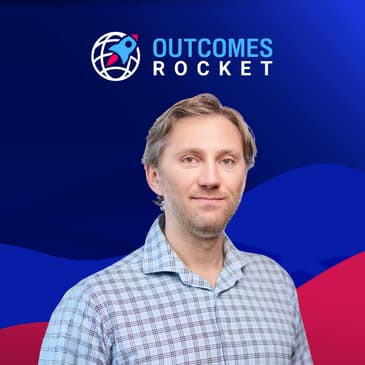
In this episode, Michael Hoxter, Chief Technology Officer at Lightbeam Health Solutions, shares key insights from HIMSS 2025, highlighting the growing role of AI and his company’s 12-year journey from a small table to a major industry presence. He explains how Lightbeam leverages data warehousing, analytics, AI-driven patient segmentation, care management, and outreach to support value-based care, particularly in Medicare programs, where they have achieved significant savings. Michael distinguishes population health from chronic care management, emphasizing its broader responsibility for patient outcomes beyond clinical settings. He also discusses Lightbeam’s shift from a product-only company to offering advisory and care management services shaped by client needs and industry feedback.
Tune in and learn how data-driven insights transform patient care and the critical role of listening to clients in building a successful health tech company!
Resources:
- Connect with and follow Michael Hoxter on LinkedIn.
- Learn more about Lightbeam Health Solutions on their LinkedIn, Instagram, and website.
Fast Track Your Business Growth:
Outcomes Rocket is a full-service marketing agency focused on helping healthcare organizations like yours maximize your impact and accelerate growth. Learn more at outcomesrocket.com
[00:00:01] This podcast is produced by Outcomes Rocket, your healthcare exclusive digital marketing agency. Outcomes Rocket exists to help healthcare organizations like yours to maximize their impact and accelerate growth. Visit outcomesrocket.com or text us at 312-224-9945.
[00:00:30] All right, everybody, we are here at the HIMSS Conference 2025, and I have the privilege to have the outstanding Mike Hoxter with us. He is the co-founder and chief technology officer at Lightbeam Health Solutions. Mike, such a pleasure to have you on the podcast. Hey, thank you very much for having me. Appreciate it. Yeah, so what brings you to HIMSS? And just tell me how it's going so far on day two.
[00:00:56] Yeah, so it's actually my first HIMSS. We as a company have been at HIMSS for a lot of years. It's good. It's a lot of firsts for me, but just the size of the thing is crazy. Every tech company that could possibly touch healthcare in any way seems to be here. And the sessions have been really good. Went to one of the keynote yesterday, I thought was great. I thought the kind of funny thing he said towards the end was challenging you to try and find 10 booths that don't say something about AI.
[00:01:25] And he's right. 100% right. So, yeah, it's been an experience. It's nice to see kind of the other companies. And I've been to a bunch of the sessions, a lot of really smart people talking about very relevant subjects. So it's been great. So I love, you know, we had a chance to connect before recording. And you guys have a huge booth here. And you were sharing kind of part of our Fonder Story series. The journey of an entrepreneur, you're sharing that 12 years ago when you started. It was a small booth with a banner. Yeah, it wasn't even a booth.
[00:01:55] It was like a table against a wall. We had a banner behind us. So, yeah, we got a pretty big booth now. It's different. Things have changed over the course of 12 years. Absolutely. Absolutely. Well, all right. Let's get into it, Mike. Tell us a little bit about the company. What do you guys do? Why is it important? And who do you do it for? Sure. So it's population health management, which I think as a phrase by itself is fairly meaningless these days because that means a whole bunch of different things to a lot of different people. We, first and foremost, data warehousing.
[00:02:23] So we take in kind of all the data for a given customer health system provider group. And then kind of with that, there's a lot of things that we can do with it. So we have a rules engine that we can use to segment patient populations, which is really kind of like a hub and spoke of a bunch of other feature functionality that we have. So we have analytics that kind of runs alongside and on that same thing. Care management.
[00:02:47] We've been doing, we've actually been doing AI for the better part of a decade, not generative AI, not the chat GPT stuff because it wasn't here, but kind of the machine learning ability to segment and risk stratify patient populations. And then also kind of the beginning part of the cycle. And then we also have patient outreach functionality. So we can take your data in, identify your patients, who needs what, and then if you need us to actually handle the outreach and some of the management of those patients. So we have a lot of different solutions.
[00:03:17] We've been around for 12 years, so we don't have just one. You know, we can either kind of deploy the whole stack or we can kind of deploy a point solution if you have like a specific need. Well, that's really great. A lot of folks, and you mentioned, right, like what exactly is population health and how does it lay into everything else? A lot of folks synonymize it with chronic care management. Can you help me understand if that's true or how to differentiate there? I think that's a big piece of it.
[00:03:45] A very important big piece of it is chronic care management, especially with like Medicare populations and things like that. That just, that's a massive portion of kind of your overall spend. I'd probably say it's more kind of operationalizing value-based care management. Oh, I like that angle. Because there's been a big shift just the way that providers are compensated where value-based care is now a large portion of the kind of the compensation. It's not just fee-for-service, you bill, you get paid. What happens when the patient leaves is not your problem. It's your problem now.
[00:04:15] I think that's really good movement for the healthcare industry in general. I think, you know, doctors, it should be their problem. What's happening when the patient's not within their walls? They should still be responsible for those patients. And, you know, when you tie incentive, when you financially incentivize somebody to do something, generally they do it. So we've kind of seen a pretty good shift as far as just the quality of healthcare that's being delivered. Because it's not just the patient comes in, gets the service, leaves, no longer your problem.
[00:04:43] It is your problem when the patient's not there and you still need to kind of monitor them. Which means you need the tools, you need the systems, the processes, kind of all the peripheral things that you really need to have in place to do that effectively. So do you consider you got yourself, like your organization, a tech-first service organization or tech-only? How do you think about your organization? We're really a product company. Yeah, yeah. But also we sell a product.
[00:05:10] But also we have a lot of customers that do need kind of services. And so we've kind of evolved over time to provide some of those as well. Both from the kind of implementation side of things, right? Like kind of like getting you up and running on what you should be doing. Our advisory team's great. Our kind of ability over time to provide more than just a tool and say, here's your tool, go. But like actually provide the kind of advisory of what you should do with it.
[00:05:39] Where you're going to get the biggest bang for your buck. Which of the many different programs can you implement and you're going to see the best results for? So that and then kind of all the way down to we found really during COVID that we could provide a lot of lists. We had a lot of clients who they say that that list is great. All my nurses are dealing with COVID patients. So kind of diminishes our value if we can't do something about it. You know, at the end of the day, you got to do something. And what's the list of?
[00:06:08] Like a list of things to do? A list of patients? Or what is the list? It's generally a list of patients who need either care gaps closed, who are high risk for particular adverse events, who need one thing or another, depending on what your objectives are. Understood. So you got to, we can provide those lists all day, but if you can't do anything with it, then it's of limited value. So we started providing kind of care management services as well.
[00:06:32] And that's when we started to do the automated, largely automated outreach for care management. So that, and that's just one. On Monday, we won, again, best in class for one of the patient longer. Congratulations, man. That's huge. Thank you. Yeah. Well, I love it. I always love to better understand who you do what you do for. So who's your end client? Are you doing this for providers? Are you doing it for payers? It's both. We have, we have clients. The majority of our clients are provider groups.
[00:07:02] So it's, it's the physicians who have kind of entered into these, these value-based care arrangements that. Largely Medicare. Largely Medicare. Some commercial. Yeah. Medicare, Medicare Advantage. We have, I think the largest Medicare shared savings program population. Yeah. So we have a large number of those were. Is that like the ACO reaches? ACO reach is kind of within that umbrella. So yeah, the direct Medicare patients. Sure, sure.
[00:07:29] So we have, we have, we have a lot of those and, and we love that program because all of the data on the performance of every single one of the ACOs is made public because it's a Medicare program. So we know exactly how we do. I love those programs, by the way. Oh, the transparency. I think that's the future, man. I think, I really think that's the future. Yeah. You need to, you need to have that level of transparency. Really. I think that's the only program today because it's, it's government that has that much transparency kind of just baked into the process.
[00:07:57] So we can look at, look at our ACOs that we manage and know exactly how we do and know exactly which one of them were successful and how we compare versus the averages. And that, that program is something we've definitely been, we've been killing it. We're, I think we're over a billion savings. That's huge. Congratulations on that. Thank you. All right. Well, what would you say is one thing that most people don't know about the problem you solve?
[00:08:24] Ah, see, it's, it, it's hard to narrow it down to one thing. I think probably the, probably the single biggest thing is just kind of the operationalizing the insights that we get. There's, there's a ton of data. Data by itself is, is meaningless. You got to turn it into what are you going to do about it? And then you got, and then you got to do it. And so I think we, what we, what we do to kind of provide some of that and make it easier
[00:08:48] is we have kind of that full continuum of being able to look at it from a very high level of where are you trending? What are the things you should focus on down to an individual patient level? At the end of the day, population health is actually delivered between a provider and a patient. It's one patient at a time. And it's a global look at the population, but it's, it's one patient at a time is when the actual care is delivered. So I think that that's an important piece.
[00:09:15] I think from, from a high level, it's easy to kind of get, get lost in the minutia. But at the end of the day, it's just all about patient care and just providing the provider with everything that he needs to know when he's sitting down in front of a patient and can kind of close all those gaps, handle all those issues and just take better care of their patients. Yeah. Because a lot of people will just stick with the terminologies. And when you think population health, you're like, okay, taking care of a population. But the reality, it's a one-to-one thing when you're really making a difference.
[00:09:43] At the end of the day, a doctor is going to see a patient and they need to know everything that they need to know to do as effective as possible a job that they possibly can't. I love it. Hey, look, as a founder and an entrepreneur that's been able to scale this company, we love to learn from successful people. So what business hack or things that you've learned in the last 12 years would you share with other aspiring entrepreneurs in the healthcare space? Listen to your clients.
[00:10:11] Most of our product roadmap is really driven from client requests. We subscribe to class. We want to know what people are saying about us. We really want to know kind of all that information so that we can really make informed decisions when we're trying to construct our strategies. So when your clients have needs, your clients have feedback, and it's really important that you listen to that feedback and you make good use of it because it's probably the most valuable data that you have. Well, I love that.
[00:10:41] Are there any processes or best practices that you'd recommend for folks to do that? I mean, class is a good one. Any of those ratings? Yeah, we love class. They're great folks. They're friends of ours. Yep. Yep. Same. They're great. We do NPS surveys. So we survey our clients pretty regularly just to kind of get what their feedback is and kind of trend the sentiment on how they feel about us, what we're doing. Are we big for you guys or quarterly? Yeah. Yeah.
[00:11:08] We have the surveys going kind of constantly, but then we kind of score ourselves quarterly. Love it. Well, that's awesome. Super helpful. As we wrap up our time today, what call to action would you leave our viewers and listeners with? And where's the best place they could find out more about you and the team? So, yeah. I mean, depending on who you are, get good at AI because it's coming if you haven't already gone down there. And then, yeah, just listen to your clients. Do what's best for the patients.
[00:11:35] That's really, at the end of the day, that's how you be successful in this game is you help patients. You have good outcomes. You make your clients successful. As far as finding us, lightbeamhealth.com. We have all the socials. So those are also regularly checked as well. So, you know, check us out. LinkedIn, Instagram, any of those. We're all over the socials. And then, yeah, reach out via the website and we'd love to talk. I love it. Well, thank you so much, Mike. It's been a pleasure, folks.
[00:12:04] Thanks for joining us straight from the HIMSS floor. Just an incredible opportunity to connect. Make sure you check out the show notes. Take action on the things that you heard today if you want to make a difference in healthcare. Thanks, everybody. Pleasure to have you. Thank you. This podcast is produced by Outcomes Rocket, your healthcare exclusive digital marketing agency.
[00:12:36] Outcomes Rocket exists to help healthcare organizations like yours to maximize their impact and accelerate growth. Visit OutcomesRocket.com or text us at 312-224-9945.